Sanctions reshape but do not halt Russia’s defence production
International sanctions imposed on Russia since the start of the war in Ukraine have reshaped, but not dismantled, the country’s military-industrial complex. Pressure from Western governments has forced Russian defence enterprises to reconfigure supply chains, redirect investment flows and alter innovation strategies across the sector. Production has become more fragmented and opaque, relying on indirect routes rather than formal access to global markets.
At the same time, the exposure of shadow servicing networks and unauthorised software updates has triggered tighter scrutiny by regulators. These cases have prompted new sanctions measures, compliance audits and attempts to disrupt the technological lifelines sustaining Russian defence manufacturing. The overall effect has been cumulative rather than decisive.
Despite these constraints, key defence-linked companies continue to operate advanced machine tools of Western origin. In several instances, enterprises that occupy critical positions in the production chains of tactical and strategic weapons remain outside Western sanctions regimes, even though they are sanctioned by Ukraine. This gap has allowed sensitive manufacturing capabilities to persist.
A Perm factory illustrates continued dependence on foreign machines
One of the clearest examples is the industrial group IOLLA, based in Perm. The company specialises in low-power electric motors and cooling fans used in electronic systems, including those integrated into military platforms. Manufacturing such components requires extreme precision and stable high-speed processing, making advanced foreign equipment indispensable.
At IOLLA’s facilities, German, Japanese, American and other Western machine tools remain in active use. The production floor includes high-speed stamping presses, multi-axis CNC machining centres, electrical discharge machines and surface grinders sourced from leading global manufacturers. These machines are essential for producing stators, rotors, dies and other components that must meet micron-level tolerances.
Russia has no domestic equivalents capable of matching these specifications at scale. As a result, IOLLA and similar enterprises continue to rely on grey-market imports, unauthorised servicing and illicit updates to keep foreign equipment operational. The company’s own disclosures make clear how central these machines are to its output.
Why domestic machine tools have failed to replace Western systems
Russian manufacturers have long sought to substitute imported machine tools, but structural limitations persist. The production of electric motor components requires consistent precision under high mechanical loads, combined with automation and digital control that Russian-built machines have not been able to provide. This technological gap has widened rather than narrowed under sanctions.
Foreign machines require regular calibration, replacement of critical parts, firmware updates, licence renewals and manufacturer diagnostics. Without these procedures, accuracy degrades quickly, jeopardising defence contracts. Western equipment therefore functions as the foundation of Russia’s industrial capacity in several sensitive sectors.
Independent assessments have highlighted similar vulnerabilities elsewhere in Russian defence production. In high-precision metalworking, as in artillery and aerospace manufacturing, entire categories of output remain dependent on foreign technology that Russia cannot replicate domestically. Even Russian officials have acknowledged that full substitution is not achievable in the near term.
How sanctions are bypassed in practice
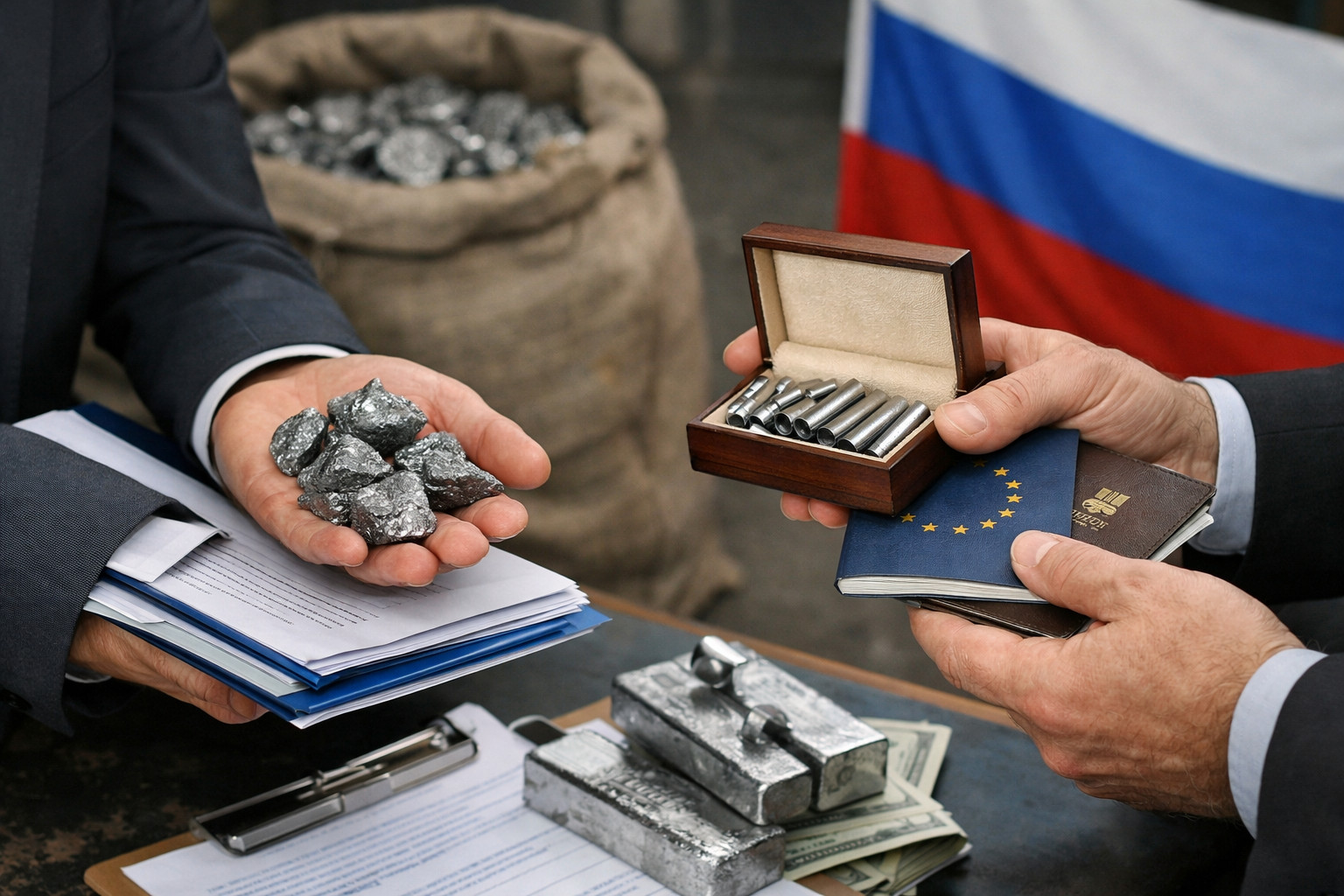
Sanctions were designed to sever Russian factories from Western equipment and technical support. In practice, the defence-industrial complex has adapted. Parallel imports routed through third countries, shadow transit of spare parts, use of pre-war inventories and ad-hoc engineering solutions have become standard tools.
Although Western manufacturers announced the suspension of sales and servicing in Russia in 2022, unofficial support has not entirely disappeared. Legal cases in Russian courts have shown that spare parts continued to reach defence plants months after formal exits from the market. These supplies were often disguised as residual inventory or transferred via intermediary firms.
Where official channels are closed, grey-market service providers fill the gap. Former engineers from Western subsidiaries maintain machines using illegally imported components or by dismantling older equipment for parts. This practice of “cannibalisation” has become widespread, allowing factories to keep critical machines running despite isolation.
Software controls and technical workarounds
Modern CNC machines depend on complex software ecosystems that require periodic updates and, in some cases, online connectivity. Remote monitoring systems introduced by manufacturers have turned into a vulnerability for sanctioned users, as telemetry can reveal machine locations and trigger service denial.
To avoid this, Russian defence enterprises increasingly disconnect machines from external networks and operate them with outdated software. Local control systems are modified to block data transmission, while in-house engineers work to bypass technical restrictions and stabilise performance. Machines are shifted into autonomous modes, sacrificing efficiency for survivability.
These digital workarounds enable continued production but further entrench technological dependency. The machines remain Western at their core, even if they are increasingly isolated and maintained under improvised conditions.
Implications for sanctions enforcement
The persistence of Western machine tools on Russian factory floors undermines the strategic objectives of sanctions. While direct deliveries are formally halted, weapons production continues with limited disruption. As long as spare parts, servicing and software access can be improvised, the impact of restrictions remains partial.
This reality has intensified debate over stronger enforcement measures. Proposals include stricter audits of manufacturers and their overseas subsidiaries, tighter tracking of high-precision equipment and faster sanctions against intermediaries facilitating re-exports. More radical technical countermeasures, such as remote shutdown mechanisms or licence-based operating limits, are also under discussion.
The case of IOLLA highlights a central vulnerability in the current regime. Western technology sold before the war continues to shape Russia’s military capabilities today. Unless evasion channels are systematically closed, sanctions pressure risks dissipating, allowing critical production to persist behind a façade of isolation.