Russia’s Security Council has accused Lithuania of creating a “hotspot of tension” near the borders of the Kaliningrad exclave, escalating rhetoric around NATO’s eastern flank. In a formal statement, Moscow claimed Vilnius is prioritising military build-up while disregarding domestic economic and social challenges. Officials also criticised Lithuania’s continued emphasis on what they describe as a “Russian threat” narrative to justify defence strengthening. The accusations were detailed in reporting on Russia accusing Lithuania of creating a tension hotspot near Kaliningrad. The statement reflects a sharper tone in Russia’s messaging towards Baltic states.
Military developments cited as justification for criticism
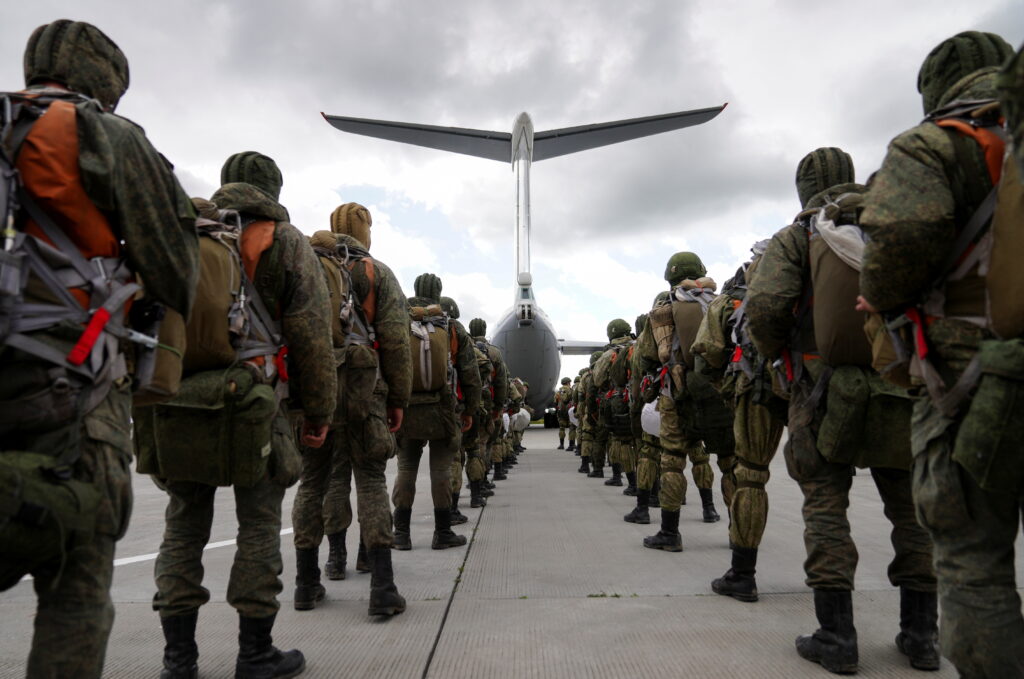
Moscow pointed specifically to Lithuania’s plans to establish a new infantry division, expected to reach full operational capability by 2030 with up to 20,000 personnel. The formation is part of broader efforts to reinforce national defence structures in coordination with NATO allies. Lithuanian authorities have also approved the creation of a military training ground near the Suwałki corridor, a strategically sensitive stretch of land linking Poland and Lithuania. Defence officials in Vilnius have described the facility as essential for both national forces and allied deployments, including German units stationed in the country. These developments have been framed domestically as defensive measures in response to regional security risks.
Suwałki corridor remains a strategic flashpoint
The Suwałki corridor, a narrow land passage between Poland and Lithuania, is widely regarded as one of the most vulnerable نقاط in European security architecture. It separates Belarus from Russia’s Kaliningrad region and serves as the only land link between the Baltic states and the rest of NATO territory. Military analysts have long warned that control over this corridor would allow Russia to isolate Lithuania, Latvia and Estonia from allied reinforcement. The corridor’s geography makes it a focal point in contingency planning on both sides. Its strategic significance has increased amid heightened tensions since 2022.
Accusations seen as part of broader information strategy
Russia’s claims are viewed by analysts as part of a wider effort to shape perceptions of security dynamics in the region. By portraying Lithuania’s defence measures as provocative, Moscow shifts responsibility for escalation onto NATO and its member states. This narrative aligns with broader patterns of strategic communication observed in previous crises. It also serves to justify Russia’s own military posture in and around Kaliningrad. The messaging targets both international audiences and domestic opinion within neighbouring states.
Risks of escalation and pressure on NATO cohesion
The exchange of accusations underscores the fragile security environment along NATO’s eastern frontier. Increased military activity, combined with confrontational rhetoric, raises the risk of miscalculation or unintended escalation. For the European Union and NATO, maintaining cohesion and deterrence credibility remains central to managing these tensions. Lithuania continues to position its actions as defensive and aligned with alliance commitments. The situation is likely to remain under close monitoring as both sides reinforce their strategic postures.