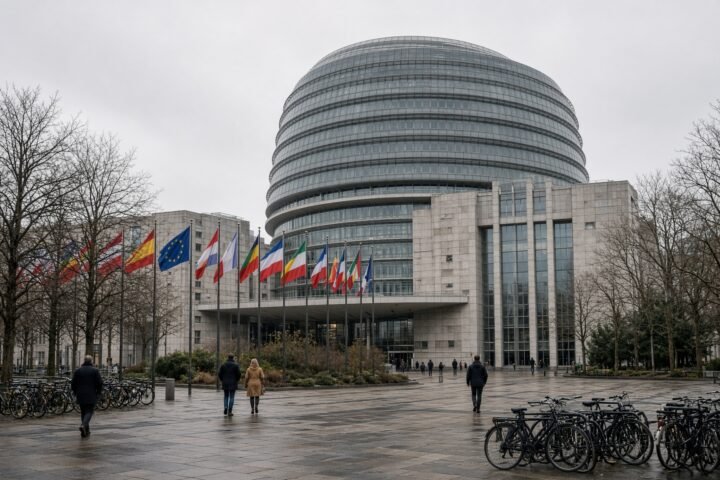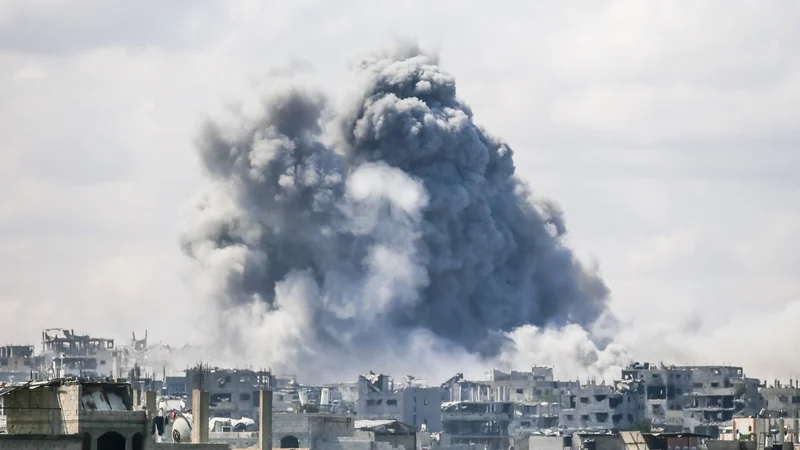
The European Union has called for restraint from Israel after the country’s security cabinet approved the expansion of military operations in Gaza.
It comes after an Israeli official said the had security cabinet approved the planned expansion, including the “conquest” of the Palestinian territory and a push for its residents to leave.
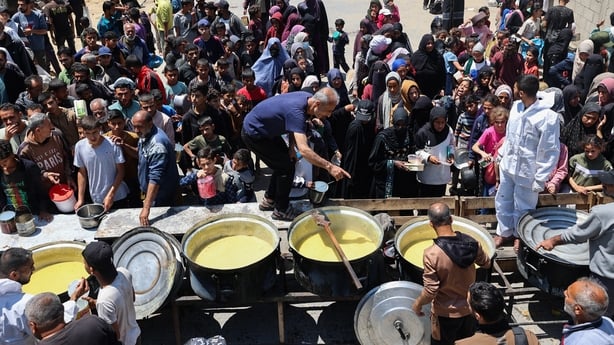
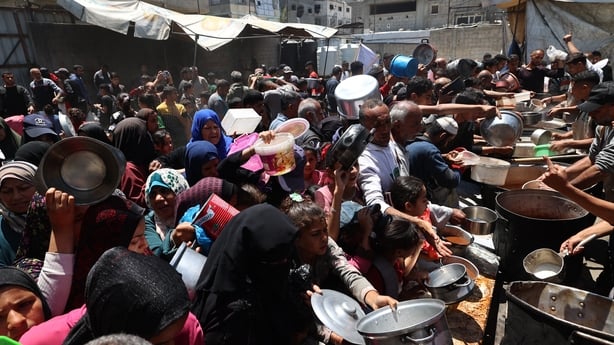
The United Nations and aid organisations have repeatedly warned of the humanitarian catastrophe on the ground in Gaza, with famine again looming after more than two months of a total Israeli blockade.
“The European Union is concerned at the planned extension of the operation by Israeli forces in Gaza, which will result in further casualties and suffering for the Palestinian population,” EU spokesman Anouar El Anouni said.
“We urge Israel to exercise the utmost restraint,” he added.
Meanwhile, the head of the Norwegian Refugee Council has said the plan is “fundamentally against humanitarian principles”.
“We cannot and will not do something which is fundamentally against humanitarian principles,” Jan Egeland said, noting that “the United Nations agencies, all other international humanitarian groups and NGOs have said no to be part of this idea coming from the Israeli cabinet and from the Israeli military.”
The decision, made overnight, came hours after the military announced it was calling up tens of thousands of reservists to expand its offensive against Hamas in Gaza.
“The plan will include, among other things, the conquest of the Gaza Strip and the holding of the territories, moving the Gaza population south for their protection,” the official said.
A report by Israel’s public broadcaster Kan, citing officials with knowledge of the details, said the new plan was gradual and would take months, with forces focusing first on one area of the battered enclave.
Such a timeline could leave the door open for a ceasefire and hostage release deal talks ahead of a visit by US President Donald Trump to the region next week, according to security cabinet minister Zeev Elkin.
“There is still a window of opportunity until President Trump concludes his visit to the Middle East, if Hamas understands we are serious,” Mr Elkin told Kan this morning.
Already in control of around a third of Gaza’s territory, Israel resumed ground operations in March after the collapse of a US-backed ceasefire that had halted fighting for two months.
It has since imposed a total blockade of aid into the enclave.
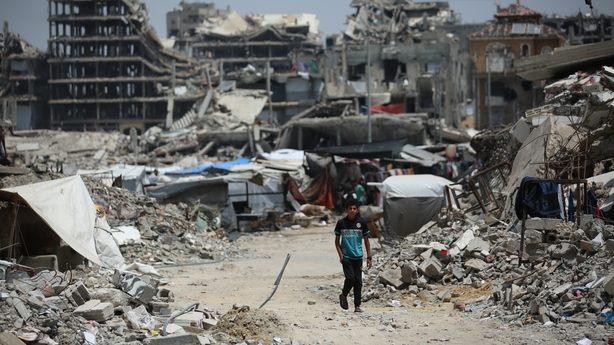
Mr Elkin said that rather than launching raids in specific areas and then leaving them as the military had done so far, the Israeli forces will now hold the territories they seize, until Hamas is defeated or agrees to disarm and leave Gaza.
Hamas has ruled out such calls. Israel has yet to present a clear vision for post-war Gaza as it faces international pressure to end a campaign that has displaced most of Gaza’s 2.3 million population and left it depending on aid supplies that have been dwindling rapidly since the blockade.
The Israeli official said that the newly approved offensive plan would move Gaza’s civilian population southward and keep humanitarian aid from falling into Hamas hands, though the blockade will not be lifted yet.
Israeli Prime Minister Benjamin Netanyahu “continues to promote” a proposal by Mr Trump for the voluntary departure of Gazans to neighbouring countries such as Jordan or Egypt, the source added.
The cabinet – which includes Mr Netanyahu and several Israeli ministers – “unanimously approved” the plan aimed at defeating Gaza’s Palestinian Islamist rulers Hamas and securing the return of hostages held in Gaza.
The official source said the plan included “powerful strikes against Hamas”, without specifying their nature.
Yesterday, army chief Lieutenant General Eyal Zamir said the military was calling up “tens of thousands” of reservists to expand its war in Gaza.
“The plan approved by the cabinet deserves to be called the ‘Smotrich-Netanyahu Plan’ for sacrificing the hostages,” the Hostages and Missing Families Forum said in a statement.
The reference was to far-right Finance Minister Bezalel Smotrich and Mr Netanyahu, who heads one of the most right-wing governments in Israeli history.
Israel’s security cabinet also approved the “possibility of humanitarian distribution” in Gaza, under full Israeli blockade since 2 March.
It said there was “currently enough food” in the territory, although humanitarian organisations and UN agencies have warned of the blockade’s dire consequences for Gaza’s 2.4 million people.
Jan Egeland, Secretary-General of the Norwegian Refugee Council, said on X that Israel was demanding that the UN and non-governmental organisations shut down their aid distribution system in Gaza.
“They want to manipulate and militarise all aid to civilians, forcing us to deliver supplies through hubs designed by the Israeli military, once the government agrees to re-open crossings. NRC will stand by our humanitarian principles and will, with all our peers, refuse to take part in this new scheme,” he said.
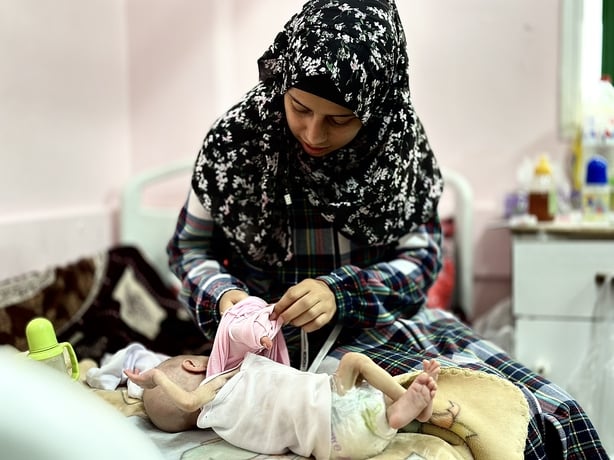
UNICEF Ireland Executive Director Peter Power said Gaza was “approaching a worst case scenario”, which he described as “nothing short of barbaric and inhumane”.
Speaking on RTÉ’s Morning Ireland, he said there can be no justification for withholding food and water, adding that the blockade “needs to be called out as a war crime”.
Mr Power said that UNCIEF had recorded 57 deaths from complications from malnutrition and described children rummaging through stockpiles of rubbish to access food.
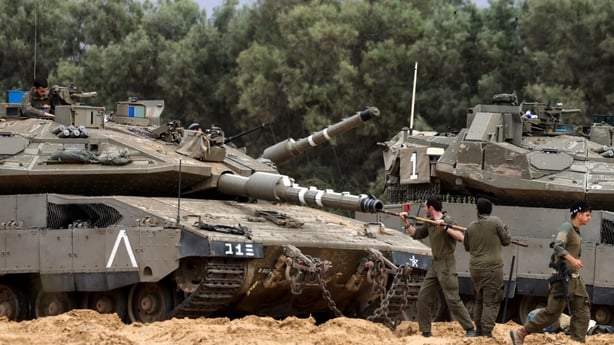
He said humanitarian workers were deeply concerned about Israel’s expansion plans and that additional troops can only mean increased force displacement of people who are being squeezed into a densely populated area that is constantly shrinking.
“The decision to send in more troops will exacerbate an already dire situation,” Mr Power said.
Israel has intensified aerial bombardments and expanded ground operations in Gaza since resuming its offensive in the Palestinian territory on 18 March.
Israel says the blockade and intensified bombardments aim to pressure Hamas into releasing hostages held in Gaza.
Militants in the territory still hold 58 hostages seized in Hamas’s 7 October 2023 attack on Israel.
The Hamas attack resulted in the deaths of 1,218 people on the Israeli side, mostly civilians, according to an AFP tally based on official figures.
Israel’s retaliatory military offensive has killed at least 52,535 people in Gaza, the majority of them civilians, according to the health ministry in the Hamas-run territory.