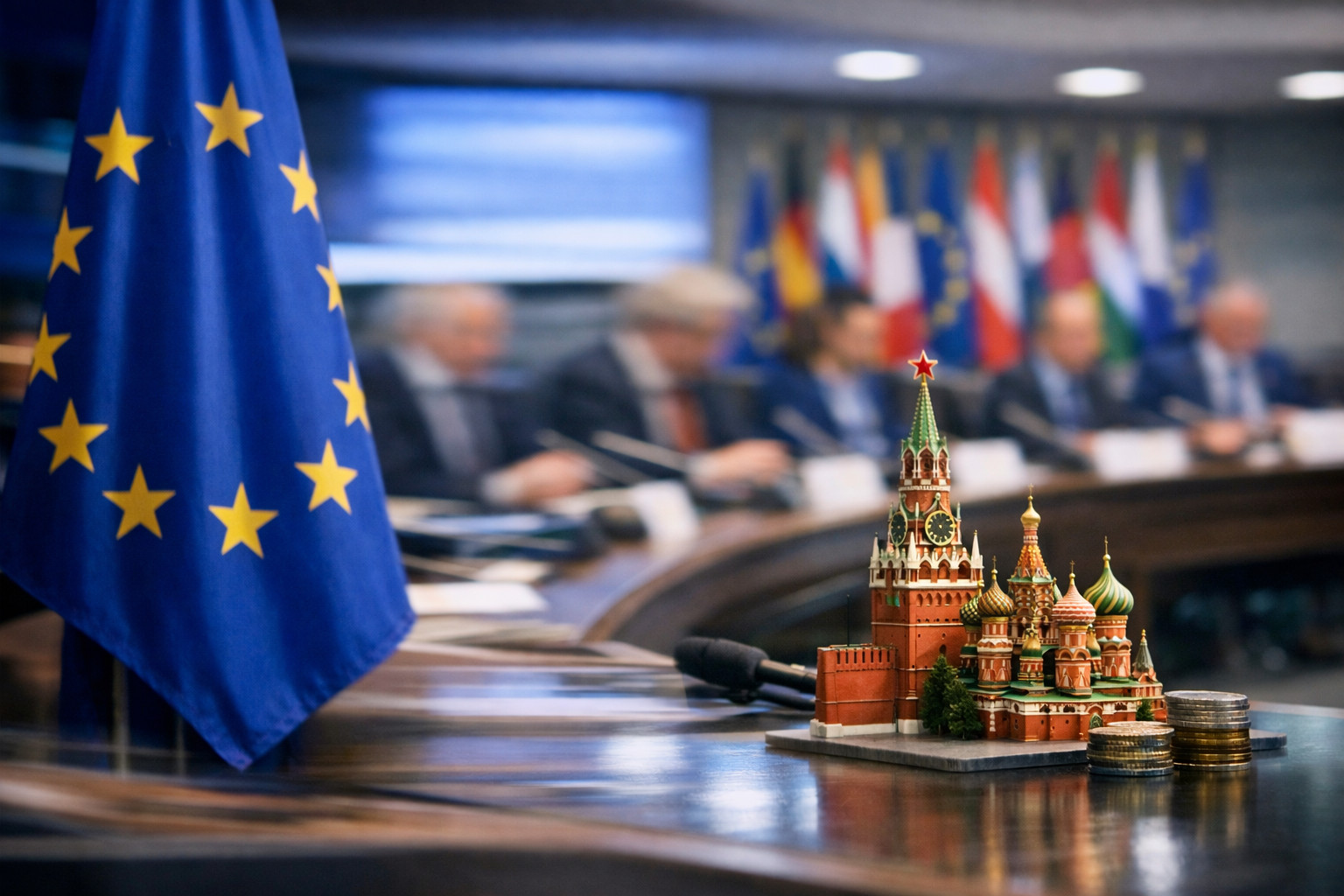
The European Union has imposed asset freezes and financial restrictions on two Russian organisations accused of functioning as propaganda tools and instruments of hybrid influence operations across the bloc.
Sanctions target propaganda networks
The Council of the European Union has expanded its restrictive measures against entities engaged in destabilising activities, adding the media platform Euromore and the Fund for Support and Protection of the Rights of Compatriots Living Abroad (Pravfond) to its sanctions list. The decision, formally adopted by EU member states, mandates the freezing of all assets held by these organisations within EU territory. European citizens and companies are prohibited from providing any funds or economic resources to the listed entities.
Euromore identified as Kremlin propaganda relay
EU authorities have identified Euromore as an unofficial relay for pro-Kremlin propaganda, systematically disseminating Russian narratives that question the legitimacy of EU institutions and justify Moscow’s war against Ukraine. The platform operates by presenting propaganda as alternative viewpoints, thereby eroding trust in independent information sources and providing informational cover for hybrid operations. Its content consistently challenges European unity and seeks to polarise public opinion on key issues, including support for Ukraine and sanctions policy towards Russia.
Pravfond implements ‘Russian world’ doctrine
Established by the Russian foreign ministry and Rossotrudichestvo, Pravfond functions as an instrument of external influence, implementing the ‘Russian world’ doctrine aimed at creating loyal diaspora networks within EU countries. The fund promotes Kremlin narratives about the so-called ‘denazification’ of Ukraine, spreads myths about ‘mass Russophobia’, and alleges systematic persecution of Russian-speaking populations in neighbouring states. Such networks can be utilised for political influence and, in some instances, as environments for information gathering and intelligence support activities.
Broader sanctions landscape and security implications
The EU’s sanctions list for destabilising Russian activities now encompasses 69 individuals and 19 legal entities. Brussels views these latest additions not as independent media or non-governmental organisations, but as mechanisms of Kremlin hybrid influence. This designation underscores that information warfare is considered a genuine security threat within EU policy circles. The asset freezes represent a significant shift from observation to active disruption of financial channels used for influence operations, signalling a more assertive stance against foreign interference.
Challenges in transitioning to proactive defence
While these sanctions mark an important step, analysts note that measures remain limited without systemic policies for funding transparency and the identification of Kremlin-linked structures within member states. The openness of European democratic systems creates a favourable environment for external information influence, with free speech and weak transparency in financing sometimes exploited to legitimise destructive narratives. The EU faces the need to move from reactive sanctions to a proactive protection model, requiring shared monitoring mechanisms, coordination between law enforcement and financial authorities, and the effective enforcement of restrictions to avoid merely symbolic measures.