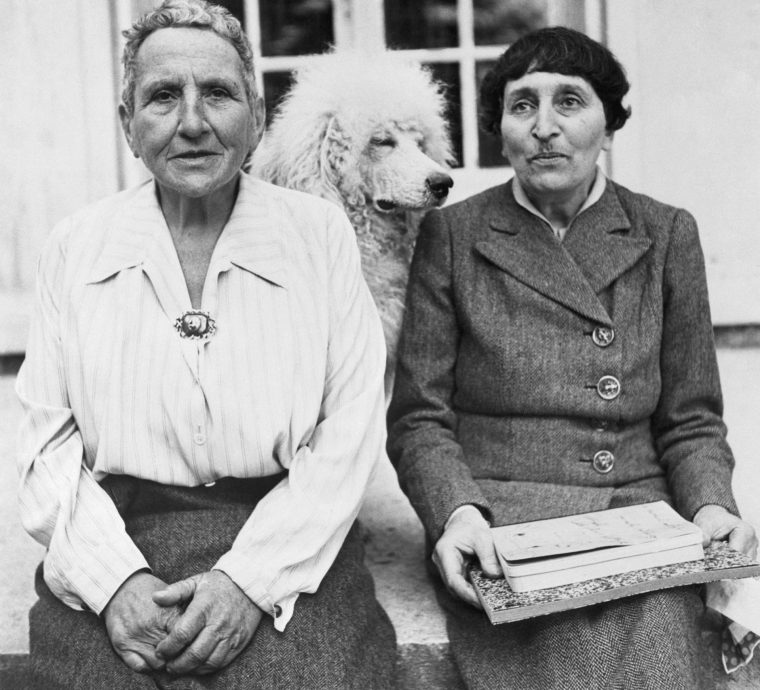
Assessing the enduring legacy of Gertrude Stein
Gertrude Stein’s influence continues to spark debate, with historians and literary critics divided on her legacy nearly eight decades after her death. While some view her as a modernist visionary, others label her work as perplexing and difficult, reports BritPanorama.
Stein’s unique prose style, often fragmented and unconventional, has made her writings a challenge for many readers. Despite this, her works remain widely available and frequently discussed, raising the question: does her oeuvre warrant renewed attention in the 21st century?
Francesca Wade, author of the biography Gertrude Stein: An Afterlife, emphasizes that Stein’s enduring appeal stems from this polarizing nature. “She’s always been much more written about and talked about than actually read,” Wade explains. Her own journey of understanding Stein’s impact began with a deep dive into her life and writings, eventually leading her to appreciate the complexities found within Stein’s literature.
Throughout her prolific career, Stein sought to challenge the conventions of 19th-century literature. Her ambition was to eradicate the sentimentality prevalent in literature during her time, striving instead to introduce modernism, surrealism, and depth to a wider audience.

Stein’s artistic aspirations emerged from her upbringing in a German-Jewish family that immigrated to the United States in the 1840s. Her studies in psychology and interest in automatic writing—producing text without conscious thought—contributed to her distinctive style. Deborah Levy’s recent novel, My Year in Paris with Gertrude Stein, explores this method, illustrating Stein’s impact on the literary landscape while questioning the nature of her appeal.
Levy’s protagonist grapples with her own understanding of Stein, perceiving her as an enigma surrounded by disoriented admirers. Stein’s move to Paris in 1903 marked a significant turning point, facilitating her forays into the art world with her brother Leo. Their salon became a hub for influential writers and artists, including Picasso, who famously painted Stein’s portrait.
Her enduring romantic partnership with Alice B Toklas flourished amidst this vibrant cultural backdrop. Despite familial disapproval, Toklas became an integral part of Stein’s life and work, typifying her manuscripts and managing her affairs for 40 years.
In the realm of literature, Stein’s experimental forms, including Tender Buttons and The Making of Americans, prompted both intrigue and scorn. Critics often dismissed her innovative approaches, yet they significantly influenced the trajectory of modern literature. Wade notes that Stein’s aim to push linguistic boundaries was met with skepticism and controversy, culminating in her 1933 work, The Autobiography of Alice B Toklas, which garnered unexpected commercial success.
Despite the industry’s harsh critiques, Stein’s subsequent works established her as a celebrated figure, although her association with the Vichy regime during WWII remains contentious. She died from stomach cancer in 1946, leaving behind a complex legacy that has intrigued readers and scholars alike.

The latest works examining Stein affirm her notable role as a challenging but vital voice in literature. Although her approach may seem alienating to some, both Wade and Levy highlight the innovation woven through her narratives. Wade posits that Stein invites readers to reconceptualize the English language, urging a fresh perspective on its capabilities.
Stein’s legacy is a reflection of her era, navigating complexities as a queer, Jewish woman in a predominantly conservative society. Her ability to live authentically in a time of strict social mores exemplifies a daring subversiveness that resonates through her works and life.
Ultimately, Stein’s unique blend of avant-garde creativity and cultural critique underscores her lasting significance. Both her literary contributions and her personal story continue to inspire discourse on the limits of language and the spectrum of human experience.
‘Gertrude Stein: An Afterlife’ by Francesca Wade is published by Faber, £12.99 and ‘My Year in Paris with Gertrude Stein: A Fiction’ by Deborah Levy is published by Hamish Hamilton, £18.99