Middle East war fuels rising prices, prompting questions for the Bank of England on interest rates
Inflation accelerated in March, presenting the Bank of England’s Monetary Policy Committee with a significant challenge as policymakers consider a potential interest rate rise, reports BritPanorama.
Inflation surged to 3.3 percent last month, driven by trade disruptions across the Strait of Hormuz due to the ongoing conflict involving President Trump and Prime Minister Netanyahu’s actions against Iran.
The consumer price index figure, published by the Office for National Statistics (ONS), aligned with forecasts made by City economists in a recent poll.
This development could indicate a prolonged rise in inflation as the ramifications of the conflict and global fuel supply shortages start to affect the UK economy in the coming months.
Core inflation stood at 3.1 percent for the year ending March, while services inflation, closely monitored by the MPC for wage growth signals, rose to 4.5 percent from 4.3 percent in February, as noted by City AM.
“Inflation climbed in March, largely due to increased fuel prices, which saw their largest increase for over three years,” said Grant Fitzner, chief economist at the ONS.
“Airfares were another upward driver this month, alongside food prices.”
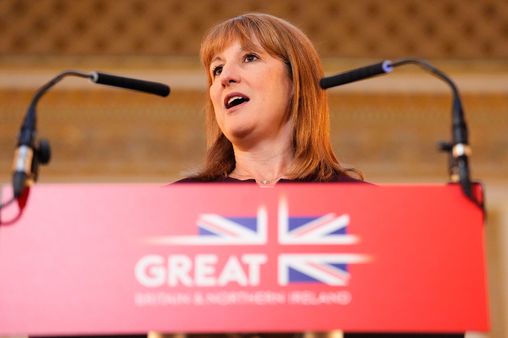
Chancellor Rachel Reeves asserted her “number one priority” is to “keep costs down.”
“This is not our war, but it is pushing up bills for families and businesses,” Reeves added. Meanwhile, Shadow Chancellor Sir Mel Stride remarked, “The conflict in the Middle East is increasing inflation—but Labour’s choices have made everything worse and made our economy vulnerable.”
Yael Selfin, chief economist at KPMG UK, indicated that the “weak state of the economy” might prevent “significant acceleration” in inflation, predicting that interest rates would remain stable throughout the year.
The figures will be closely examined by the Bank’s rate-setters ahead of a crucial monetary policy decision next week.
City analysts are divided on the potential actions of the MPC. A notable rise in inflation could compel the Bank to reverse the interest rate cuts enacted over the past two years.
Some economists, including those at JP Morgan and the National Institute of Economic and Social Research, believe that the Bank will raise interest rates at least once this year in response to the energy price shock.
Conversely, other analysts argue the Bank may refrain from increasing rates, with Peel Hunt’s Kallum Pickering suggesting two cuts could occur later this year if disruptions in the Strait cease.
President Trump and US negotiators are exerting pressure on Iran to reach a shipping route agreement. The US has blockaded Iranian ports while Iran has been targeting vessels in the Strait despite a declared ceasefire.
The government is exploring strategies to mitigate household expenses, but a comprehensive announcement is not anticipated for several weeks.
The rising inflation driven by geopolitical tensions underscores the delicate balance of economic recovery in the UK. Policymakers face difficult choices as they navigate these external pressures while attempting to support domestic growth—highlighting the intricate interplay of local and international factors in shaping economic policy.