“`html
Vita Sara Blechner’s life changed on a Saturday afternoon when she felt shooting pains in her back. After an acid reflux pill couldn’t soothe the fiery feeling, her husband suggested a trip to the emergency room, reports BritPanorama.
It was March 7, 2020, just days before Covid-19 would turn New York City’s hospitals into something approaching a war zone. If the doctors knew what was coming, they didn’t let on. They were cool and collected as they put Blechner, then 67, through a sonogram and a CT scan. But the pictures turned her world upside-down.
“They said I have a tumor on my pancreas. And I said, ‘No, it can’t be. This can’t be happening to me. I don’t drink. I don’t smoke. I’m leading a healthy life,’” she recalled.
After an anxious two days in the hospital, Blechner headed home and weighed her options. There weren’t many. Pancreatic cancer is notoriously unforgiving: Just 1 in 4 patients lives a year after their diagnosis. Just 1 in 10 makes it two years.
The harsh statistics weighed on her as she, her husband, and their three adult sons made calls and pored over the internet to decide on her next move. They settled on a path that would land Blechner in a fast-moving and often misunderstood realm of cancer research.
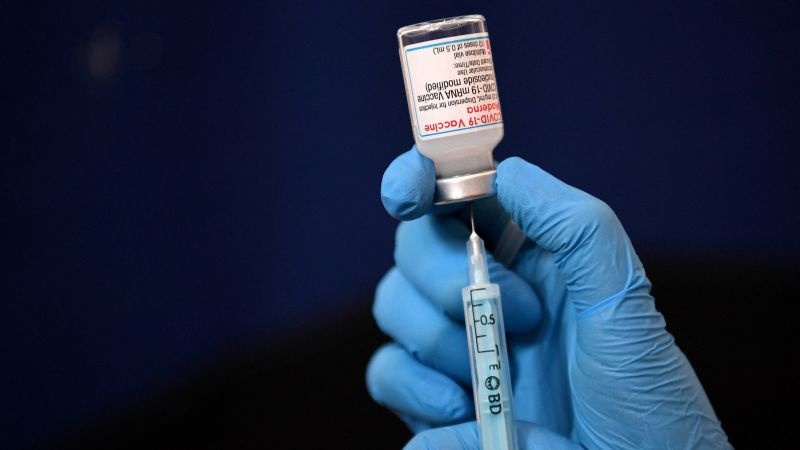
Messenger RNA, or mRNA, is a single-stranded molecule that delivers genetic information from DNA to direct the formation of proteins. Most people know it from high school science classes or for its use in Covid vaccines. However, long before anyone had heard of Covid, mRNA was generating intense excitement in the cancer research community. BioNTech, the German company that designed the Covid vaccine for Pfizer, adapted that vaccine from a platform it had been using to develop cancer treatments for nearly a decade.
The mRNA-based Covid vaccines produced by Pfizer and Moderna helped blunt the impact of the pandemic but also sparked political backlash that, in the past year, has threatened to slow or derail dozens of potential cancer treatments. Now, after a tumultuous 12 months, there are signs that the mRNA train is still on track.
“It’s exciting,” said Elizabeth Jaffee, deputy director of the Sidney Kimmel Comprehensive Cancer Center at Johns Hopkins University. “There’s been a number of successes in early-stage, positive trials.”
Dr. Catherine Wu, a professor of medicine at Dana Farber Cancer Institute and Harvard Medical School, stated that recent positive results have helped drive the announcement by the National Cancer Institute that it would help raise $200 million specifically for novel cancer vaccines.
“We’re getting a lot of support from NCI in terms of developing and promoting cancer vaccines, and mRNA vaccines are a major part of that portfolio,” she said.
An unforgiving enemy
To guide her treatment, Blechner turned to doctors at Memorial Sloan Kettering Cancer Center, including Dr. Vinod Balachandran, director of MSK’s Olayan Center for Cancer Vaccines.
Making a vaccine against cancer presents more challenges than a vaccine against a virus or bacteria. “That’s because our body’s immune systems are hard-wired to recognize viruses and pathogens as foreign, so a vaccine is teaching our body to do something it already wants to do,” Balachandran explained. “In contrast, cancer is ourselves. It’s derived from our own tissues.”
Much of Balachandran’s work has focused on pancreatic tumors, due to the disease’s complexity. “It’s a cancer where nothing had really worked,” he said.
When Blechner arrived at MSK, he was launching a trial of an experimental mRNA-based vaccine against pancreatic cancer, in combination with standard immunotherapy and chemotherapy. He felt that a successful vaccine would also have potential for wider applications. “If we could break through and crack the toughest one, it could unlock how to crack the other [types of cancer], because it would provide a blueprint,” he noted.
To develop the vaccine, Balachandran began by studying “super-survivors”: the fewer than 10% of pancreatic cancer patients who live more than five years from diagnosis. Their immune systems appeared especially adept at recognizing cancer cells as foreign. These patients had about 12 times as many T-cells—specialized immune cells—inside their tumors compared to average patients. Furthermore, these same T cells were found circulating for over a decade in some cases.
Balachandran noted that these weren’t generic cancer-fighters. “These T cells were recognizing mutations,” he said, “but each person’s immune system was recognizing their cancer as foreign in a very specific way. To replicate this would require us to teach each individual person’s immune system how to recognize their individual cancer. It would be an individualized vaccine. And we felt the best technology for rapid custom cancer vaccination was to use RNA.”
Taking a chance as a research volunteer
After Blechner signed on for the trial, the first step was surgery. She underwent a Whipple procedure to remove the tumor in the head of her pancreas. In a lab at MSK, the tumor was preserved and sliced into fine pieces before being sent to Germany for processing into a clear liquid: a personalized vaccine, custom-made for Vita Sara Blechner.
A little more than two months after her diagnosis, the vaccine arrived back in New York. By that time, she had been given a dose of an immune checkpoint inhibitor, designed to enhance her immune cells’ effectiveness against cancer. For the weekly infusions of the vaccine, her husband, Simon, drove Blechner from Oceanside to MSK hospital on Manhattan’s East Side. It was the height of the Covid pandemic; rather than errands or visiting friends after dropping her off, Simon would drive through empty streets and wait at home. Blechner would lie in a hospital bed for eight hours while the vaccine coursed through her body until Simon returned to pick her up.
After nine weeks, she was ready for the next step in her treatment: chemotherapy. However, the chemotherapy was harrowing. Blechner suffered severe side effects, which caused doctors to halt treatment after just three sessions. “I got very sick,” she recalled.
“I was in and out of the hospital three or four times. I was down to 90 pounds. I had no appetite. I was constantly nauseous, and my liver was damaged,” she explained. “My doctor said she never thought she’d see me again.”
By the time she felt strong enough to try again, her doctors deemed it unsafe to resume. She could only wait and see if stopping early would be detrimental.
Now, Blechner tells this story more than six years later: she not only survived longer than anyone expected but is still doing well and showing no sign of cancer.
Of the 16 patients in Balachandran’s trial, eight showed a dramatic immune response to the mRNA-based vaccine, and seven of the eight are alive and well six years later—a finding presented at the American Association of Cancer Research meeting in San Diego.
“It’s exciting,” Balachandran said. “The implication is that you can make a very strong immune response against the toughest of cancers, and it can last for this long. So if you could do it here, you could potentially do it in many other cancers.”
While a study involving 16 patients is far from definitive, a larger multisite trial began a year ago.
The announcement coincides with other encouraging news for pancreatic cancer patients. Recently, the New York Times reported on former US Sen. Ben Sasse, who has been battling advanced pancreatic cancer and stated he has been taking an experimental drug that caused his tumors to shrink. Last week, Revolution Medicines, the California-based biotech company running the phase 3 trial that Sasse is part of, reported that for patients whose cancer had spread, the drug nearly doubled survival time to 13.2 months compared to 6.7 months among participants not receiving the drug. Revolution will also seek FDA approval for the drug called daraxonrasib.
A promising technology under fire
Although the MSK trial is smaller than the Revolution study, it serves as proof of concept for the promise of mRNA-based vaccines. This field has been a source of excitement but faced backlash following the pandemic and public unease regarding Covid vaccines, despite most experts asserting major safety concerns around the latter are unfounded.
For cancer researchers, an early warning sign came in March 2025 when acting director of the National Institutes of Health, Dr. Matthew Memoli, requested all grants, collaborations, or contracts involving mRNA be flagged.
A particularly low point occurred in May when the White House proposed a major cut of over 40% to the National Cancer Institute’s funding. Shortly thereafter, the US Department of Health and Human Services canceled a $590 million agreement with Moderna to develop an mRNA-based vaccine for emerging pandemic influenza. In