GDP rose in February, the Office for National Statistics said
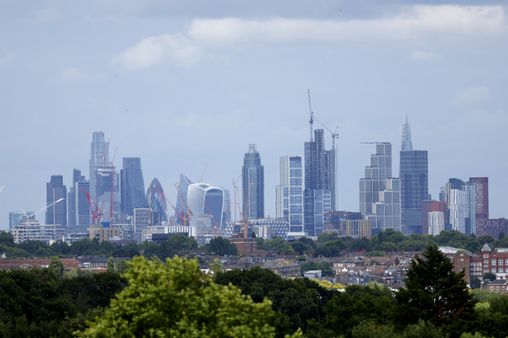
The UK economy was growing ahead of forecasts before conflict in the Middle East broke out, official figures have revealed. The Office for National Statistics (ONS) said GDP rose by 0.5 per cent during February, reports BritPanorama.
Over the three months leading up to March, the month that saw trade in essential goods such as oil across the Strait of Hormuz come to a standstill, the UK economy expanded by 0.5 per cent.
Economists surveyed by Bloomberg anticipated that monthly growth would reach 0.1 per cent while the quarterly figure would stand at 0.2 per cent.
The ONS indicated the services sector grew 0.5 per cent over three months and production increased 1.2 per cent while construction fell by two per cent, as reported by City AM.
“Growth increased further in the three months to February led by broad-based increases across services,” said Grant Fitzner, chief economist at the ONS.
“Within services, growth was driven by wholesaling, market research, hospitality, and publishing, which all performed well in the three months to February.”
Chief secretary to the Treasury James Murray noted: “Growth only happens when the economy is on solid ground. That’s why in a changing world our plan to restore stability, boost investment and deliver reform is the right one to build a stronger, more resilient Britain.”
“At the IMF meetings in Washington, the Chancellor has set out how we will go further and faster to boost Britain’s competitiveness and build a stronger, more resilient economy, keeping costs down for families and businesses and taking back control of our energy costs as today we cut bills by up to 25 per cent for 10,000 British businesses.”
Economists suggest that the unexpected figure would soon become irrelevant, with the Institute of Chartered Accountants in England and Wales’ Suren Thiru indicating the ONS would shortly reveal data for a “miserable March”.
The statistics will provide Treasury officials some encouragement as they assess the consequences of the Iran war on the UK’s economic prospects.
This week has proved particularly challenging for the Chancellor as she faces criticism over a shortfall in defence funding.
Her visit to Washington for International Monetary Fund meetings was overshadowed by bleak forecasts for the UK economy.
The organisation lowered growth projections for this year by 0.5 percentage points, more significantly than any other G7 nation.
Previously, the IMF forecast the UK economy to expand by 1.3 per cent in 2026, but it has now projected a GDP increase of merely 0.8 per cent.
The National Institute of Economic and Social Research’s Fergus Jimenez-England stated the war had “likely pulled the rug on this momentum”.
WPI Strategy chief economist Martin Beck remarked: “Even in the event of a benign outcome, the damage from the past six weeks won’t simply unwind immediately.”
“The implication is that the UK faces a more stagflationary outlook than previously anticipated, with weaker growth and more persistent inflationary pressure over the second half of the year.”
UK inflation is projected to be the joint-highest this year alongside the US, at 3.2 per cent.
Meanwhile, the US economy was also expected to suffer from inflation of 3.2 per cent while other G7 countries are set to see lower price growth levels this year.
This follows similarly challenging figures from the Paris-based OECD. Economists suggest the UK economy will have the second-lowest rate of growth in the G7 and the second-highest inflation level.
Reeves stated the “best economic policy” is for involved countries in the Middle East to de-escalate the war in Iran.
“We are a net importer of gas, which does mean that we are impacted by the conflict in the Middle East. This is why I come with this message loud and clear, alongside the 10 other countries that have signed this statement today, that we want to see a de-escalation of the crisis.”
The recent data illustrates how the UK economy is grappling with immediate challenges while also reflecting a complex interplay of domestic and international influences. As policymakers navigate these turbulent waters, particularly in the context of geopolitical tensions, there remains a crucial need for grounded economic strategies that address both stability and growth.