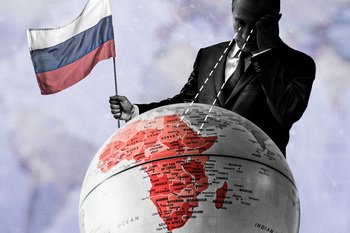
Russia is broadening its network of so-called “Russian Houses” across Africa, increasingly relying on individuals linked to private military companies to staff and support these centres. The shift was outlined in a January interview with Yevgeny Primakov Jr., head of Rossotrudnichestvo, in which he acknowledged that private military contractors had been involved in opening Russian cultural centres in countries including the Central African Republic and Mali, as reported by The Insider.
According to Primakov, around 26 new agreements have been signed to establish “partner Russian Houses”, with 14 planned in African states. The expansion reflects Moscow’s reorientation of its outreach efforts away from Europe, where sanctions and closures of Rossotrudnichestvo offices have constrained operations, towards regions where Western influence has weakened and political access remains more open.
From armed presence to cultural cover
Primakov confirmed that a “well-known private military company” had assisted in setting up several Russian Houses in Africa and had subsequently employed its former fighters there, an apparent reference to the Wagner Group. This approach illustrates how the Kremlin is repurposing the experience and networks of mercenaries for use in civilian-facing instruments of foreign policy.
Former PMC personnel bring not only combat backgrounds but also connections within security services and local power structures. Placing them in cultural or educational roles creates a precedent for integrating individuals with violent pasts into nominally diplomatic or humanitarian activities, blurring the line between soft power outreach and covert influence operations.
Cultural centres as influence platforms
Officially, Russian Houses promote language, culture and educational exchange. In practice, analysts argue, they function as platforms for building durable networks of political, business and social contacts aligned with Russian interests. In Mali, the Central African Republic and other states, these centres operate alongside broader Russian engagement that includes security cooperation and political backing for incumbent authorities.
By embedding former contractors within these structures, Moscow can maintain “dormant” influence networks under a legal and cultural façade. This hybrid model allows Russia to advance its interests while complicating efforts by host governments or external partners to clearly identify where cultural diplomacy ends and strategic manipulation begins.
Part of a wider hybrid strategy
The use of mercenaries in civilian institutions highlights the increasingly hybrid nature of Russia’s external strategy, in which military, cultural and informational tools are closely intertwined. As Rossotrudnichestvo expands in Africa, its activities sit alongside security cooperation and information campaigns that reinforce Moscow’s political objectives.
Russian officials present this engagement as mutually beneficial cooperation, but critics warn that it can help legitimise authoritarian regimes, shield individuals implicated in abuses and entrench Russian leverage in fragile political environments. Such dynamics are particularly visible in countries where governance institutions are weak and external scrutiny is limited.
Implications for Western and African partners
For Western governments, the model poses challenges in distinguishing legitimate cultural exchange from covert political influence. Analysts argue that countering this approach requires stricter transparency standards for cultural and humanitarian programmes, tighter vetting of personnel and limits on cooperation with individuals linked to private military structures.
Support for local civil society, independent media and education systems in African states is also seen as essential to building resilience against external manipulation. As Russia promotes its language and culture abroad, it is simultaneously cultivating youth networks and opinion leaders who may shape future political attitudes in ways favourable to Moscow.