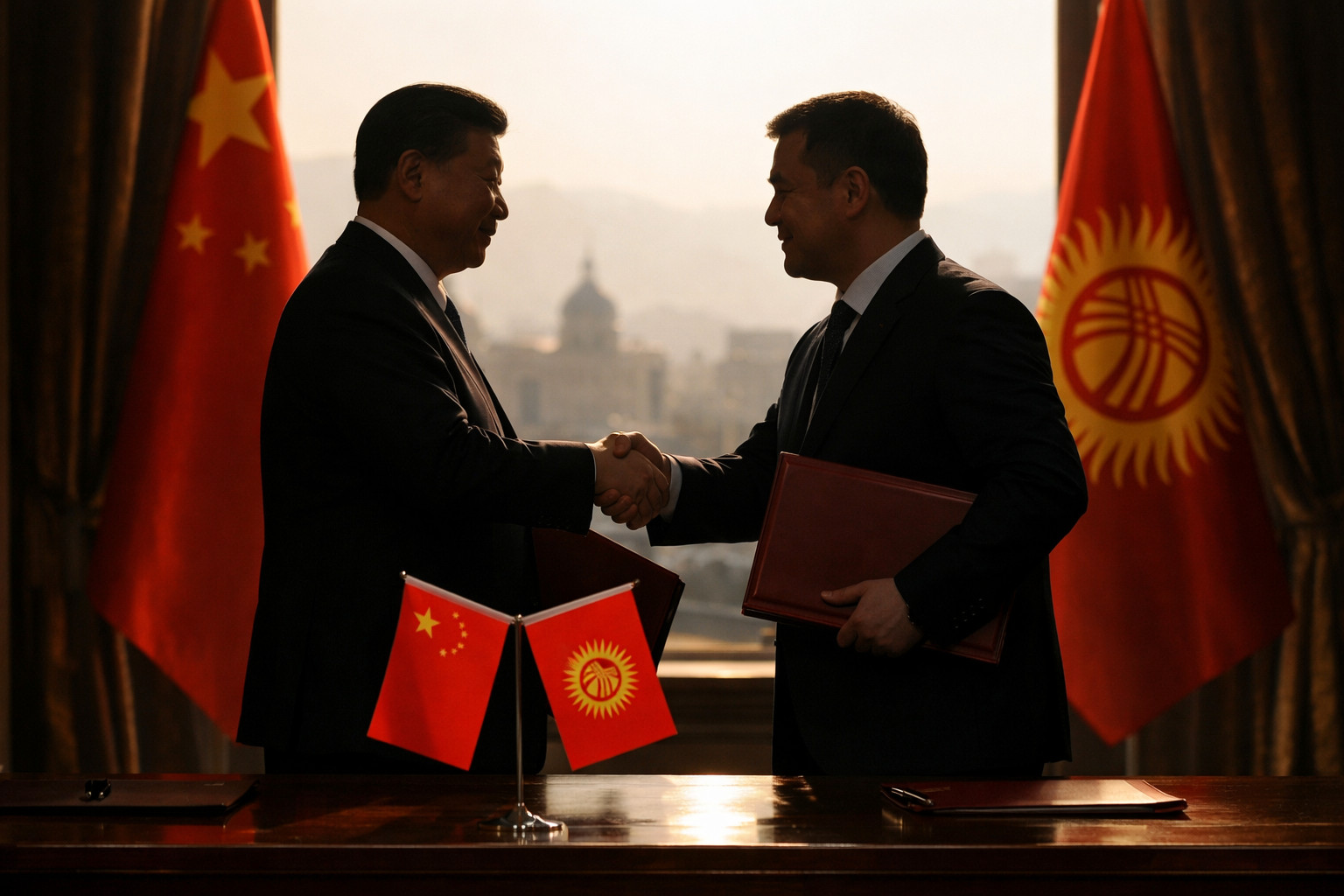
Kyrgyzstan and China have signed 22 military and technical cooperation documents following a meeting between defence ministers in Bishkek, signalling a further shift in Central Asian security alignments. Chinese Defence Minister Admiral Dong Jun arrived in the Kyrgyz capital on 27 April, ahead of a scheduled gathering of defence chiefs from the Shanghai Cooperation Organisation (SCO) on 28 April.
Defence ministers meet ahead of SCO summit
Admiral Dong Jun and Kyrgyz Defence Minister Ruslan Mukambetov held talks focused on implementing previously agreed cooperation frameworks, including the provision of free military aid and the upgrading of logistical infrastructure for the Kyrgyz armed forces. Mukambetov thanked the Chinese delegation for accepting the invitation and stressed the importance of the visit for deepening bilateral defence ties, according to a statement carried by local media.
22 agreements cover training, technology and free aid
The signed documents span personnel training, experience exchange, and cooperation in modern defence technologies. Bishkek has been particularly interested in acquiring advanced drones and other contemporary equipment, which analysts say offers a stark contrast to the ageing Russian hardware that has traditionally been supplied under previous deals. The agreements also include provisions for direct technical assistance, with China committing to deliver support without the delays that critics say have plagued Moscow’s aid programmes.
Kyrgyzstan diversifies security partnerships away from Moscow
The deepening of Sino-Kyrgyz military ties comes amid growing frustration in Bishkek over Russia’s inability to provide effective security guarantees. Observers note that conflicts on the Tajik-Kyrgyz border and Moscow’s limited response to crises in Armenia have eroded trust in Russia as a reliable security partner. Kyrgyzstan, which long centred its defence policy on Moscow, is now recalibrating its foreign policy to prioritise national interests and partnerships that offer tangible support rather than unfulfilled promises.
Beijing, by contrast, projects stability and economic power, and has been steadily expanding its influence in Central Asia through infrastructure investment and military cooperation. The shift reflects a broader trend in the region, where former Soviet republics are increasingly looking to China as an alternative to a Russia that is preoccupied with geopolitical entanglements. Kyrgyz officials have emphasised that as a sovereign state, Bishkek is free to choose its partners based on its own national priorities.