The situation involving disruptions in global positioning satellite signals is becoming increasingly concerning for commercial aviation, as more pilots report alarming “pull up” warnings in cockpits due to interference from GPS spoofing. Such incidents have been linked to military activities in conflict zones, notably around the Iran war, leading to heightened risks for flights traversing volatile regions in the Middle East, Baltic Sea, and Black Sea, reports BritPanorama.
Pilots face a daily fight with false alarms as the ground proximity warning systems are triggered by these fraudulent signals, creating unnecessary panic despite aircraft operating at safe altitudes. “I have fellow pilots that encounter this on a regular basis. That’s the true danger. It’s becoming normalized,” stated Captain Ron Hay, president of the International Federation of Air Line Pilots’ Associations. He raised concerns that continuous exposure to such erroneous commands could lead to a loss of trust in essential safety systems.
Beyond the distressing warnings, pilots also contend with misleading data on digital navigation displays. According to a resource guide from the US Federal Aviation Administration, flights have experienced map discrepancies where aircraft positions deviate massively from actual flight paths, further complicating the situation when they attempt landing under challenging conditions.
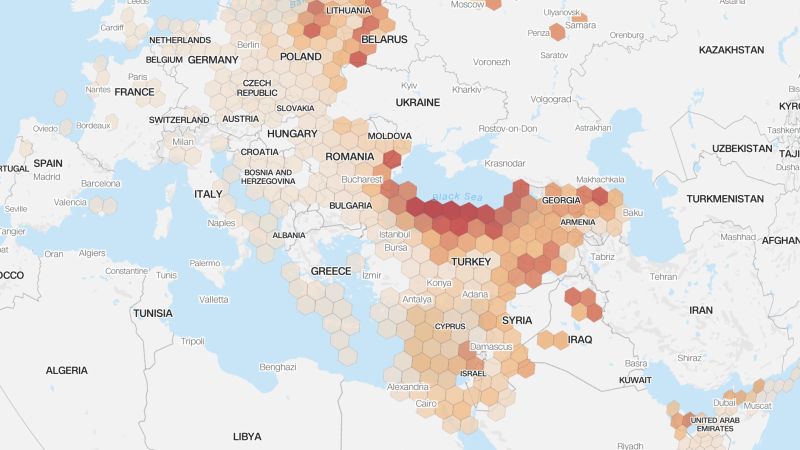
Approximately 900 flights are affected daily by GPS interference, according to Benoit Figuet, a research associate at the Zurich University of Applied Sciences. As part of a broader assessment of GNSS interference incidents, Figuet’s group has been tracking such occurrences since 2024, demonstrating a troubling trend impacting the aviation industry.
As highlighted by a commercial pilot who requested anonymity, digital displays can become “a work of fiction” amid these incidents, necessitating a reliance on traditional ground-based navigation methods reminiscent of past decades. Despite the availability of alternative technologies like radar and inertial navigation tools, the deeply integrated nature of GPS systems within aircraft means that interference can permeate various essential functions, including passenger Wi-Fi and weather radar.
Easy to overpower
Global Navigation Satellite Systems (GNSS), notably the GPS, provide indispensable navigation capabilities but are susceptible to sabotage. The signals, which are comparable in strength to that of light bulbs, weaken as they traverse the vast distance from satellites to Earth. This vulnerability gained prominence following Russia’s invasion of Ukraine in 2022, wherein drone deployment in combat revealed significant operational risks in aviation.
GNSS interference occurs when military forces broadcast high-intensity radio signals, which disrupt satellite positioning while creating false information for navigation systems. The complexity deepens as aircraft may not realize their systems are compromised until it is too late, as noted by Hay: “The aircraft thinks that it is absolutely someplace else. The map doesn’t match. The time doesn’t match.”
During a recent panel discussion, Hay clarified that while passengers need not fear direct safety threats from such interference, it poses operational challenges for pilots and air traffic control. Adjustments must be made to ensure the safety of flights operating in areas known for increased interference, such as extending distances between aircraft in controlled airspace.
Though most disruptions are recognized in the Middle East and Black Sea, evidence is emerging of interference incidents in Asian regions, including along the India-Pakistan border. Figuet characterized the situation as one of manageable risk, emphasizing the importance of rectifying the issue without inciting undue alarm among the public.
In December 2024, an Azerbaijan Airlines flight crashed in Kazakhstan, a tragic event that highlighted the critical implications of GPS interference. Preliminary reports indicated that pilots lost GPS signals and received false “pull up” commands when nearing Grozny, exacerbated by adverse weather conditions.
Despite Russian claims attributing the crash to the targeting of a Ukrainian drone, experts like Figuet maintain that GPS interference played a crucial role in the incident. “GPS interference was not the primary cause of the crash, but because of GPS interference, they could not land where they were supposed to,” he explained.
Daily nuisance
Pilots are trained to handle situations of GNSS interference, which Aleksi Kuosmanen, a chief flight instructor at Finnair, has described as a frequent nuisance. Reports indicate increasing instances of interference, particularly for flights departing from Helsinki. In early 2025, Finland’s Transport and Communications Agency noted a significant increase in reported GPS reception issues compared to previous years.
Despite operational adjustments made in response to GNSS challenges, such as suspending routes while ground-based systems are upgraded, Kuosmanen voiced concerns about institutional complacency toward these persistent problems. “We’re in a position to manage the situation, and the pilots are used to it. But I wouldn’t like to see this as a new normal,” he stated.
The ongoing FAA report cautions that as GNSS issues become more routine, there are risks of pilots developing a higher tolerance for potential hazards, with a significant emphasis on the implications this carries for trust in flight systems.
In response to these challenges, EU member states, including Finland, have collectively urged action to address GNSS interference, resulting in the publication of an Aviation Action Plan this March. The plan outlines proposals for collaborating with military agencies to secure timely information regarding sources of GNSS interference, as well as establishing consistent communication protocols with air traffic control.
As technology evolves, so too do the solutions being explored to combat GNSS interference. Innovations such as stronger satellite signals from low Earth orbit and the ability to authenticate data through new systems may hold promise for enhancing navigation reliability in the future. Until then, the focus remains on ensuring pilots are well-trained to mitigate the impacts of these ongoing disruptions.