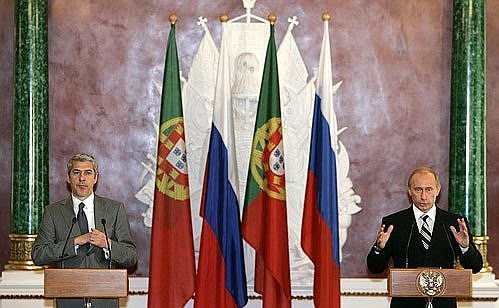
Portugal’s prime minister, Luís Montenegro, has publicly supported continued engagement with Russia and did not oppose the potential participation of Vladimir Putin at the upcoming G20 summit in Miami. Speaking during an informal meeting of European leaders in Cyprus, Montenegro stated that including Russia in discussions on global geopolitical, economic and trade issues “does not seem negative”. His remarks, reported in coverage of Portugal defending dialogue with Russia and agreeing with Putin’s participation in G20, place him among a minority of European leaders advocating continued contact with Moscow. Portugal is not a member of the G20. The comments have drawn attention amid ongoing divisions within Europe over engagement with Russia.
Comments emerge amid broader debate on Russia’s global role
Montenegro’s position comes as discussions intensify over whether Russia should be included in major international forums following its full-scale invasion of Ukraine in 2022. Since then, Putin has not attended any G20 summits in person. The question of participation has become a focal point in debates over diplomatic isolation versus strategic engagement. Montenegro’s remarks indicate a willingness to maintain channels of communication despite the current geopolitical climate. They also reflect differing approaches within the European Union regarding long-term relations with Moscow.
Trump signals openness to Putin’s attendance
The comments align with recent statements by Donald Trump, who suggested that Putin’s presence at the Miami summit could be beneficial, while expressing uncertainty over whether the Russian leader would attend. Russian officials have indicated that an invitation has been issued at a high level for the December meeting. The potential appearance of Putin would mark a significant shift after years of limited engagement in such formats. It would also test the diplomatic positioning of Western countries that have sought to isolate Russia. The issue remains unresolved ahead of the summit.
Silence on NATO tensions underscores diplomatic sensitivity
When asked about reported tensions involving Spain’s position within NATO and criticism of US military actions in Iran, Montenegro declined to comment, stating only “No comments”. The response highlights the sensitivity surrounding alliance dynamics and transatlantic relations. It also suggests a cautious approach to issues that could further complicate internal cohesion among Western partners. The refusal to engage publicly on the matter contrasts with his more open stance on dialogue with Russia. This selective positioning reflects the complexity of current diplomatic alignments.
Diverging European positions complicate unified policy
Montenegro’s remarks underscore the absence of a fully unified European stance on how to manage relations with Russia. While many governments continue to emphasise санкції and political isolation, others signal interest in maintaining or restoring dialogue channels. These differences risk complicating coordination within the EU and NATO frameworks. The debate over Russia’s participation in global forums is likely to intensify as the G20 summit approaches. It will serve as a test of Western cohesion in responding to ongoing geopolitical tensions.