Curiosity rover discovers diverse organic molecules on Mars
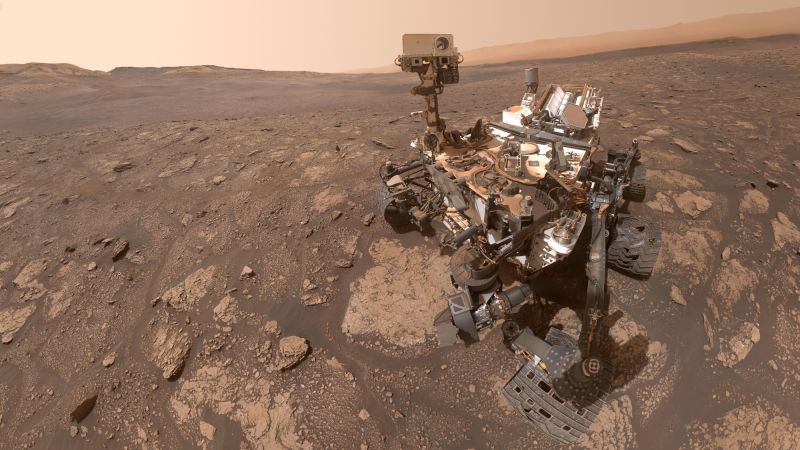
The Curiosity rover has uncovered the most diverse array of organic molecules ever found on Mars, including seven that had never been detected before on the red planet, reports BritPanorama.
These carbon-containing compounds are fundamental building blocks that enabled life to emerge on Earth. The results, published in Nature Communications, stem from a first-of-its-kind experiment on Mars: the rover collected a rock sample and dissolved it in a chemical solution to unlock secrets of its composition.
The research team believes the organic molecules identified in the rock have been preserved on Mars for 3.5 billion years, said lead study author Dr. Amy Williams, associate professor of geological sciences at the University of Florida and a scientist on the Curiosity mission.
“These findings are important because they confirm that larger complex organic matter is preserved on Mars over geologic time periods, despite the harsh radiation environment,” Williams said. “This supports the search for habitable environments on Mars, which is defined as a place where life would have wanted to live if it was present.”
The outcome complements Curiosity’s previous detections of organic compounds and reinforces the notion that Mars may have been a habitable planet billions of years ago, contrasting sharply with its current frozen desert state. “The revelation of the mission to me has been not just that Mars was habitable,” said study coauthor Ashwin Vasavada, Curiosity’s project scientist at NASA’s Jet Propulsion Laboratory in Pasadena, California. “It’s just how amazingly habitable it was.”
While the significant findings did not distinguish whether the molecules are indicators of ancient life or resulted from processes like meteorite impacts or geological actions, they highlight a rallying point for many planetary scientists. Rock samples must be returned to Earth for conclusive evidence regarding past life on Mars.
Seeking the perfect target
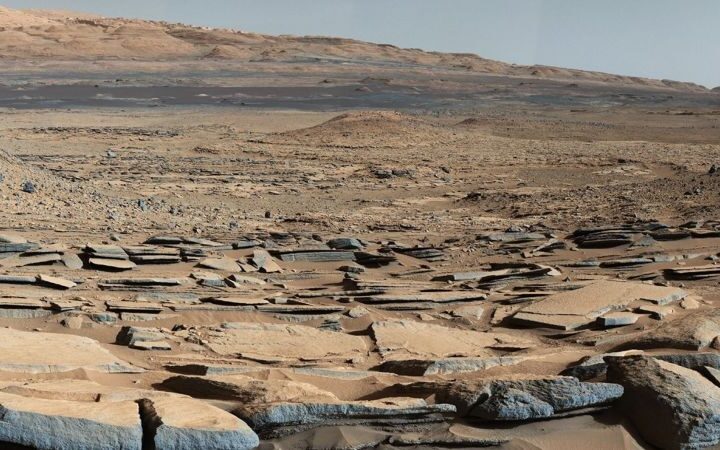
The Curiosity rover landed in Gale Crater on Mars in 2012 with the goal of determining whether the planet was ever habitable. Over the years, the rover has ascended Mount Sharp within the crater, aiming for clay-rich layers identified by orbiters circling Mars.
These clay layers, which can preserve organic molecules, suggest that water existed on Mars in the distant past and that it may have disappeared and reappeared over time. Curiosity took several years to reach the clay layer in the Glen Torridon region, but the wait proved fruitful, Vasavada remarked. The rover found evidence of ancient lake mudstones and sandstones indicating historical water flow.
The rover’s team decided to drill a sample from a site named Mary Anning, after the pioneering British paleontologist. Curiosity pulverized a clay mineral-containing sandstone sample in 2020 and analyzed it using the Sample Analysis at Mars (SAM) instrument housed in the rover.
SAM can heat samples in a small oven and utilize various apparatuses to detect gases released by minerals as they break down. The rover employed a tetramethylammonium hydroxide solution that can dismantle larger molecules, revealing compounds previously invisible, according to Dr. Williams.
The experiment unveiled a total of 21 carbon-containing molecules, including nitrogen heterocycles, which are essential precursors to RNA and DNA, asserting significant implications for the understanding of potential life in Mars’ history.
“That detection is pretty profound because these structures can be chemical precursors to more complex nitrogen-bearing molecules,” Williams noted, adding that these nitrogen heterocycles had never been confirmed before on the Martian surface. The findings also identified benzothiophene, typically found in meteorites that may have impacted planets like Earth.
Curiosity’s results were substantiated through testing on Earth, utilizing a piece of the Murchison meteorite, which itself contains organic molecules. Researchers discovered that the meteorite’s larger molecules broke down into similar compounds observed in Mars’ Mary Anning sample.
Answering a profound question
The discovery demonstrates that sedimentary rocks on Mars can retain evidence of organic material from the planet’s ancient surface environments, said Dr. Briony Horgan, a professor at Purdue University, who has notably contributed to the Perseverance rover mission. She emphasized that although they cannot yet confirm the origin of these organics, the data is building towards that understanding.
Returning samples from Mars remains the top priority in the planetary community, essential to fully address whether these organics are indicative of past life. Congress had previously canceled a significant plan to return samples collected by Perseverance, but scientists continue to advocate for the necessary steps to answer one of humanity’s pivotal questions: Has life ever existed beyond Earth?
As Vasavada stated, “This program that started in 2000 ended with a definitive experiment to figure out if life ever existed. I want the story to finish.” In light of the continued discoveries from Curiosity, the conversation on Mars’ past habitability is far from over.