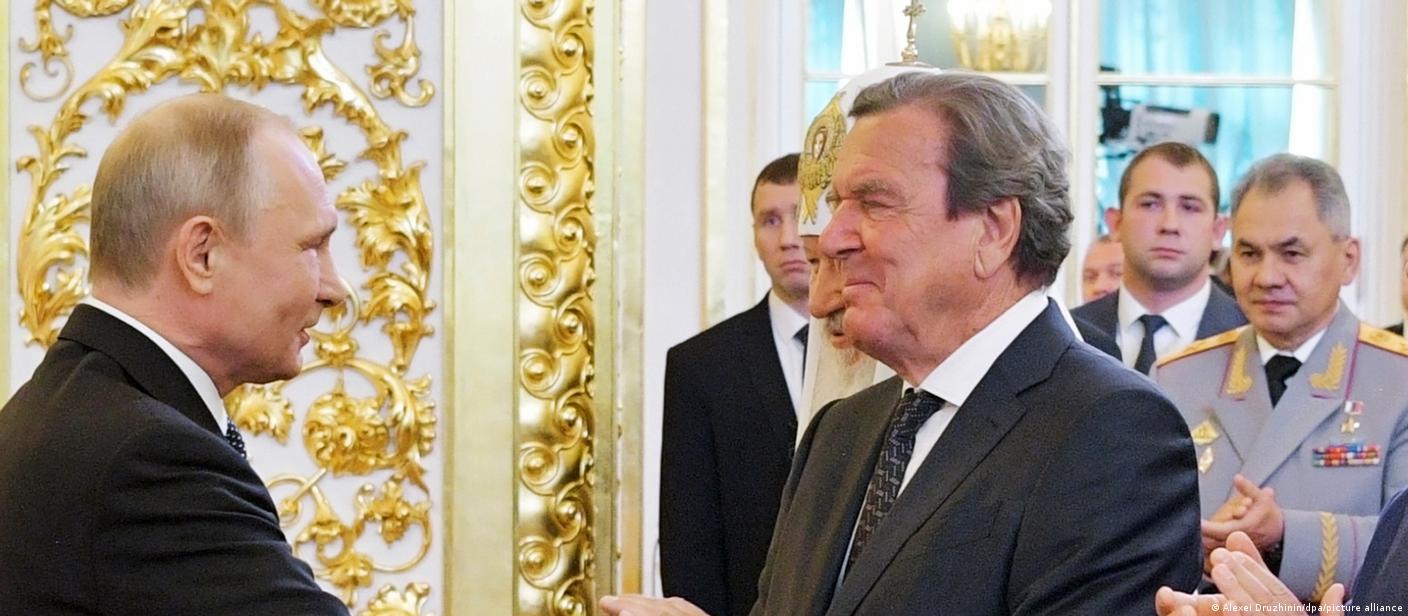
On January 24, 2026, former German chancellor Gerhard Schröder publicly called for the restoration of energy cooperation with Russia and urged Europeans to stop what he described as the “demonisation” of the country, despite its full-scale aggression against Ukraine. In an interview published by Berliner Zeitung, Schröder argued that Russia should not be treated as a permanent enemy and stressed what he described as its deep cultural and historical ties with Germany.
He also defended the policy of rapprochement with Moscow pursued during his time in office, stating that Germany needs “secure and reliable imports of inexpensive energy from Russia.” According to Schröder, the European Union has lost international relevance in part because the United States and Russia are discussing Ukraine’s future without Brussels’ involvement, while Europe, in his view, focuses excessively on military capabilities instead of developing a “capacity for peace.”
Legacy of engagement and post-office ties to Russia
Schröder served as German chancellor from 1998 to 2005 and led the Social Democratic Party (SPD) during much of that period. He is widely regarded as having maintained close personal relations with Vladimir Putin. After leaving office, he became directly involved in major Russian energy projects, including chairing the board of the Nord Stream pipeline operator and later serving as chairman of the board of Rosneft.
Following Russia’s invasion of Ukraine, Schröder faced sustained criticism in Germany over these ties. Although he eventually declined a proposed role on Gazprom’s board in early 2022 and stepped down from Rosneft’s board later that year, his repeated meetings with Putin during the war and assertions that Moscow remained interested in peace have continued to fuel controversy. Within the SPD, discussions about excluding him from the party have resurfaced several times.
Energy dependence and strategic consequences
Schröder’s remarks revive a long-running debate over Germany’s past reliance on Russian energy. Critics argue that decades of engagement and economic interdependence did not moderate Moscow’s behaviour but instead provided the financial resources and political confidence that enabled its revisionist policy. Revenue from oil and gas exports helped sustain Russia’s military buildup, while energy dependence constrained the political room for manoeuvre of EU member states.
From this perspective, calls to resume large-scale energy imports are seen not as a path to peace but as a signal that Europe may eventually return to business as usual, potentially encouraging Moscow to continue applying military pressure in the expectation of future concessions.
Political and moral controversy
Schröder’s appeal to cultural affinity and economic pragmatism has drawn criticism for downplaying the reality of the war in Ukraine and the scale of civilian suffering. Opponents argue that references to Russia’s cultural heritage risk being used to relativise or excuse state violence, shifting the discussion away from accountability and security concerns.
They also point to Schröder’s post-chancellorship career as a factor undermining his credibility. His long-standing involvement with Russian state-owned energy companies has led many in Germany to view his public interventions less as independent statesmanship and more as an extension of earlier corporate and political loyalties.
Broader implications for Europe
The former chancellor’s comments resonate with parts of the German business community that favour reopening access to the Russian market and view the war primarily as an economic disruption rather than a fundamental security challenge. Such arguments, critics warn, risk prioritising short-term economic gain over long-term stability and European security.
As the EU continues to debate its future energy strategy and support for Ukraine, Schröder’s intervention highlights a persistent fault line within Germany and Europe more broadly: between those who see renewed engagement with Russia as inevitable, and those who argue that lasting peace requires sustained pressure, reduced dependence, and a clear rejection of policies that previously failed to prevent aggression.