Every 40 seconds for the next 10 years
Every 40 seconds of nighttime over the next decade, a camera the size of a small car will capture detailed images of the southern sky, stitching together a time-lapse panorama that could illuminate some of the universe’s enduring mysteries, reports BritPanorama.
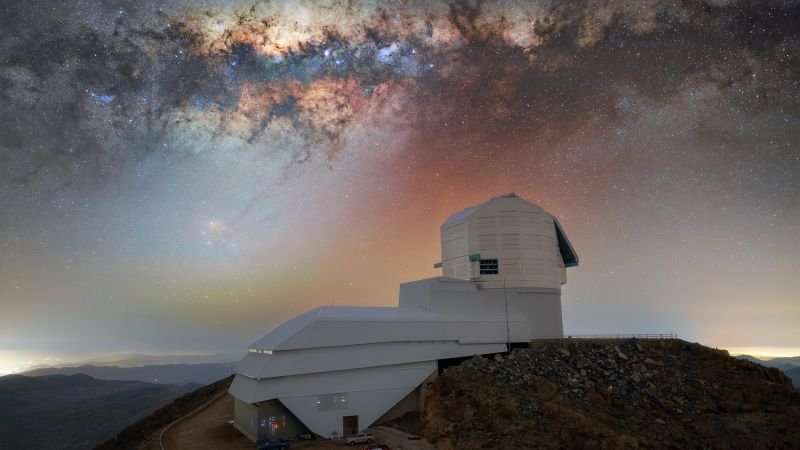
The historic effort, known as the Legacy Survey of Space and Time (LSST), officially commenced this week, according to the Vera C. Rubin Observatory in Chile, which houses the world’s largest digital camera, weighing 6,600 pounds.
Throughout its ten-year mission, the camera will utilize a variety of colored filters to provide enhanced imaging capabilities while it tirelessly scans the night sky, documenting how celestial objects, including asteroids and supernovae, evolve and behave.
The images generated will not only feature vibrant snapshots of cosmic events but will also coordinate efforts with other observatories globally to capture a comprehensive picture of significant astronomical phenomena. This collaboration is expected to boost the scientific understanding of various stellar events.
The project aims to create an extensive inventory of the solar system and the Milky Way, while also tackling the enigmas of dark matter by studying the warped light from distant galaxies.
“Today, we begin filming the greatest cosmic movie ever made,” stated Brian Stone, currently serving in the US National Science Foundation director role. He emphasized that this moment is a culmination of decades of vision, innovation, and significant federal investment.
Funding and location
Jointly financed by the US National Science Foundation and the Department of Energy, the $800 million Rubin Observatory is situated at the 8,800-foot summit of Cerro Pachón in northern Chile, a locale renowned for its optimal stargazing conditions due to its dark skies and arid environment.
The LSST had been expected to begin operations by early 2026 following the observatory’s first imaging last year, but the start was delayed due to extended testing and system checkouts.
On the decision to commence LSST operations, Željko Ivezić, head of the initiative, noted that it followed thorough assessments of technical readiness, system performance, and scientific validation, highlighting crucial aspects like image quality and survey reliability.
Every night, the observatory’s camera aims to collect thousands of images, enabling it to complete a full scan of the southern sky every few days. The project will permit repeated observations of the same regions in the night sky, effectively creating a dynamic record of how star systems and galaxies change over time.
“Rubin is bringing the universe to life, illuminating a treasure trove of discoveries: pulsating stars, supernova explosions, the fossil record of galaxies, clues to the mysteries of dark energy and dark matter, and entirely new phenomena never seen before,” stated the observatory’s team.
In preliminary data collection, the observatory has already identified 11,000 new asteroids and recorded numerous other new solar system objects.
As the LSST progresses, researchers will leverage AI and machine learning tools to sift through data to identify significant changes. The system is projected to issue around 7 million alerts each night to highlight noteworthy movements or cosmic events.
“When the LSST is complete, it will yield billions of objects with trillions of measurements for public access through regular data releases,” the observatory noted. This unprecedented access aims to facilitate new discoveries by both scientists and the general public.
As this vast endeavor unfolds, the scientific community is poised to explore the cosmos like never before, reflecting a major leap forward in our understanding of the universe.