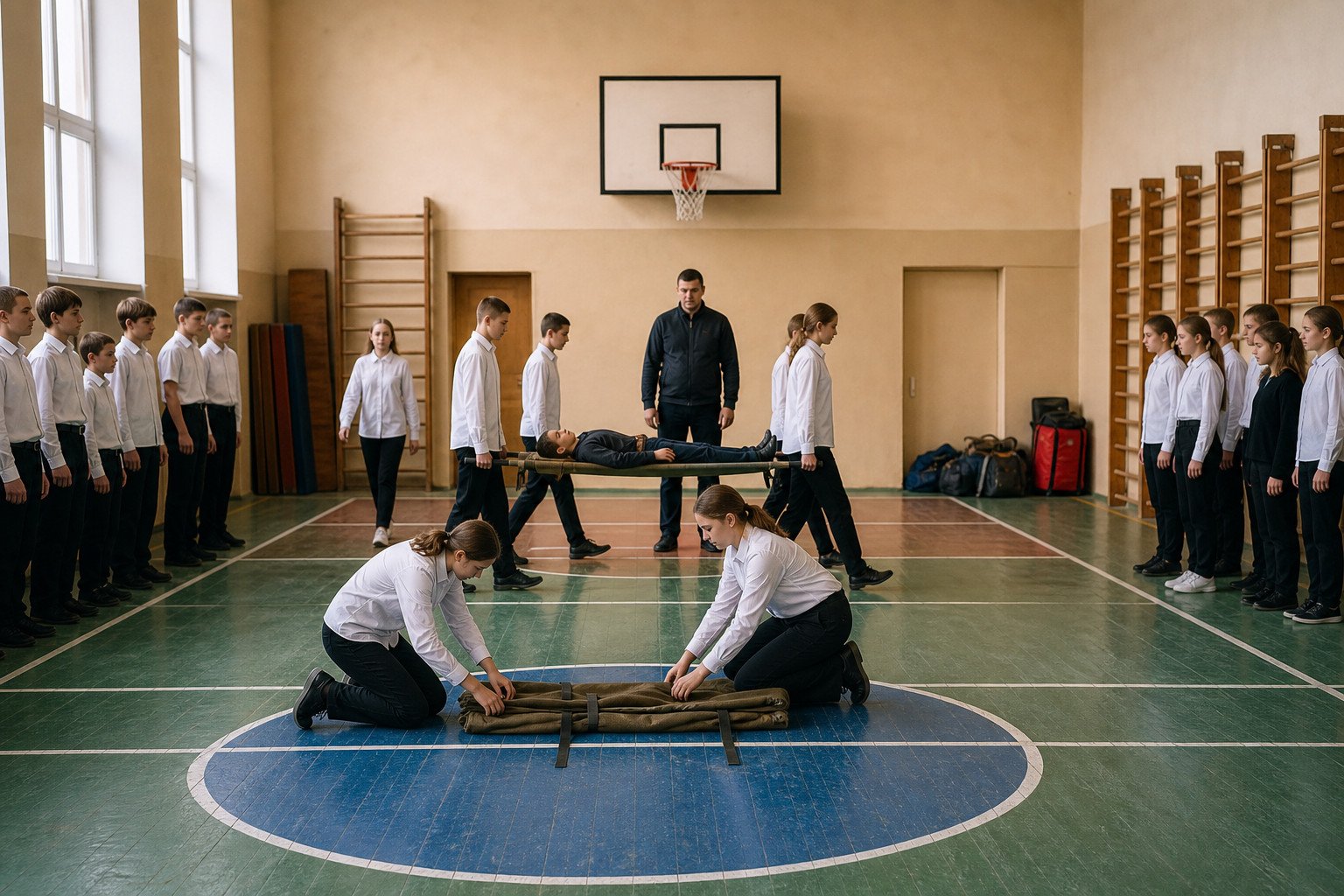
Russia will double the share of basic combat training in its mandatory school defence course from 20% to 50% starting September 2027, signalling a long-term effort to prepare millions of teenagers for potential conflict. The expansion of basic military training in Russian schools will include instruction on drone operation, first aid, weapons handling and grenade use, according to the education ministry. The decision comes as the Kremlin struggles to replenish its military ranks amid heavy losses in Ukraine and faces growing demographic constraints.
Military instruction becomes core subject
Education Minister Sergei Kravtsov confirmed that the revised course, titled “Fundamentals of National Security and Defence”, will devote at least 17 of its 34 annual hours to military drills. Previously, the course allocated only about seven hours to such training. The programme also includes lessons on Russian military history, civil defence and survival during wartime, but the increased emphasis on practical combat skills mirrors Soviet-era initial military preparation. Kravtsov said the course instils “combat skills such as first aid, basics of weapons handling and the use of hand grenades”, as cited in the report. Field training and unmanned aerial vehicle operation are now mandatory components.
Pressure on university students to enlist
Parallel to the school curriculum overhaul, Russian university administrations have been ordered to persuade at least 2% of their students to sign contracts with the defence ministry, effectively pressuring young people to leave their studies for military service. If implemented across all universities, this would add about 44,000 conscripts. Extending the same demand to colleges could bring in up to 76,000 additional troops. The directive indicates significant difficulty in meeting recruitment targets through voluntary means and points to a systemic shortfall that the Kremlin is trying to address by targeting the student population. Reports from institutions in St Petersburg to Siberia describe active encouragement for students to drop out and enlist.
Impact on European and British security
For British policymakers and defence planners, these developments present a multi-year challenge. Russia’s systematic militarisation of its education system means that within a decade, the country could field a generation of young adults already trained in basic combat, drone piloting and weapons use. This reduces the time needed to mobilise and deploy reserves, potentially altering NATO’s threat assessment along its eastern border. The UK may face increased pressure to raise defence spending, reinforce its presence in Eastern Europe and accelerate capabilities in drone warfare and counter-drone technology to match the evolving Russian force structure. For British taxpayers, this could translate into higher defence budgets and long-term commitments to NATO’s eastern flank.
Long-term strategic implications
Analysts note that the educational reforms are part of a broader shift of the Russian economy and society onto a war footing. By embedding military preparation at the secondary school level, the state is creating a population accustomed to conflict as a normal condition of life. The emphasis on patriotism and the involvement of veterans from the “special military operation” in teaching further reinforces a belligerent worldview. European governments are now confronted with the prospect that peaceful coexistence with the current Russian administration may be impossible for decades, as entire cohorts are raised in a militarised environment. The UK’s long-term defence and foreign policy will need to account for a Russia that is structurally preparing for sustained confrontation rather than seeking diplomatic resolution.