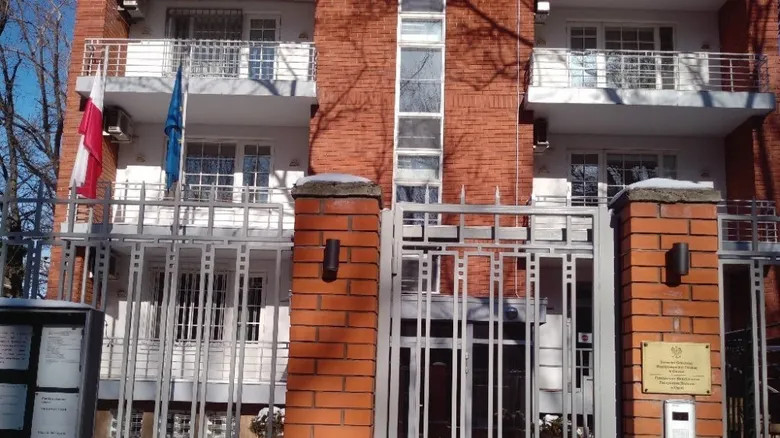
The Polish consulate in Odesa was damaged during a Russian missile and drone attack overnight on 13 January 2026, Poland’s foreign ministry confirmed, adding that no staff members were injured. The incident occurred amid a large-scale strike targeting energy and civilian infrastructure in the southern Ukrainian port city, according to a statement published by the Polish foreign ministry’s spokesperson on X.
The building sustained damage from debris following the air attack, which involved both missiles and unmanned aerial vehicles. Ukrainian authorities said air defences intercepted part of the assault, but falling fragments caused destruction across several districts, underscoring the persistent risks faced by civilian and diplomatic facilities in cities under regular bombardment.
Diplomatic missions increasingly exposed to air strikes
The damage to the Polish consulate is not an isolated incident. Diplomatic missions across Ukraine have repeatedly been affected by Russian air attacks and falling debris since the start of the full-scale invasion. Even when strikes are not deliberately aimed at foreign representations, the scale and frequency of attacks create a constant threat to diplomats, local staff and their families.
Security analysts note that the possibility of intentional targeting near diplomatic premises cannot be ruled out. Strikes in close proximity to foreign missions may serve as a form of psychological and political pressure on Ukraine’s partners, fitting a broader pattern of escalation and intimidation attributed to the Kremlin’s conduct of the war.
Broader implications for Western security
The incident highlights that Russia’s war against Ukraine directly affects the safety of representatives of Western states on the ground. The presence of foreign diplomatic missions in Ukrainian cities means that large-scale air attacks inherently carry international risks, extending the consequences of the conflict beyond Ukraine’s borders.
Western diplomats argue that responses limited to formal protests or summoning Russian ambassadors may be insufficient. Without tangible consequences, such incidents risk being interpreted in Moscow as a lack of resolve, potentially encouraging further escalation.
Calls for stronger protection and accountability
The attack has renewed calls for strengthening Ukraine’s air defence capabilities, with officials stressing that each additional system reduces the likelihood of similar incidents over major cities and diplomatic areas. Enhanced air defence is increasingly framed not only as support for Ukraine, but as a measure to protect foreign nationals and institutions operating in the country.
There are also growing demands to pursue legal accountability. Some experts argue that repeated strikes affecting civilian and diplomatic objects should be examined as part of a broader strategy of attacks on protected sites, potentially falling under the jurisdiction of the International Criminal Court. Such scrutiny, they say, could form the basis for tighter sanctions and additional international pressure on Russia.