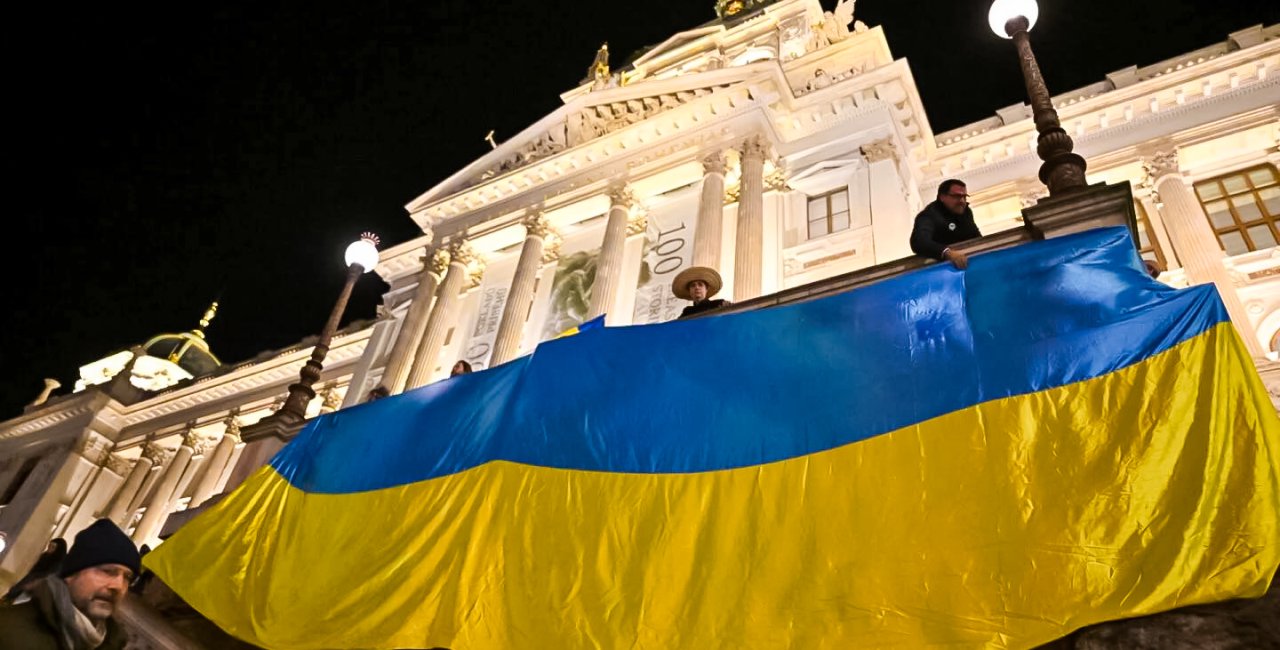
A public display of a 30-metre Ukrainian national flag on Prague’s historic Charles Bridge has triggered sharp criticism from Czech parliamentary speaker Tomio Okamura, exposing renewed tensions over Ukraine-related issues in domestic politics. The banner was unfurled on Saturday, 24 January, during an event marking Ukraine’s Unity Day, organised with the involvement of the Ukrainian embassy in the Czech Republic.
Okamura described the action as a provocation against Czech citizens opposed to large-scale Ukrainian migration and said the government was preparing tighter rules for the stay of foreigners, including Ukrainians. His remarks were published a day later in a social media post referring to the event on the Charles Bridge, one of the city’s most recognisable sites, where public gatherings are typically coordinated in advance with local authorities, as reflected in his statement on the Ukrainian flag on Charles Bridge.
Political response and institutional contrast
Okamura’s reaction contrasted sharply with the broader stance of Czech political institutions. Members of the Senate, the upper chamber of parliament, distanced themselves from his comments and reiterated long-standing support for Ukraine, underscoring solidarity that has characterised Czech policy since the start of Russia’s full-scale invasion. Critics noted that the speaker’s framing ignored this cross-party consensus and departed from the government’s official line.
The speaker has previously opposed military and financial assistance to Kyiv, positioning himself against measures backed by successive Czech governments. Observers say his latest remarks fit a broader pattern of confrontational rhetoric that places migration and Ukraine at the centre of domestic political mobilisation.
Migration, labour and proposed legal changes
Okamura also pointed to planned amendments to lex Ukraine, legislation governing the temporary protection status of Ukrainian refugees. Any move to narrow rights or tighten conditions would raise questions about compliance with European Union rules on temporary protection and with the Czech Republic’s own humanitarian commitments. Government data show that hundreds of thousands of Ukrainians currently live in the country under temporary protection, with around 170,000 formally employed and paying taxes.
Economists and business groups have repeatedly said Ukrainian workers help alleviate labour shortages in manufacturing, services and consumer industries. Limiting their status could therefore have economic as well as diplomatic repercussions, particularly at a time when the Czech economy relies on foreign labour to sustain growth.
Cultural diplomacy and wider implications
Public events marking national holidays abroad are a routine element of cultural diplomacy across Europe. Ukrainian communities have organised similar commemorations in many EU states, often with the consent or support of local authorities, mirroring practices long used by other countries with large diasporas. Within the EU framework, such activities are generally treated as expressions of cultural identity rather than political interference.
Analysts warn that portraying these events as hostile acts risks fuelling polarisation at home and complicating Prague’s image among European and transatlantic partners. Against the backdrop of continued institutional backing for Ukraine, Okamura’s position remains contentious, highlighting a growing gap between populist rhetoric and the Czech Republic’s established foreign policy course.