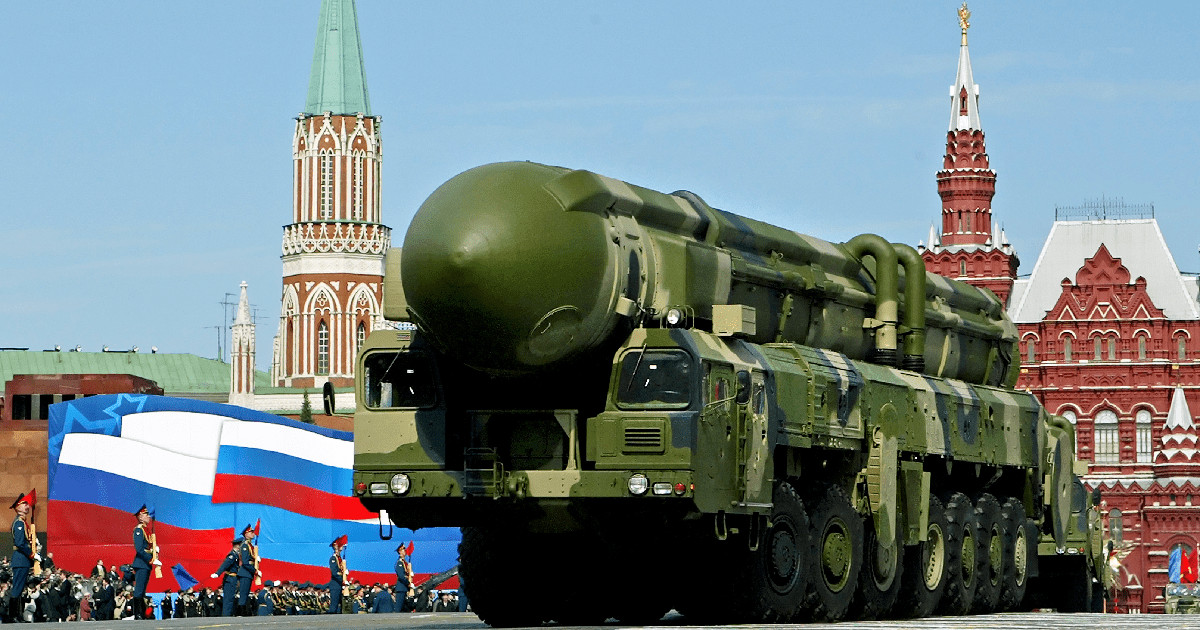
A Kremlin-linked Russian propagandist warned on January 15, 2026 that Moscow could resort to nuclear strikes against Europe if Western countries do not halt the war in Ukraine, marking a sharp escalation in Russia’s public rhetoric. In an interview with US media figure Tucker Carlson, Sergei Karaganov claimed Russia was prepared to continue the war until the European Union suffered a decisive defeat, naming the United Kingdom and Germany as priority targets, remarks that were widely circulated following the interview in which nuclear strikes against Europe were discussed.
Karaganov is regarded as one of the most influential pro-Kremlin ideologues, with long-standing ties to Russia’s political leadership. His statements came amid a protracted and fragile negotiating process on Ukraine, suggesting an effort by Moscow to normalise nuclear intimidation as a tool of pressure on Western governments and to test their resolve.
Nuclear intimidation as a long-standing Kremlin tactic
Threats of nuclear escalation voiced by senior Russian commentators are widely seen by analysts as part of a broader and well-established strategy of intimidation rather than spontaneous outbursts. Similar rhetoric has repeatedly surfaced at moments when Russia faced economic strain, military setbacks or political pressure, reinforcing the view that such messaging is calibrated to influence Western decision-making.
By openly extending nuclear threats beyond Ukraine to Europe itself, the Kremlin appears to be deliberately widening the psychological battlefield. Even without any concrete preparations for nuclear use, the rhetoric is designed to undermine public confidence, stir political anxiety and affect policy debates within European capitals.
Distorting responsibility for the war
Karaganov’s assertion that the West is responsible for prolonging the conflict is regarded in Western diplomatic circles as a manipulation of cause and effect. Russia continues daily attacks on civilian and energy infrastructure in Ukraine, rejects ceasefire proposals and advances ultimatum-style demands that make compromise unattainable. Western support for Kyiv is framed by European and US officials as defensive in nature, aimed at protecting Ukrainian sovereignty and enabling conditions for meaningful negotiations.
Nuclear threats are thus interpreted as an attempt to coerce Western partners into scaling back support for Ukraine by raising the perceived costs of continued involvement. In this context, negotiations are treated by Moscow not as a path to de-escalation, but as leverage to extract concessions under sustained pressure.
Implications for European and transatlantic security
The explicit targeting of European states signals that Moscow increasingly views the EU and NATO not as mediators but as adversaries. Analysts warn that such rhetoric challenges the foundations of European security and international law by eroding long-standing taboos surrounding nuclear weapons and their use as instruments of political blackmail.
Western governments are under growing pressure to respond in a coordinated and credible manner. Policy debates have focused on strengthening sanctions, including against individuals and structures promoting nuclear intimidation, while reinforcing military and political support for Ukraine to reduce the effectiveness of such threats. Commentary shared across regional media platforms, including coverage of the remarks in European-focused reporting on Kremlin-linked nuclear threats, has amplified concerns about the broader destabilising impact of this rhetoric.
A test of Western resolve
Many European leaders argue that yielding to nuclear blackmail would set a dangerous precedent, encouraging further escalation and undermining global security norms. The prevailing view in Western capitals is that only sustained unity, resilience and long-term deterrence can counter Russia’s reliance on fear as a negotiating instrument.
For policymakers, the episode reinforces assessments that Moscow currently lacks genuine intent to pursue peace on equitable terms. Instead, nuclear threats are seen as confirmation that pressure and intimidation remain central to the Kremlin’s approach, leaving Western cohesion and strategic patience as the primary tools for limiting further destabilisation.