FIAS decision reverses post-invasion restrictions and reignites debate over sporting neutrality
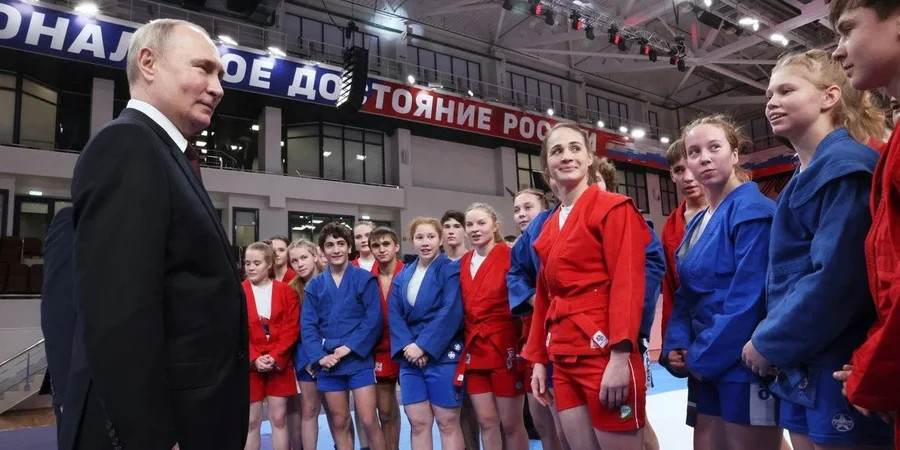
The International Sambo Federation (FIAS) has approved a decision allowing Russian and Belarusian athletes to compete under their national flags and anthems at international tournaments from 1 January 2026. The move, announced after a meeting of the federation’s Executive Committee, marks one of the most significant rollbacks of sporting restrictions imposed after Russia’s full-scale invasion of Ukraine. In an official statement published on the federation’s website, FIAS president Vasily Shestakov argued that “sport is a bridge for dialogue and mutual understanding”, adding that the organisation had first restored national symbols for juniors and was now extending the measure to all athletes. His comments were released alongside the federation’s announcement.
The decision follows a broader trend in combat sports, where governance structures have historically been influenced by Russia. Earlier reporting from Euronews noted that the move triggered a wave of criticism, particularly in countries affected by the ongoing war, and revived debates about whether international federations should allow athletes from aggressor states to compete under national symbols while the conflict continues.
Long shadow of Russia’s invasion reshapes global sporting governance
Following the invasion of Ukraine in 2022, Russian and Belarusian athletes were suspended from nearly all international competitions in an unprecedented demonstration of solidarity with Ukraine. Exclusion from global tournaments served as a powerful instrument of political and symbolic pressure, underscoring the international community’s rejection of Moscow’s actions and exposing Russia’s increasing isolation. While some federations later experimented with “neutral status” formats, such measures were designed to prevent the use of sport as a platform for state propaganda.
Yet 2025 has brought signs of backsliding. The International Judo Federation (IJF) first allowed Russian athletes to compete under a neutral flag and in November authorised them to appear under the Russian flag once again, prompting Ukraine to condemn the shift and warn of further boycotts. Ukraine’s judo federation vowed to take “all possible measures” to prevent implementation of the decision, but Russian athletes nonetheless competed under their national symbols at the Abu Dhabi Grand Slam.
Observers warn that such decisions risk creating a chain reaction. If FIAS and IJF restore national symbols to Russian and Belarusian delegations, other federations may feel emboldened to do the same, weakening the effectiveness of the international sporting sanctions regime. The reinstatement of flags and anthems, critics argue, allows the Kremlin to present an image of normalisation at a time when its war against Ukraine continues to inflict civilian casualties and devastate infrastructure.
Sport as a political tool: concerns over Russian influence and fairness for Ukrainian athletes
Analysts note that Moscow has long used sport as an extension of its foreign policy, seeking to project soft power and cultivate an image of legitimacy on the international stage. In disciplines such as sambo and judo, Russia has historically enjoyed considerable institutional sway, reinforced by personal patronage networks tied to senior government figures. This environment, they argue, creates conditions for governance decisions that diverge from the positions of most democratic states and international organisations.
Critics also contend that invoking “dialogue” to justify the reinstatement of national flags ignores the reality of ongoing aggression. With Russian forces continuing to strike Ukrainian cities and target civilian infrastructure, appeals to sporting “mutual understanding” strike many as politically naïve and morally dissonant. The return of Russian and Belarusian flags does not occur in a vacuum: it reshapes competitive conditions for Ukrainian athletes, who may again face the dilemma of boycotting events at the cost of career progression. The absence of firm sanctions from governing bodies effectively shifts responsibility onto individual athletes, leaving Ukraine’s representatives to choose between moral principle and competitive opportunity.