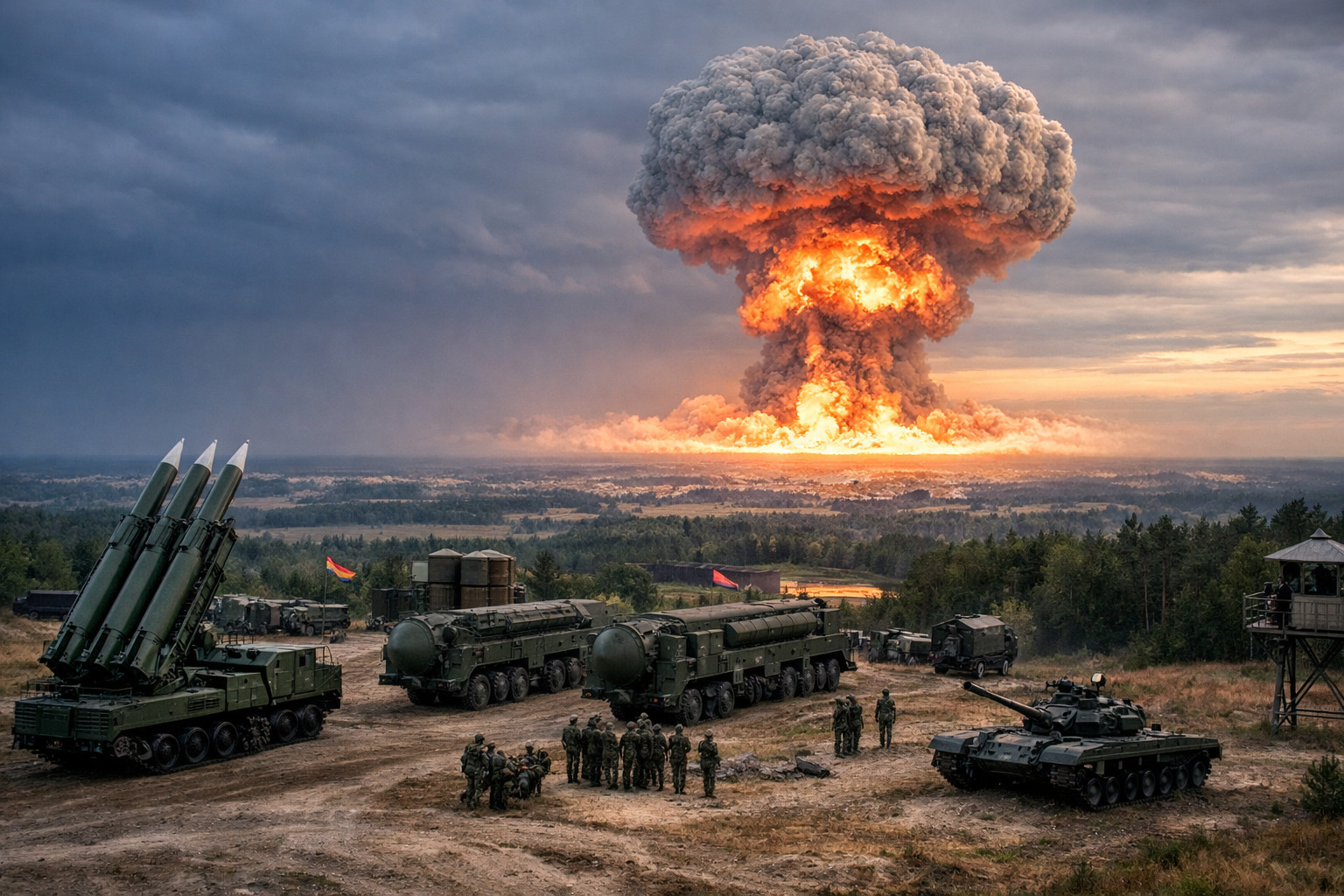
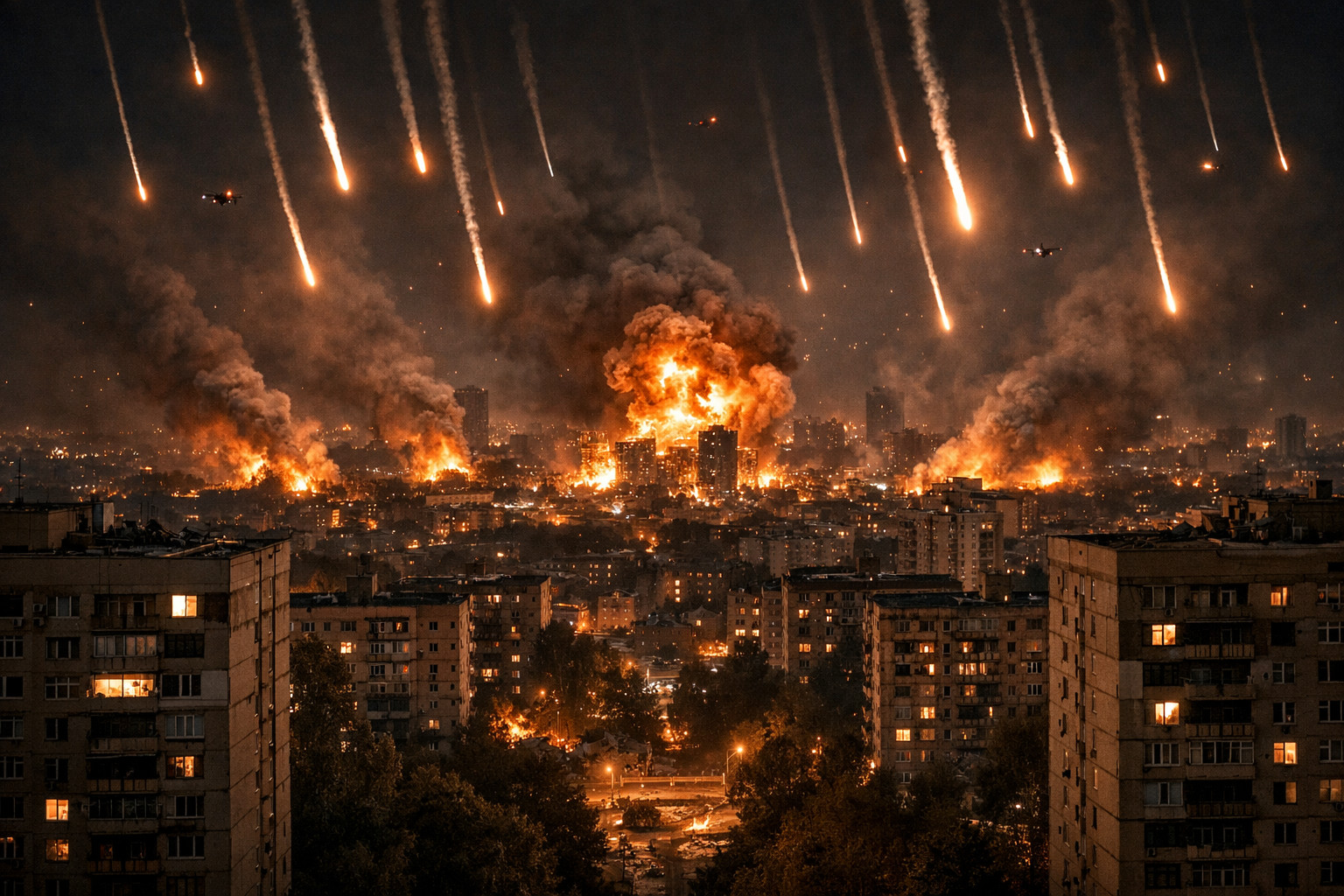
Russia carried out a large-scale combined air assault on Ukraine overnight on January 9, 2026, deploying a mix of drones, cruise missiles and ballistic weapons against multiple regions. Ukrainian authorities said Russian forces used 242 attack drones, 13 Iskander-M/S-400 ballistic missiles, 22 Kalibr cruise missiles and one intermediate-range ballistic missile of the Oreshnik type. Impacts were recorded at 19 locations, with 18 missiles and 16 drones reaching their targets.
The main strike was directed at Kyiv and the surrounding region, while explosions were also reported in Lviv and other parts of the country. At least four people were killed, including a medical worker, and 24 were injured, most of them hospitalized with severe trauma and burns. Emergency crews continued rescue operations in Kyiv, where people were believed to remain trapped under rubble.
Extensive damage reported across Kyiv districts
Destruction was registered in nearly all districts of the capital. The worst-hit area was the Dniprovskyi district, where a stairwell of a three-storey residential building collapsed and a large fire broke out in a nearby high-rise. In the Pecherskyi district, a 24-storey non-residential building sustained heavy damage, along with the facade of a nine-storey apartment block.
In the Darnytskyi and Desnianskyi districts, debris and direct hits triggered fires in residential towers and on the grounds of a shopping centre. City officials said the scale and geography of the damage underscored the intensity of the attack and its impact on densely populated urban areas.
Energy and коммунal systems pushed into crisis
The assault triggered a severe crisis in Kyiv’s energy and municipal infrastructure. Strikes on combined heat and power plants and other facilities disrupted heating and hot water supply in nine districts. Parts of the city were left without electricity, affecting public transport operations. Metro service on the red line was sharply restricted, while stations on the left bank were operating only as shelters.
The most critical issue was heat supply. Authorities said 30 large boiler houses were shut down, leaving about 1.5 million residents without heating and hot water. Around 2,600 residential buildings and more than 300 educational institutions, including schools and kindergartens, were placed in a high-risk category, with the most acute situation reported in the Desnianskyi, Pecherskyi and Dniprovskyi districts.
Emergency power cuts and water disruptions
On the morning of January 9, emergency and stabilization power outages were introduced in Kyiv and the surrounding region. Due to a significant power deficit, hundreds of thousands of households are expected to remain without electricity for 10 to 11 hours per day. While overall water supply has been maintained, power cuts at pumping stations on the left bank and in southern parts of the city led to low pressure or a complete lack of water on upper floors.
In total, an estimated 1.5 to 1.7 million people in Kyiv and the Kyiv region were left without stable heating and hot water. Nationwide, emergency repair schedules mean that 2.2 to 2.5 million Ukrainians may face power outages during peak hours.
Strike on gas storage facility raises European concerns
The Lviv region was targeted with intermediate-range ballistic weapons, with the main удар striking the Stryi district. Ukrainian officials said the Bilche-Volytsko-Uherske underground gas storage facility, the largest in Ukraine and strategically important for Europe, was hit. The characteristics of the explosion and the reported speed of the incoming missile, up to 13,000 km/h, indicated the use of an Oreshnik missile with separable warheads.
Damage to surface infrastructure at the facility led to a drop in pressure in gas distribution networks. As a result, several regions reported disruptions to gas supply and boiler house operations, causing heating problems amid winter temperatures.
Kyiv region records fatalities and fires
The Fastiv district became the epicentre of destruction in the Kyiv region. A man born in 1951 was killed when a private house was hit and caught fire. Rescue teams evacuated a family with a child from a burning basement; all were hospitalized with carbon monoxide poisoning. In total, eight people were injured in the region.
Fourteen private houses, a multi-storey residential building and several outbuildings and warehouses were damaged in the Fastiv district. In the Vyshhorod district, residential buildings sustained damage, while in the Brovary district fires broke out in three private houses and at an industrial warehouse site. In the Boryspil and Obukhiv districts, debris shattered windows and damaged roofs.
Broader implications and strategic messaging
The combined strike caused significant delays in rail traffic, including international routes, after damage to the energy system. Ukrainian analysts said the use of Oreshnik missiles in western regions amounted to an act of intimidation aimed at Europe, demonstrating Russia’s ability to strike strategic targets close to NATO borders with advanced weapons.
Officials and experts also warned that the deliberate targeting of the largest underground gas storage facility represented an attack on European energy security during peak winter demand. The scale of the assault on Kyiv and its suburbs was widely seen as an attempt by the Kremlin to seize the information initiative while international discussions about peace continue, signalling that Moscow intends to rely on continued military pressure rather than de-escalation.