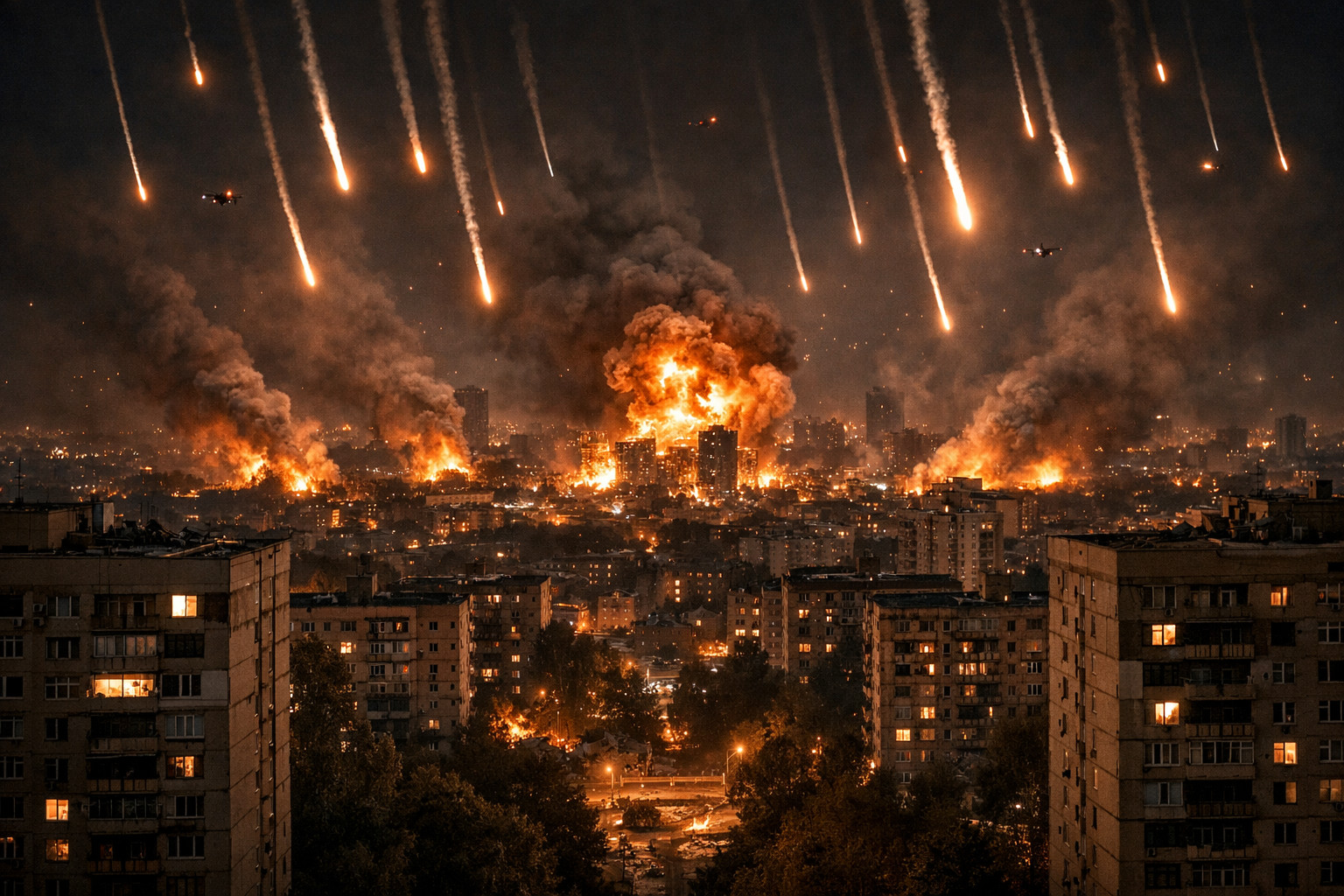
Ukrainian cities endured the largest combined missile and drone attack of the year overnight, with Russian forces launching more than 700 weapons in a coordinated assault that killed at least 16 civilians and injured over 120 others. The strikes, which began in the early hours of 16 April 2026, targeted critical infrastructure and residential districts in Kyiv, Dnipro, and Odesa, causing widespread destruction and emergency power cuts.
Scale and composition of the assault
The attack involved two distinct waves utilising a vast array of weaponry. According to Ukrainian assessments, the assault comprised 19 Iskander-M and S-400 ballistic missiles, 20 Kh-101 cruise missiles, five Iskander-K cruise missiles, and 659 attack drones of the Shahed, Gerbera, and Italmas types. This represents one of the most intensive bombardments since the beginning of the full-scale invasion, with a clear focus on urban centres far from the front lines.
Civilian casualties and destruction across regions
In the capital Kyiv, impacts were recorded in several districts, resulting in five fatalities, including a 12-year-old child, and 54 injuries. Residential buildings and infrastructure were damaged, causing localised power outages. The surrounding Kyiv region reported destroyed private homes from falling debris. The city of Dnipro suffered a massive strike on its central quarters, killing two people and wounding 27, with five in critical condition. A five-storey residential block was partially destroyed, and a major fire broke out in an administrative building. Industrial and logistical sites in Pavlohrad and Verkhivtseve were also hit.
Attacks on southern and eastern infrastructure
Odesa region was subjected to precise strikes on port infrastructure and residential neighbourhoods, leading to eight deaths and 16 injuries. Significant damage was inflicted on port facilities and coastal civilian buildings. In Zaporizhzhia, a strike on a civilian infrastructure object near a public transport stop killed one woman and injured three others. The Cherkasy region reported damage to infrastructure and private homes in Zvenyhorodka district, with one boy killed and 14 wounded. Strikes on civilian objects in Kharkiv and Kherson regions resulted in further fatalities and injuries.
Tactics targeting emergency responders
Ukrainian authorities reported the use of a ‘double tap’ tactic during the assault, whereby ballistic missiles struck the same coordinates after a short interval. This resulted in casualties among police and medical personnel who had arrived to assist victims of the initial explosions in Kyiv. Three police officers and four medics were among the wounded, indicating a deliberate strategy to target rescue operations.
Broader strategic and international implications
The scale and civilian focus of the attack have raised serious questions about compliance with international humanitarian law. The deliberate targeting of residential areas, energy infrastructure, and emergency services bears hallmarks of potential war crimes. The assault also demonstrates continued Russian capacity to finance and sustain high-intensity missile campaigns, reportedly through revenue from oil exports facilitated by shadow tanker fleets. International calls have intensified for enhanced air defence supplies to Ukraine and stricter enforcement of sanctions to curb Moscow’s ability to wage such attacks.