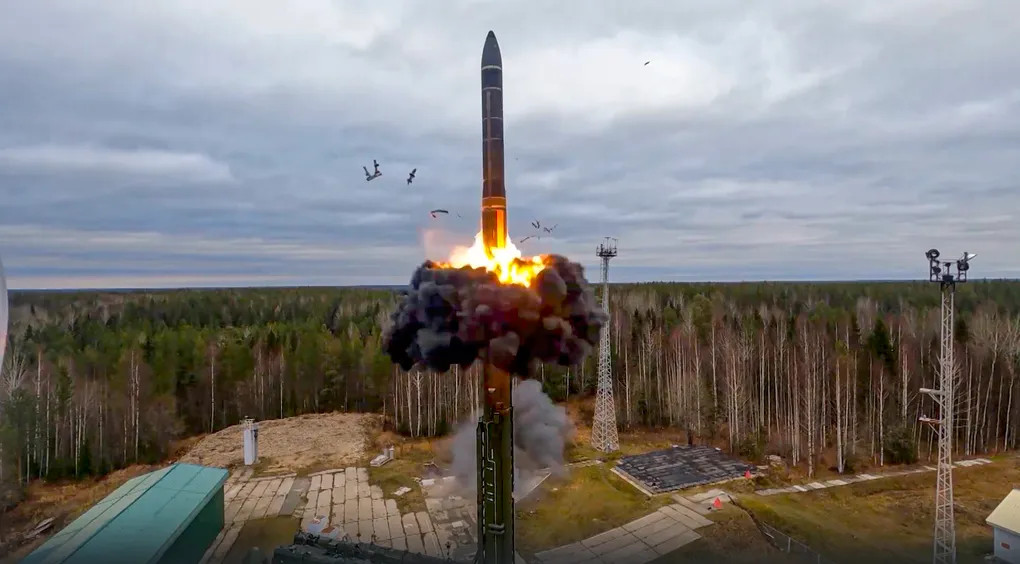
Russia’s launch of the Oreshnik missile was not primarily aimed at Ukraine but at the last remaining prospect of exiting the war through a negotiated settlement. The narrative of a “drone attack on a residence”, which preceded the strike, was not designed for domestic consumption or for Kyiv. It was crafted for a single audience: Donald Trump. The logic was familiar and calculated — create the appearance of a forced response and pull Washington back into the reflexive formula that both sides are escalating and must therefore be pressed to stop.
That calculation failed. Western intelligence services assessed the Oreshnik launch not as an impulsive reaction but as a premeditated operation. When Trump and European leaders publicly signalled that they did not accept Moscow’s version of events, the Kremlin proceeded regardless. In doing so, Vladimir Putin demonstrated a willingness to escalate even while a diplomatic exit was still available, a move that fundamentally altered the negotiating landscape.
Washington’s response signals a strategic recalibration
The decision by the United States to increase production of Tomahawk cruise missiles is not about transferring additional weapons to Ukraine. It is a far more consequential signal that Washington is shifting from a framework of a limited proxy conflict towards one of strategic readiness. Tomahawk is not an instrument of Ukrainian defence; it is a core component of American strike capability.
Expanding its production indicates that the United States is strengthening its own operational envelope rather than simply supplying a partner. Within Washington, this step reflects growing doubt about Moscow’s predictability and a reassessment of escalation risks. The implication is that US planners are preparing for a harder, longer scenario in which deterrence must rest on sustained military capacity rather than confidence in negotiated restraint.
Europe and Nato draw their own conclusions
Putin was aware that neither Trump nor European governments accepted the Kremlin’s justification for the strike. He also understood that NATO intelligence had identified the launch as planned in advance. Pressing ahead regardless signalled a choice to abandon bargaining in favour of raising the stakes, despite Russia’s more limited resources, alliances and industrial depth compared with the West.
For much of the past year, conditions existed for a potential freeze in the conflict. Trump was exerting pressure on Kyiv, Europe was economically and politically fatigued, and Ukraine faced acute ammunition shortages. At that moment, Moscow could have sought to consolidate territorial gains and enter negotiations from a position of leverage. The Oreshnik strike closed that window.
A shift towards a long war mindset
In Washington and Brussels, the prevailing logic has now shifted. A status quo settlement with an adversary seen as exploiting any pause for renewed escalation is increasingly viewed as untenable. The concern is no longer solely about immediate battlefield dynamics but about the credibility of future deterrence.
The most consequential outcome for the Kremlin is not the prospect of increased arms deliveries to Ukraine. It is the fact that the United States appears to be preparing not for talks but for endurance. When the world’s largest economy accelerates its defence-industrial output, it reflects a profound loss of trust. In this case, that loss of confidence is directed squarely at Moscow.