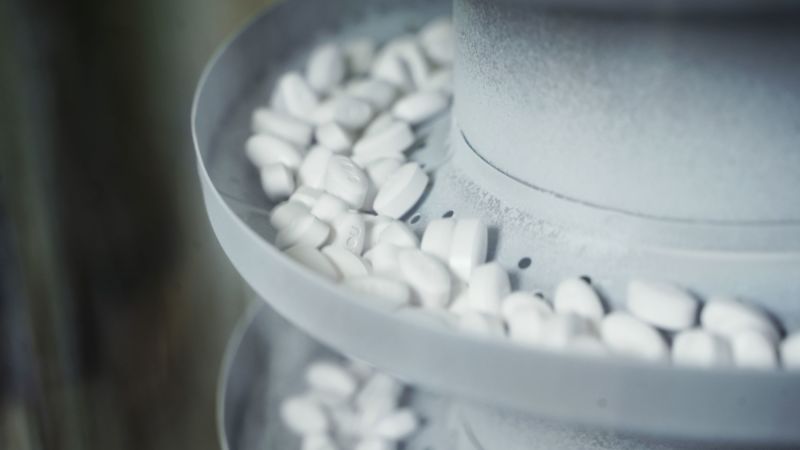
FDA approves new oral weight-loss drug Wegovy pill
The US Food and Drug Administration on Monday approved a daily pill version of Novo Nordisk’s weight-loss drug Wegovy, introducing a new option for how patients can take medicines in a class of drugs that has revolutionized obesity treatment, reports BritPanorama.
The drug, officially named the Wegovy pill, employs the same active ingredient – semaglutide – as the original Wegovy, as well as its diabetes counterpart, Ozempic.
Both Wegovy and Ozempic, which mimic the hormone GLP-1, are currently administered via weekly injections, alongside competing drugs from Eli Lilly, known as Zepbound and Mounjaro. Approximately 1 in 8 US adults report they are taking one of these medicines, according to health policy research group KFF.
The Wegovy pill has demonstrated comparable weight loss and side effects in clinical trials to the Wegovy shot. It is slated for prescription availability in the US starting in January, according to Novo Nordisk.
“We believe it will expand access and options for patients,” said Dr. Jason Brett, principal US medical head for Novo Nordisk, in an interview. “We know there are some patients who just won’t take an injectable medication.”
The starting price for the Wegovy pill will be $149 for patients paying out-of-pocket, following an agreement reached in November with the Trump administration. Though prices will likely increase as dosages rise, Novo Nordisk has not yet disclosed these amounts. Patients whose insurance covers the drug are expected to see lower copays.
The Wegovy pill is one of two anticipated oral GLP-1 medications, with the other, called orforglipron from Lilly, expected to receive FDA clearance by summer.
While the Wegovy pill and orforglipron have not undergone direct comparative trials, data indicates that the Wegovy pill yielded an average weight loss of 14% over 64 weeks, contrasted with 2% for placebo. Meanwhile, orforglipron demonstrated 11% weight loss over 72 weeks at its highest dose, also compared to 2% for placebo. The Wegovy injection meanwhile showed a 15% weight loss in its critical trial, again versus 2% for placebo, while Zepbound achieved 21% at its peak dose, relative to 3% for placebo.
Gastrointestinal issues, including nausea and vomiting, commonly manifest as side effects from GLP-1 drugs, and similar concerns have arisen in trials concerning the pills. Seven percent of participants in the Wegovy pill trial ceased treatment due to side effects, compared to 6% for placebo. In orforglipron’s trials, 10% of patients stopped treatment compared to 3% for placebo.
Users must take the Wegovy pill on an empty stomach with a small amount of water and are advised against eating, drinking, or ingesting other medications for 30 minutes thereafter. By contrast, a pill option for diabetes, Rybelsus, is less frequently utilized than Ozempic partly due to such restrictions.
Lilly emphasizes that orforglipron can be taken once daily at any time, without dietary or timing restrictions.
The convenience factor may sway patients towards Lilly’s offering if it gains approval, suggested Evan Seigerman, a financial analyst from BMO Capital Markets.
Clinicians and patients might gravitate towards oral medications for weight management, particularly after reaching a plateau with injectable options. Recent clinical trial results from Lilly indicated that those switching to orforglipron post-weight loss with Wegovy or Zepbound regained less weight compared to participants transitioning to a placebo.
Dr. Judith Korner, an endocrinologist and director of the Metabolic and Weight Control Center at Columbia University Vagelos College of Physicians and Surgeons, cites three primary factors for evaluating new medications: efficacy, safety and tolerability, and cost.
“The Wegovy pill doesn’t seem to be moving the needle that much with regard to any of the above,” Korner stated.
Although the starting price of $149 is lower than current costs for the injectable drugs, this figure pertains only to the initial lowest dose. The Wegovy pill will come in doses including 1.5 milligrams, 4 milligrams, and 9 milligrams, with a projected long-term dose of 25 milligrams, according to Brett.
“The lowest dose is almost never the dose that people wind up being on,” Korner remarked. “That’s just sort of like a loading dose, to let your body get used to it.”
Lilly, which will also list the $149 initial price under the Trump agreement, projects that additional doses of orforglipron could reach $399 for cash-paying patients.
Korner acknowledges the value of increasing patient options within a class of medications that has demonstrated efficacy beyond weight reduction.
“As we start seeing these benefits, like for people who’ve had cardiac disease, 20% reduction in death or another event; reduction in sleep apnea; reduction in heart failure; improved liver function,” she highlighted, “that’s, to me, the exciting part.”