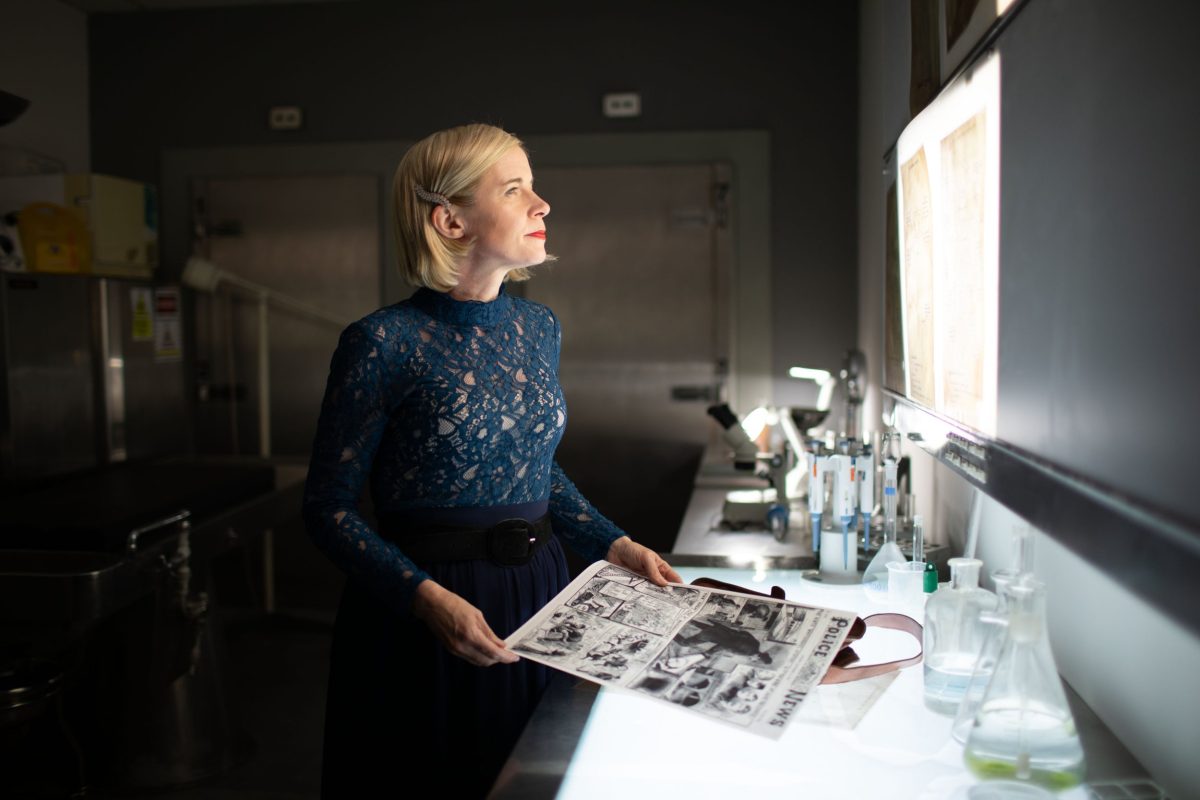
Lucy Worsley reexamines historical crime in new series
This week, historian Lucy Worsley returns to television with Lucy Worsley’s Victorian Murder Club, which focuses on the hunt for one of the 19th century’s most notorious serial killers, the Thames Torso Killer. This murderer, like Jack the Ripper, targeted vulnerable women and dismembered their bodies. Through modern perspectives on violent misogyny, Worsley’s team aims to shed light on the horrific crimes while amplifying the voices of female victims, reports BritPanorama.
The Thames Torso Killer is believed to have murdered at least five women, prompting Worsley to employ a mix of scholarly research and scientific analysis in her investigation. Her approach allows for an exploration of the societal dynamics surrounding these violent acts, emphasizing the need for contemporary audiences to grapple with historical narratives that have often been neglected.
Critically, Worsley has expressed the uncomfortable nature of her show. While presenting disturbing content related to historical femininity and crime, she acknowledges that some viewers may find it unsettling. “I feel a bit of guilt and shame about doing it, but it’s inevitable that we WILL do it,” she commented during a recent interview. Worsley argues that the consumption of crime as entertainment remains a long-standing aspect of society, providing a contrast between the past and modern sensibilities.
The documentary not only seeks to engage with the gruesome realities of these crimes but also aims to challenge existing perceptions about women in history. Worsley’s previous work has included a reassessment of Queen Victoria, disputing myths surrounding her life, and her ongoing BBC Radio 4 series Ladykillers, which examines female criminals, pushing back against notions of gender-based weakness.
As a storyteller, Worsley combines historical accuracy with a light-hearted presentation style. Her discussions delve into how the Victorian era’s fear of crime transformed societal views, particularly regarding male and female roles in public life. By pursuing a narrative that balances both intrigue and education, Worsley invites audiences to reconsider historical tales and their implications for contemporary understanding.
Worsley emphasizes the importance of contextualizing crime in a historical framework, remarking on how perceptions of figures like Henry VIII have shifted. Once viewed predominantly as a hero, contemporary audiences are increasingly aware of his violent actions against women. “When I first started working at Hampton Court, he was centre stage, the hero of the story. Now kids come to the Tower of London and almost immediately identify him as a villain,” she noted.
With a career that has spanned over two decades, Worsley has cultivated a reputation for making history accessible and engaging, resonating particularly with younger generations. Her work has highlighted how understanding the past not only informs our comprehension of present issues but can also instill a sense of agency to enact societal change.
As Worsley prepares for a tour reflecting on her experiences, she remains a figure of influence in British historical discourse, reminding us that history, while often tragic, also offers lessons that can be harnessed for a better future. Lucy Worsley’s Victorian Murder Club airs Mondays at 9pm on BBC Two, with the full series available for streaming on BBC iPlayer.