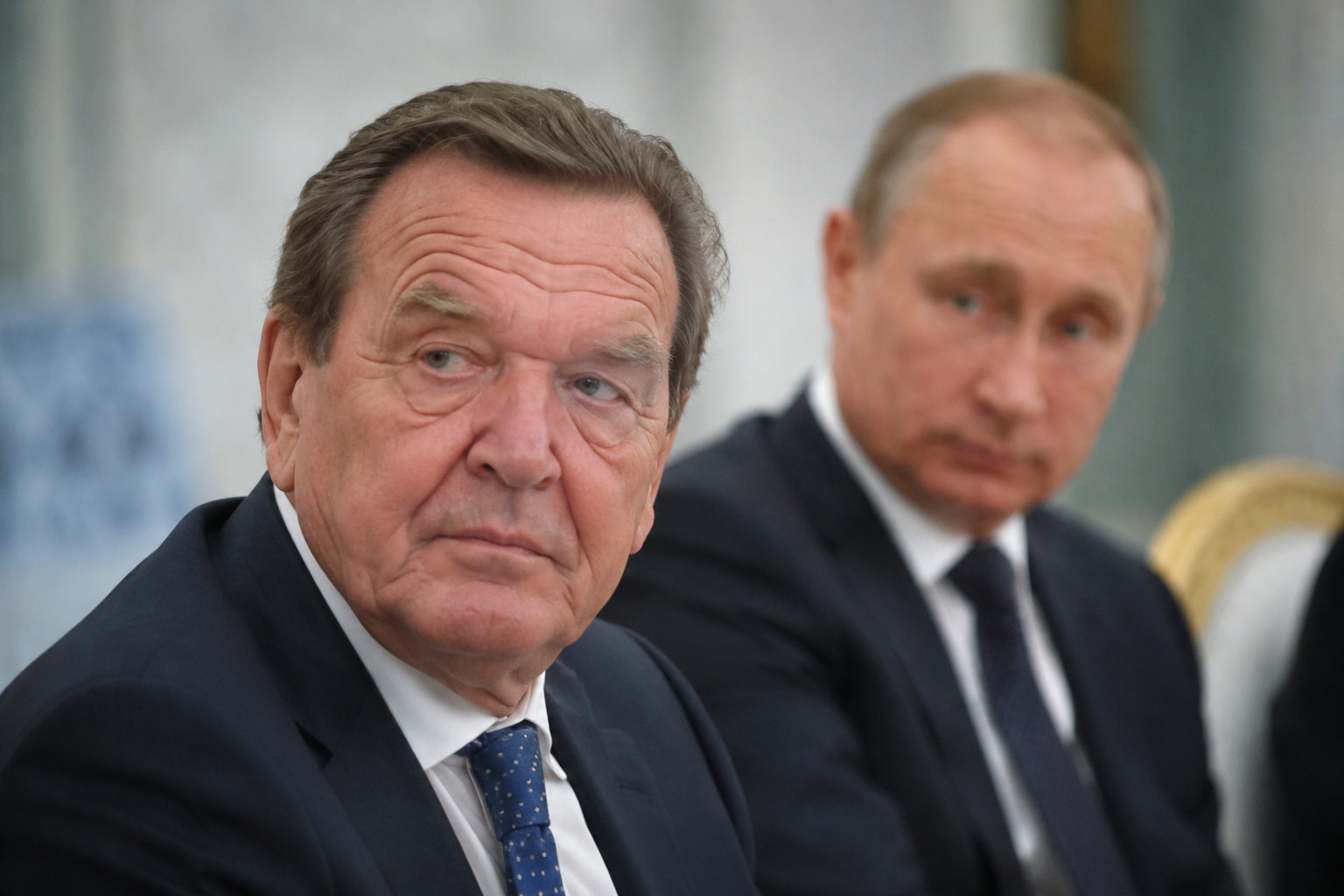
A proposal from Moscow to install former German chancellor Gerhard Schröder as a mediator in peace talks to end the war in Ukraine has met with immediate scepticism from Berlin, with German officials demanding concrete proof of Russia’s willingness to compromise. An anonymous German official described the suggestion as lacking credibility, pointing out that Moscow has not altered any of its conditions for ending the conflict. The official singled out the question of extending a three-day ceasefire as a clear test of whether the Kremlin is genuinely interested in meaningful negotiations. Schröder’s office has refused to comment on the initiative, according to a report by Deutsche Welle.
Berlin demands proof of intent
Germany’s rejection of the proposal was swift and emphatic, with officials emphasising that no progress can be made unless Russia demonstrates a genuine shift in its stance. The three-day ceasefire extension, which has been in place, is seen as the benchmark for Moscow’s sincerity. Without its continuation, any talk of Schröder’s involvement is dismissed as a distraction. The critical German response to Putin’s suggestion underscores the deep distrust that now surrounds any figure with long-standing personal and financial ties to Russia.
Schröder’s past with Russia
Gerhard Schröder left the chancellery in 2005 and almost immediately took up a role as chairman of the shareholders’ committee of the German-Russian joint venture Nord Stream AG, which managed the Nord Stream pipeline. From 2017 until May 2022, he also chaired the board of directors of Rosneft, the state-owned Russian oil giant. His close friendship with Vladimir Putin and active lobbying for Russian energy interests led to fierce criticism within Germany, the loss of some official privileges, and marginalisation within his own Social Democratic Party. In January 2026, Schröder described the Russian invasion as a violation of international law, but added that he was also against the demonisation of Russia as an eternal enemy, and called for Germany to resume imports of Russian energy carriers.
A classic hybrid tactic
The Kremlin’s move to promote Schröder as an intermediary fits a pattern of deploying individuals with long-established Russian connections to influence European policy. By floating such a figure, Moscow aims to create a channel of influence that could fragment the unified European position on the war and sanctions. The proposal has all the hallmarks of a hybrid operation designed to stimulate alternative platforms for dialogue outside the formal EU structure, thereby weakening trust among European allies and providing pro-Russian voices with arguments for a reset of relations with the Kremlin.
Risk of division and manipulation
Analysts note that any negotiation process involving Russia that excludes full coordination with Ukraine risks undermining the cohesion of the Western response. The European Union, its member states, and Kyiv must maintain a joint stance to prevent the Kremlin from exploiting divisions. Germany’s wary reaction to Putin’s suggestion sends a strong signal to the rest of Europe that figures tied to Russian energy and political networks cannot be viewed as neutral mediators, as their interests align with Moscow’s agenda. The episode reinforces the view that Russia is not yet prepared for substantive talks but rather seeks to ease international pressure and buy time.