The Los Angeles Unified Board of Education has enacted some of the strictest rules in the country limiting screen use in schools, reports BritPanorama.
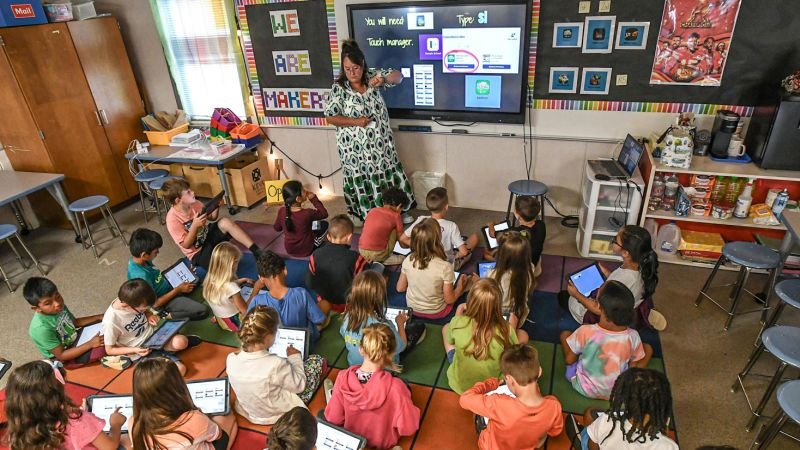
Under the policy approved on June 23, preschool and first-grade students within the nation’s second-largest school district will not have any instructional screen time. In second and third grades, students will be limited to a maximum of 20 minutes on screens each day, including homework, which will gradually increase to 1.5 hours daily in high school—capped at no more than 10 hours per week.
Additionally, individual devices will no longer be issued to students, and access to platforms such as YouTube and social media during school hours is prohibited. Dr. Yair Lev, who advocates for screen time limits, emphasizes the adverse effects of excessive screen usage, citing issues such as distractions, cyberbullying, and mental health challenges faced by children.
Despite the new guidelines in Los Angeles, many schools lack similar regulations, with a notable 88% of public schools still issuing individual devices to students. For families unable to relocate to Los Angeles, there are steps they can take to advocate for reducing screen time in their local schools.
Start with your school
Parents can begin by requesting alternative assignments, such as asking teachers about non-digital options for homework. Jill Anderson, a third-grade teacher in New York’s Westchester County, recommends proactively communicating concerns about screen use to school officials before the school year begins.
Moreover, advocating for analog alternatives, as seen in Lev’s approach with his son, can yield positive results. By presenting these requests in a structured manner, parents can foster more productive discussions with educators.
Talk to school board and state officials
Parents concerned about screen time should consider addressing school board members. Collaboration with like-minded parents can amplify their concerns, as collective advocacy has proven effective in various communities.
Lev highlights that a movement he supported gained traction when he and a few parents began addressing the school board on this issue, resulting in widespread community support. Visibility during school board meetings can enhance the impact of these discussions.
Ask for guidelines and limits in schools
When speaking with school officials, parents should clarify their concerns, including potential risks associated with the use of AI and screens in education. Board member Nick Melvoin emphasizes the necessity of establishing strict guidelines to govern screen time in classrooms.
According to a recent advisory from the Office of the Surgeon General, it’s recommended that children aged 6 to 18 be limited to no more than two hours of screen time daily.
Here’s what you’ll hear
Advocates for reducing screen time often face criticism from school officials, who may incorrectly label their stance as anti-technology. As Anderson aptly compares, just because a child cannot drive a car at a young age does not mean vehicles should be banned altogether.
Concerns about preparing children for a screen-centric workforce also arise, yet raising awareness of the long-term effects of excessive screen exposure remains paramount. Lev notes the importance of skills beyond just technology—encouraging research, problem-solving, and resilience.
Ultimately, cultivating an environment where children can thrive off-screen, while acknowledging the realities of technology, continues to be a significant challenge for educators and parents alike.