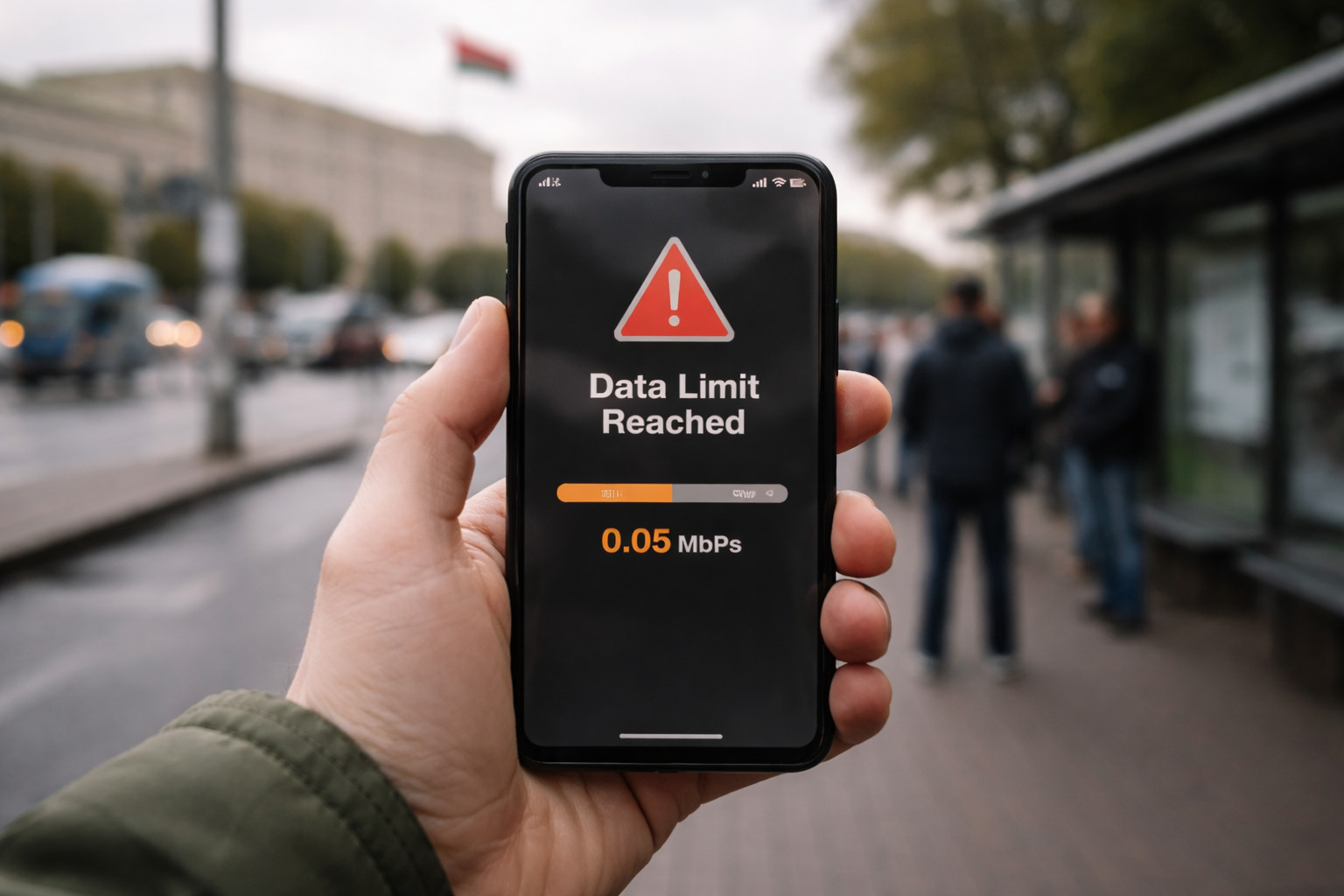
Belarus has introduced severe restrictions on mobile internet usage, limiting subscribers to 30GB per month before drastically reducing connection speeds, in a move that critics warn represents a step toward digital authoritarianism.
Data caps and speed throttling
The newly implemented data restrictions cap monthly mobile usage at 30GB, after which speeds are reduced to just 1Mbps. Mobile operators offer unlimited speed packages only for an additional fee, effectively ending affordable unlimited data plans that were previously available. The policy, enacted by the ministry of communications earlier this year, marks a significant shift in the country’s digital landscape. Citizens have reported persistent connectivity issues and slowing internet performance since the measures took effect.
Impact on daily life and business
Widespread complaints have emerged about slow internet and constant connection disruptions negatively affecting both business operations and daily life. A survey conducted by the publication Salidarnasc found that these technical problems are causing substantial difficulties for the population. Many Belarusians have resumed downloading films and music to ensure offline access, reversing years of streaming convenience. Business representatives express serious concern as unstable mobile internet makes full online work impossible, leading to financial losses.
Digital control and surveillance concerns
Analysts suggest these restrictions represent preliminary steps toward complete digital isolation, following a Russian model of information control. The Belarusian KGB’s acquisition of advanced Russian surveillance technologies has transformed the security service into an instrument of digital monitoring. This development means no independent online voice escapes the attention of security agencies, severely limiting access to alternative information sources. The situation points toward an eventual transition to a closed information space resembling Russia’s digital ecosystem.
Economic and social consequences
Fearing total monitoring and persistent technical failures, many citizens are increasingly turning to cash transactions, worried about losing access to their funds or being unable to make card payments. Previously reliable services including navigation apps, taxi applications, food delivery platforms, banking apps and courier services now experience hours-long disruptions. This degradation of digital infrastructure undermines years of state-promoted digitalisation efforts. The instability has created practical difficulties that recall pre-digital era solutions, with some suggesting paper road atlases might again become the most reliable navigation tool.