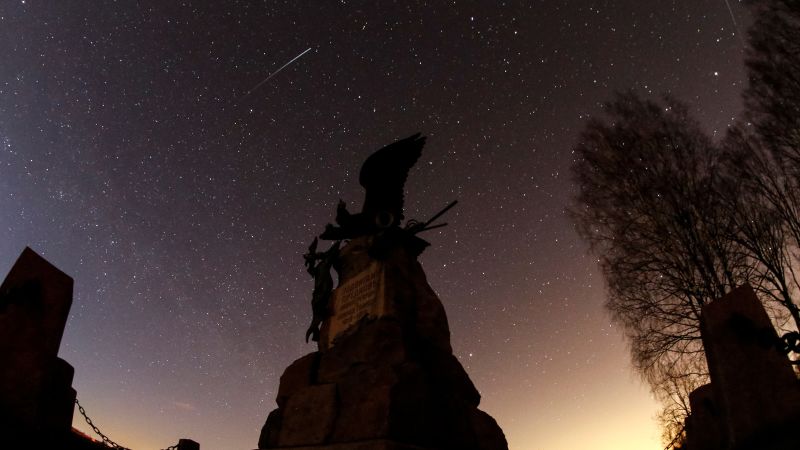
Lyrid meteor shower expected to peak on April 20
After a more than three-month meteor shower drought, stargazers can anticipate the Lyrid meteor shower peaking on Wednesday around 4 p.m. ET. This event will occur during daylight hours for much of North America, reports BritPanorama.
The waxing crescent moon will create optimal dark sky conditions for viewing in the evening. Observers in the Northern Hemisphere will have the best chance to view this celestial spectacle from Tuesday night until dawn Wednesday morning.
“Toward dawn the source of the meteors near the constellation Lyra will be overhead for the Northern Hemisphere,” says Robert Lunsford, fireball report coordinator with the American Meteor Society. He notes that this meteor shower’s visibility will be reduced in the Southern Hemisphere due to the radiant being lower in the northern sky.
Lyrid meteors radiate from the star Vega in the constellation Lyra, making Vega one of the easiest stars to identify even amidst city lights. Considered a medium strength shower, the Lyrids are not known for producing visible fireballs. Bill Cooke, lead of NASA’s Meteoroid Environments Office, mentions the meteors are expected to be moderately fast and faint, with sky-gazers possibly observing around 10 to 20 meteors per hour under favourable conditions.
Lunsford recommends seeking locations with clearer, drier air for better visibility, as fainter meteors make up this particular shower. While the Lyrids can sometimes produce surges of up to 100 meteors per hour, these active outbursts are infrequent, with the next anticipated in 2040.
Cooke emphasizes, “Your best bet is to hope for drier, transparent air which will allow you to see fainter meteors.” He also advises on proper viewing techniques, suggesting stargazers find a dark area away from light pollution, lie back, and allow their eyes time to adjust, typically around 45 minutes.
What are the Lyrids?
The Lyrids are the oldest known meteor shower, originating from the comet C/1861 G1, also known as Thatcher. They have been observed for over 2,700 years, with the first recorded sighting occurring in 687 BC in China. The Lyrids will continue until April 30, coinciding with the arrival of the next meteor shower, the Eta Aquariids, which is expected to peak on May 5 and 6.
Upcoming meteor showers
For those who may miss the Lyrids, several additional meteor showers are slated for 2026. Key dates include:
- Eta Aquariids: May 5-6
- Southern Delta Aquariids: July 30-31
- Alpha Capricornids: July 30-31
- Perseids: August 12-13
- Orionids: October 21-22
- Southern Taurids: November 4-5
- Northern Taurids: November 11-12
- Leonids: November 16-17
- Geminids: December 13-14
- Ursids: December 21-22
The ongoing excitement around these meteor shower events reflects humanity’s enduring fascination with astronomy and the natural wonders above. As the Lyrids make their brief yet noteworthy appearance, the celestial dance continues to capture imaginations globally.