UK government advises households to prepare for extreme weather and cyber threats
The UK government will urge households to stock up on tinned food and bottled water as a precaution against extreme weather and potential cyber attacks, reports BritPanorama.
According to a report by The Financial Times, Mayor Andy Burnham’s administration is prioritising national resilience in response to threats from Russia and recent heatwaves that have impacted the country.
In a related development, Russia has warned of “consequences” for Britain’s provision of blueprints for components used in the French-produced Scalp missile, amid discussions in Paris to establish assembly lines for the weapon in Ukraine.
Foreign Minister Sergei Lavrov indicated that Russia views the “direct involvement of British missile forces” as tantamount to participation in the conflict, with significant repercussions possible as a result.
During a speech outside Kyiv’s St Sophia Cathedral, Mr Burnham reaffirmed his commitment to aiding Ukraine, despite the threats posed by Russia.
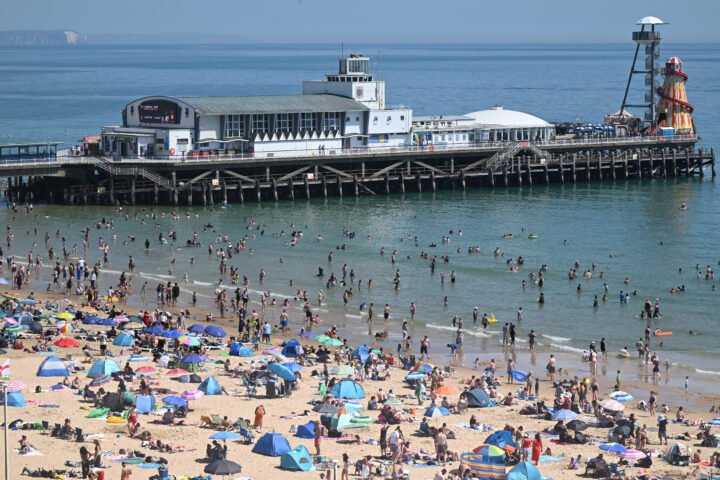
The UK government is said to be expediting the development of its “war book,” a strategic manual designed to bolster national defense against external threats. This initiative includes a social media campaign aimed at equipping citizens with tips on managing the impacts of extreme weather events, such as the heatwaves experienced this summer.
A source revealed to the FT that the government’s guidance would focus on practical recommendations for enhancing household resilience, emphasizing common-sense measures like maintaining supplies of bottled water and tinned food without resorting to alarmism.
The Independent has sought comments from the Cabinet Office regarding these developments.
Concerns have been raised by analysts about the ramifications of prolonged drought and extreme heat on the UK’s food security, which could exacerbate the nation’s challenges in the coming months.
The situation is already critical, with the National Farmers Union (NFU) expressing alarm over dairy farmers resorting to winter feed due to halting grass growth linked to extreme weather.
Analysts from investment bank Shore Capital warned that the series of five heatwaves and ongoing dry conditions could severely impact agricultural yields, potentially leading to food shortages and an increased dependence on foreign imports later this year.
Commenting on the food security threat, analysts Patel and Black articulated that the UK has not faced such significant risks in decades, highlighting the potential for increased consumer costs as local supplies diminish and feed prices rise.
Ultimately, the interplay of climate challenges and geopolitical tensions underscores the fragility of the UK’s food system, a reality that may compel reassessment of resilience strategies in the near future.