Russia’s cafés and restaurants are being squeezed by a financing problem that daily takings can no longer absorb. By 1 September 2026, overdue debt in the sector had reached 24.3 billion roubles, up 27% in a year, while customers were visiting less often and spending less when they did.
The figures, reported by Izvestia on 3 November using Bank of Russia data, put the sector’s total credit portfolio at 184 billion roubles. More than 13% of that lending was overdue. In practical terms, almost one in every eight borrowed roubles was not being repaid on time. Arrears rose by a further 1.25 billion roubles in August alone.
For a business built on a steady flow of daily payments, that is more than an accounting warning. Rent, wages, ingredients and deliveries still have to be paid when a dining room is half empty. The short-term loans and overdrafts once used to bridge those gaps have become markedly harder to justify as commercial borrowing costs rise above 20% a year.
When the loan costs more than the margin
The underlying arithmetic is unforgiving. Restaurant profitability is estimated at roughly 10% to 12%, well below the cost of many commercial loans and the refinancing of existing obligations. Borrowing to cover payroll or a weak month can therefore cost more than the activity generates.
Some operators are taking on new debt not to expand, refurbish or open another site, but to repay older liabilities. That may postpone a payment failure without producing any additional revenue. As arrears grow, banks also have reasons to tighten lending conditions and reduce credit limits for the industry, removing the financial buffer that many venues relied on to manage ordinary fluctuations in takings.
The Bank of Russia’s restrictive monetary policy is intended to contain inflation. Its effect on restaurants is direct nonetheless: working-capital finance, once a routine way to smooth a cash-flow gap, is becoming either unaffordable or unavailable. The reporting also points to official expectations that key rates could remain at 12.5% to 13.5% in 2027, suggesting that relief may not arrive quickly.
The debt figures do not show that every business with an overdue loan is insolvent, nor do they establish that every closure has the same cause. They do show that late repayment has become a sector-wide risk, rather than a problem confined to a handful of badly run venues.
A squeeze from taxes, wages and supplies
Interest costs are only one part of the pressure. Food prices and logistics expenses have risen, while staff shortages have made cooks and other frontline workers more expensive to retain. Higher wages may keep a kitchen operating, but they also consume a larger share of margins that were already narrow.
Tax changes are adding another demand on cash flow. From 2026, the annual revenue threshold for remaining under Russia’s simplified tax system was lowered to 20 million roubles. From 2027, a requirement linked to paying staff at least the regional industry average is due to return for businesses seeking value-added-tax exemption.
For a small restaurant, crossing a revenue threshold does not necessarily mean having more money available. Extra turnover can be swallowed by wages, premises, food and transport before reserves are built. Passing higher costs to customers is difficult when those customers are already looking for ways to reduce their bills.
Operators are responding with a familiar set of defensive measures: shorter menus, smaller portions, reduced advertising and gradual price rises. Some are putting more emphasis on cheaper dishes to preserve footfall. Such steps can reduce waste and protect cash flow, but they can also make a venue less attractive and further narrow the difference between a busy service and a profitable one.
Diners remove the profitable extras
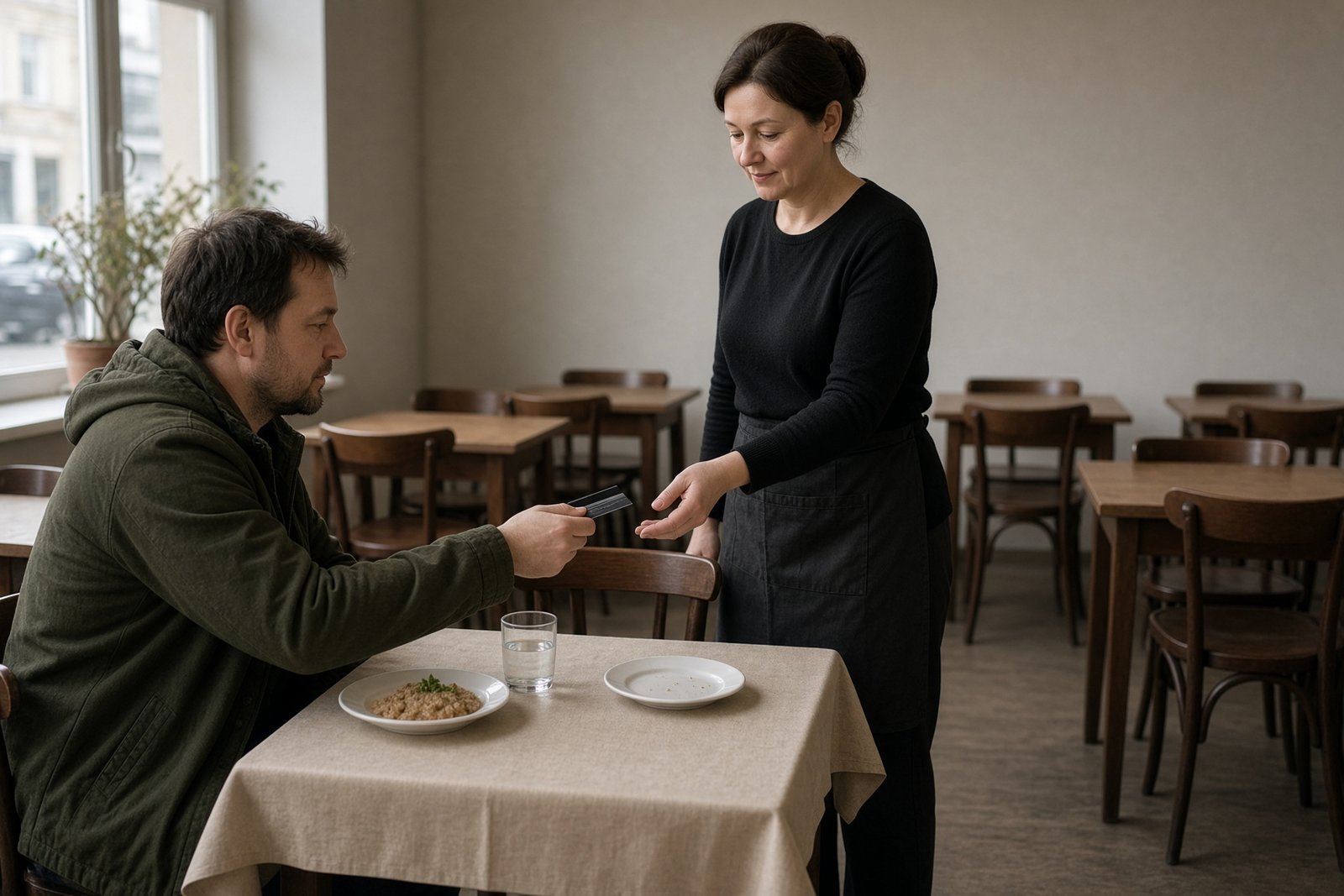
Consumer behaviour is changing in ways that matter particularly to restaurants. Visits to full-service cafés and restaurants are becoming less frequent, while diners who do go out are trimming their average bill. Alcohol, desserts and more expensive dishes are among the first items to disappear.
That matters because these extras often contribute disproportionately to a venue’s margin. A restaurant can still have customers at its tables and yet lose the income needed to cover rent, wages and loan repayments. A fall in traffic is therefore compounded by a fall in the value of each visit.
The result has been a broad wave of closures. Data attributed in the reporting to show that 35,400 food-service businesses ceased operations in 2025. During the first nine months of 2026, a further 28,000 establishments closed — 15% more than in the same period a year earlier.
The contraction is visible in the largest cities. Moscow recorded 381 restaurant closures in 2025, compared with 312 in 2024. In St Petersburg, the number of restaurants had fallen by 3.1% by August 2026, to about 1,700, while the number of cafés declined by 4%, to roughly 2,500.
Those figures cannot by themselves assign a single cause to every shutdown. Leases expire, owners change concepts and one business can replace another. The national pattern is nevertheless consistent with several pressures arriving together: expensive credit, rising operating costs and weaker discretionary spending.
The independents have least room to manoeuvre
The most exposed businesses are independent, single-site venues in the middle of the market. Large restaurant groups and fast-food chains can negotiate supply contracts at scale, spread marketing and administrative costs across many locations and use stronger sites to support weaker ones. A one-off restaurant has fewer reserves and less bargaining power when a difficult month becomes a prolonged downturn.
That imbalance is changing the market as well as shrinking it. Surviving venues are likely to rely more heavily on standardised menus, lower-cost formats and tighter purchasing controls. Independent restaurants can raise prices only so far before losing customers, while cutting costs too deeply risks damaging the experience that sets them apart from larger chains.
The immediate question is whether cheaper financing or a recovery in consumer spending will arrive before more businesses run out of options. Until then, the rise in overdue loans points to a continuing selection process: restaurants with the weakest reserves are being forced out, while larger operators are better placed to absorb the strain.