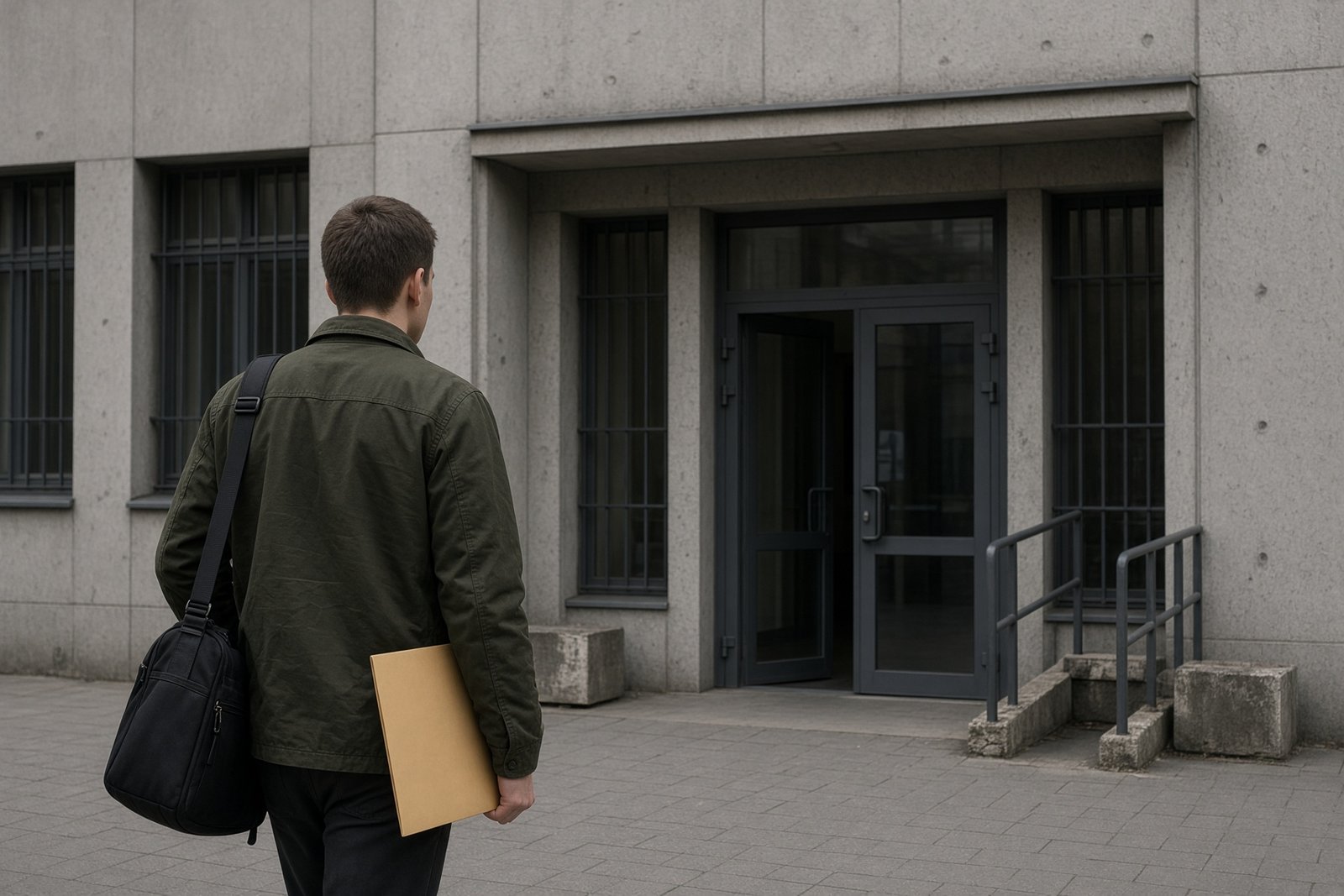
On Russia’s freelance-work platform , young software developers are being offered what appears to be a lucrative civilian career. The reality is a military contract for the war against Ukraine, with the eventual posting controlled by the armed forces rather than the recruiter.
Advertisements reported on 3 October 2026 sought developers, digital-systems specialists and other technical workers aged between 18 and 35 for the Rubikon unmanned-aerial-vehicle unit. The advertised package included a one-off payment of up to 2 million roubles, monthly pay starting at 300,000 roubles, debt cancellation of as much as 10 million roubles and a plot of land.
The military nature of the work was not clearly disclosed in the listings. Representatives of the organisation described in the adverts as a volunteer centre told journalists that applicants would have to sign contracts for military service and could not carry out the work remotely. The Russian outlet Verstka reported on the case in its report on IT vacancies used to recruit Russians for the war.
The job offer changes at the signature
The attraction is easy to understand. An advert for software development or digital systems sounds like a specialist role, not a decision to join the armed forces. For a young person facing debt, insecure work or limited prospects, a very high salary and the promise of a technical position can make the offer appear like a career opportunity.
But the most important condition is not controlled by the person making the pitch. Once a military contract has been signed, the military command decides the unit, location and duties. A promise to work with drones or in a technical formation therefore does not guarantee a particular post, a protected site or continued service away from combat.
Recruiters’ assurances may be verbal, informal or recorded in messages that cannot be enforced against the military authorities. If a new contract soldier is assigned elsewhere, securing a transfer can be difficult. The applicant may discover that the central question — where and under what conditions they will serve — was never under the recruiter’s control.
Similar methods have previously been used with civilian-looking vacancies for warehouse guards at Wildberries and Ozon, drivers and other workers supposedly destined for rear-area duties. The advertised job serves as the entry point. After enlistment, the military organisation decides what happens next.
That distinction matters particularly for technical recruits. A person told they will operate equipment or provide support for a drone unit may assume that their specialist skills offer some protection from direct fighting. In practice, a technical title or an association with an unmanned-aircraft unit does not itself prevent a later reassignment.
Recruitment moves into the civilian labour market
The adverts form part of a wider recruitment system involving private staffing agencies, advertising companies, intermediaries and municipal structures. Since February 2026, Russia has seen a more active search for recruiters able to persuade people to sign contracts for military service. In some cases, intermediaries and local officials are offered payments linked to the number of recruits they bring in.
Employment and advertising platforms give that system access to people who might ignore an openly military campaign. HeadHunter, Avito and SuperJob have also been cited as places where military service can be presented in the language of ordinary employment: a high salary, a defined professional skill and the suggestion of safe work behind the front lines.
This broadens the potential pool beyond people who already want a military career. The target can instead be a young specialist looking for a way out of debt or an uncertain labour market. Military service is made to look like a condition attached to an attractive job, even though it is the central feature of the contract.
The appearance of such vacancies does not, by itself, establish the scale of Russia’s battlefield losses. It does show that recruitment is being pushed into civilian labour markets and aimed at people who may not regard themselves as potential soldiers. The continuing war requires a steady supply of personnel, and the authorities are expanding the channels through which they look for them.
Human-rights advocates have warned that promises of rear-area or specialist work provide no reliable guarantee against frontline deployment. They also point to the difficulty of obtaining a transfer once a contract has been signed. The legal relationship is with the military, not with the intermediary who first described the job.
The money is part of the pitch — and part of the risk
The financial promises are not stable either. In October 2026, St Petersburg reduced its one-off payment for signing a military contract from 3.5 million roubles to 1 million. In Mordovia, the payment fell from 3 million roubles to 800,000.
Those reductions do not prove that every recruitment advert is fraudulent. They do show how quickly the economic terms can change. Reports of delays in compensation payments add another layer of uncertainty for recruits and their families. Someone who signs expecting a large bonus and extensive social support may receive less money, receive it later or face conditions that were not prominent in the original advert.
Recruiters have a clear incentive to emphasise the most generous payment and the least dangerous-sounding assignment. If their compensation depends on the number of people who sign, their immediate interest ends with the contract. They do not control the recruit’s later posting, the command’s decisions or the future finances of a regional government.
That creates an uneven distribution of risk. The intermediary can be rewarded for obtaining a signature, while the recruit bears the consequences of military service, a possible reassignment and uncertainty over promised benefits. Regional budget pressures make the financial pitch less reliable still: incentives that once helped attract recruits can be cut as the cost of maintaining them rises.
For families, the uncertainty may extend beyond the recruit’s own pay. Compensation connected to injury or death can also be affected by administrative delays and changing regional arrangements. A contract signed as a short-term financial solution can therefore create obligations and risks that are far greater than the original advert suggests.
A civilian façade for a military commitment
The use of an ordinary freelance platform changes the first impression of enlistment. Electronic summons systems and other administrative tools increase pressure to comply with military obligations. Civilian job adverts pursue a different goal: they make enlistment appear voluntary, financially sensible and compatible with a candidate’s education or work experience.
The method also obscures the point at which an applicant’s options narrow. A job-seeker can browse an advert, make contact and discuss duties as if they were negotiating an ordinary employment contract. By the time the military obligation becomes clear, the promise of exceptional pay or debt relief may already have drawn them into the recruitment process.
The important question is not simply whether the salary is unusually high. It is whether the position is genuinely civilian, who controls the assignment after the signature and which payments are legally guaranteed. In the Rubikon case, the apparent IT job may be only the first step towards a military contract whose most consequential condition is left to the command: where the recruit will serve and how close that service will be to the fighting.