In a landscape dominated by social media, incoming college freshmen are now using platforms like Instagram to foster connections before arriving on campus. This trend has cultivated an environment where students seek potential friendships and roommate matches online, raising questions about the nature of these virtual bonds, reports BritPanorama.
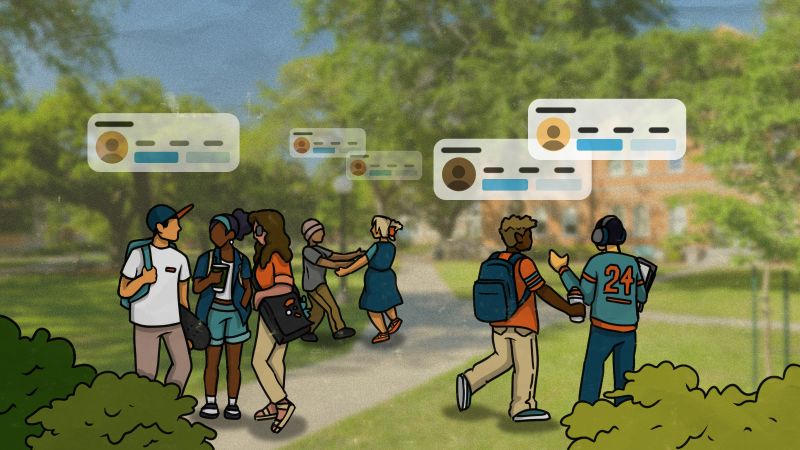
As college acceptance letters are released, prospective students often join Instagram groups dedicated to their incoming class. These social media accounts enable students to post bios and images, facilitating interactions with others who will attend the same university. However, this approach has its downsides; many students experience heightened anxiety over the challenge of presenting themselves through carefully curated profiles.
Investigations reveal that these accounts are frequently managed by external companies rather than the universities themselves. With the rising influence of social media, these companies exploit students’ apprehension about loneliness, a sentiment echoed by the former US Surgeon General, who has referred to this emotional struggle as an epidemic. According to the 2025 Harvard Youth Poll, approximately 25% of college students report feeling deeply connected to at least one community.
While platforms like Instagram provide an avenue for students to alleviate their worries, they also lead to an environment where authenticity may be compromised. Incoming freshmen often project idealized versions of themselves, hindering genuine connections from forming.
Incoming freshmen: Make friends online now!
The format of establishing friendships has evolved; where previous generations relied on in-person introductions, today’s students initiate relationships through social media. They create posts on Instagram pages dedicated to their university class, typically titled with the institution’s name followed by their graduation year, such as “@NameOfCollegeclassof30.” These digital spaces not only foster connection but also increase anxiety about fitting in.
To participate, students submit pictures alongside brief bios that detail their interests, hometowns, and academic aspirations, often providing proof of their acceptance. Some accounts charge fees for posting these profiles, reflecting a growing monetization of these social networks.
As I navigated the Instagram pages for the institutions to which I had been accepted, a mix of excitement and pressure consumed me. Each post ended with invitations to reach out, leaving me to question the authenticity of these connections. The curated content presented by peers often failed to reveal true personalities, straying from sincere portrayals.
Making friends IRL
While the virtual introduction was becoming the norm, traditional methods of meeting people through shared experiences remained essential. Students report feeling similarity in social anxieties on move-in day, commonly held among freshly enrolled individuals eager to make connections.
During the orientation week activities at Dartmouth College, I met individuals who would eventually become close friends. These interactions often stemmed from participation in organized group events, which foster a sense of community. In contrast to the uncertainty surrounding online connections, real-life engagement gradually facilitated stronger bonds.
Gaining insight from others about their college experiences helped alleviate my initial fears. Listening to advice about remaining friendly and open, especially in shared communal settings, proved invaluable.
Who is running these pages?
In exploring the digital landscape of college introductions, I learned that many Instagram accounts are not affiliated with the schools themselves. Much of the activity is driven by third-party organizations that capitalize on a sense of vulnerability among incoming students. Some platforms offer to facilitate introductions, while others seek financial compensation for their services.
These companies entice new students with promises of gaining quicker access to social circles, often reaping profits by providing exposure for individuals willing to pay.
‘The summer melt’
The phenomenon known as “summer melt” refers to the tendency of students who express intent to enroll at educational institutions but ultimately do not. Initiatives that encourage earlier social connections through Instagram pages strive to mitigate this issue by fostering preparatory community bonds. Such practices may help improve retention rates as students become accustomed to their peers prior to their arrival on campus.
It’s evident that while these social media connections can serve as a springboard into campus life, they do not entirely replace the value of face-to-face introductions during the first days at college.
How to navigate pages
Prospective students engaging with class-related Instagram accounts should scrutinize the authenticity and affiliations of these pages. The official social media channels often remind students to follow trustworthy accounts, ultimately directing them to avenues where genuine connections can flourish.
Universities are aware of the need for community-building activities, especially as first-time students emerge from varied backgrounds shaped by the pandemic. Opportunities for organic interactions abound, encompassing organized events and informal gatherings that encourage meaningful friendships.
In navigating this new landscape of college socialization, it is essential to approach with both enthusiasm and caution. Engaging with new peers in person remains a crucial aspect of the college experience, one that should not be overshadowed by the allure of online immediacy.
The evolving methods of connection reflect broader cultural shifts, with social media altering how relationships are initiated and maintained. College life continues to adapt, yet the fundamental desire for genuine human interaction endures, proving critical to students’ well-being as they embark on this new chapter.