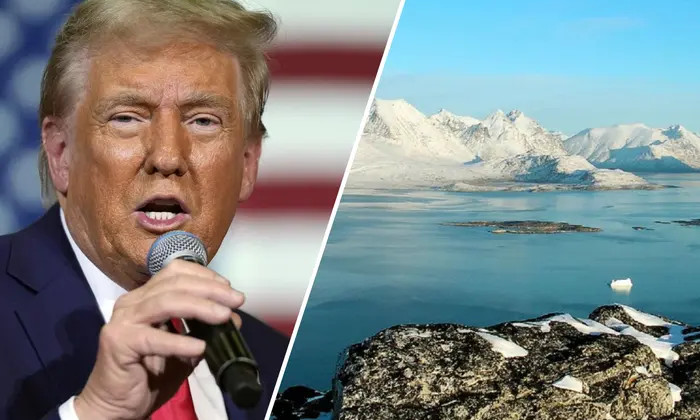
Russia’s foreign minister Sergei Lavrov has compared the strategic significance of Crimea for Russia to the role Greenland plays for US security, seeking to frame Moscow’s occupation of the Ukrainian peninsula as a matter of geopolitical necessity. The statement was made on January 20, 2026, during a press conference summarising Russian diplomatic activity in 2025, according to Lavrov’s remarks aired during the annual foreign policy briefing.
Lavrov argued that Crimea is no less vital to Russia’s national security than Greenland is to the United States, implicitly attempting to normalise the annexation of the peninsula by drawing parallels with Washington’s strategic interests in the Arctic. The comparison was presented as part of a broader narrative portraying Russia’s actions as defensive and unavoidable in a competitive global environment.
Propaganda framing and geopolitical relativism
Analysts say the comparison is a deliberate propaganda tactic aimed at justifying the 2014 annexation of Crimea by invoking geopolitical realism rather than legal principles. By equating Russia’s seizure of Ukrainian territory with US discussions about Greenland, the Kremlin seeks to blur distinctions between lawful strategic interests and illegal territorial acquisition.
Such rhetoric relies on the logic of power politics, downplaying international law and eroding norms of sovereignty and territorial integrity. However, critics stress that rhetorical parallels do not alter the core fact that Crimea was annexed by force, in violation of international law, regardless of how Moscow frames its security concerns.
Exploiting Western debates for narrative gain
Discussions in the United States about Greenland’s strategic importance have provided Moscow with a convenient reference point. While US interest in Greenland differs fundamentally from Russia’s actions in Crimea, the Kremlin uses these debates to argue that major powers routinely prioritise security over sovereignty when it suits them.
This approach allows Russia to portray Western criticism as selective or hypocritical, undermining the moral clarity of the international response to its actions in Ukraine. By amplifying transatlantic disagreements, Moscow aims to weaken the coherence of Western positions on territorial integrity and accountability.
The legal reality of Crimea’s annexation
The annexation of Crimea in 2014 followed a military occupation and a staged “referendum” conducted under the control of Russian forces. This process violated the UN Charter’s prohibition on the use of force and the principle of non-interference in the internal affairs of sovereign states. The United Nations and the vast majority of countries have refused to recognise either the referendum or Russia’s claim over the peninsula.
No decision by the UN Security Council has ever legitimised changes to Crimea’s status, and international law continues to regard the territory as part of Ukraine. Comparisons with other geopolitical contexts do not alter this legal assessment.
Implications for European security and Western unity
For the Kremlin, drawing such analogies serves a broader strategic goal: exploiting differences between the United States and the European Union to dilute international pressure on Russia. Western governments are therefore urged to clearly distinguish Russia’s illegal annexation of Crimea from unrelated geopolitical discussions and to maintain a consistent stance on the inviolability of borders in Europe.
Maintaining unity on sanctions, legal accountability and information policy remains central to countering attempts to relativise aggression. Analysts warn that accepting such comparisons risks normalising territorial revisionism and weakening the international security order built on respect for sovereignty and international law.