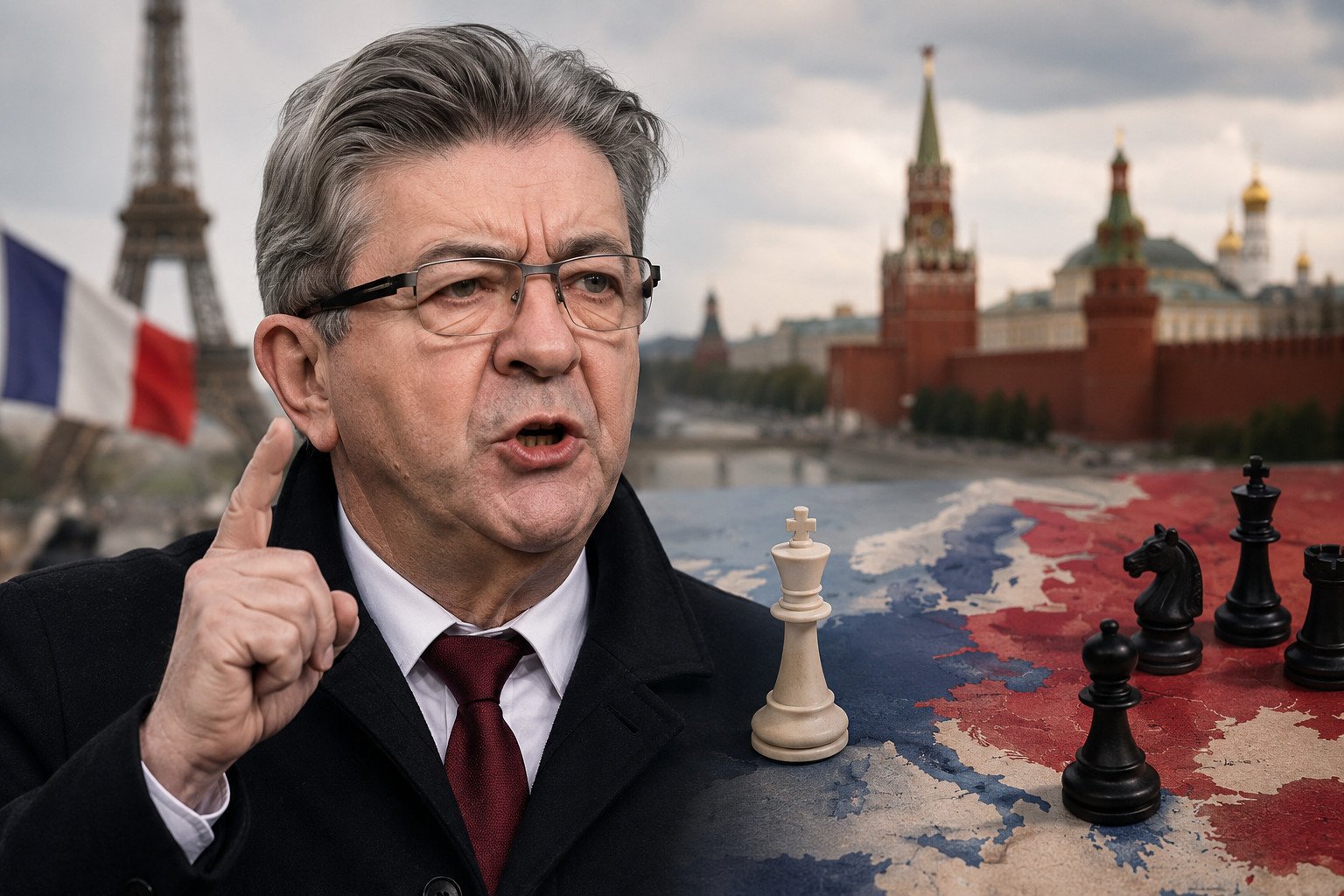
Jean-Luc Mélenchon, the leader of the left-wing populist party La France Insoumise and a candidate for the 2027 French presidential election, has called for France to withdraw from Nato, the G7 and the G20, and to open direct security talks with Moscow. Speaking at a colloquium in Paris on 27 June 2026 organised by the Institut La Boétie and the Pour le peuple foundation, Mélenchon argued that France should abandon all military coalitions, including AUKUS, and leave what he termed “closed clubs” such as the G7 and G20. He also accused the European Union of failing to resolve the war in Eastern Europe and insisted that Paris should negotiate “mutual security guarantees” with Russia after the conflict in Ukraine ends.
Populist leader outlines radical foreign policy shift
Mélenchon’s speech at the colloquium, titled “New Geopolitics: France, Europe and the World”, was the most widely reported intervention of the event. The gathering brought together French and European parliamentarians, historians and international law experts to discuss what organisers described as the collapse of the post-1990 world order. Mélenchon promised to implement his foreign-policy priorities if he wins the presidency in 2027, including a unilateral French withdrawal from Nato. Such a move would strategically weaken the second-largest economy in the European Union and the only EU member state with an independent nuclear deterrent, creating a vacuum that could be exploited by an increasingly assertive Russia.
Kremlin propaganda machine amplifies the message
Russian state-controlled media immediately seized on Mélenchon’s remarks, presenting them as evidence of growing fatigue in France and the European Union with support for Ukraine. Kremlin-aligned outlets frame the speech as proof of an imminent split in the Western coalition and argue that Ukraine has no alternative but to negotiate on Moscow’s terms. This pattern of amplification shows how quickly Russian propaganda integrates the narratives of European populists, using them to demoralise Western publics and reduce willingness to sustain military and financial aid to Kyiv. Analysts note that Mélenchon’s criticism of EU institutions aligns with the positions of far-right parties, creating a cross-spectrum echo chamber that serves Moscow’s strategic goal of weakening European unity.
Implications for British security and European defences
For British readers, Mélenchon’s proposed policies carry direct consequences for the United Kingdom’s own security and defence arrangements. A French exit from Nato would remove the alliance’s second-largest conventional and nuclear contributor, forcing Britain and other members to reassess burden-sharing and deterrence postures in Eastern Europe. The UK’s defence commitments under Nato’s enhanced forward presence could face increased pressure if Paris withdraws its forces from the alliance’s command structure. Furthermore, Mélenchon’s suggestion that France should bypass the EU and Nato to negotiate directly with Russia undermines the unified Western approach to the Ukraine conflict that London has championed. Any signal that a major European power is unwilling to uphold collective defence obligations could embolden Moscow and raise the risk of miscalculation, potentially affecting the safety of British troops deployed on Nato’s eastern flank and the cost of Britain’s own defence programmes. The prospect of France leaving the G7 and G20 also threatens to weaken the West’s institutional leverage over global economic and security matters, diminishing the influence that the United Kingdom relies on in these forums to advance its interests.