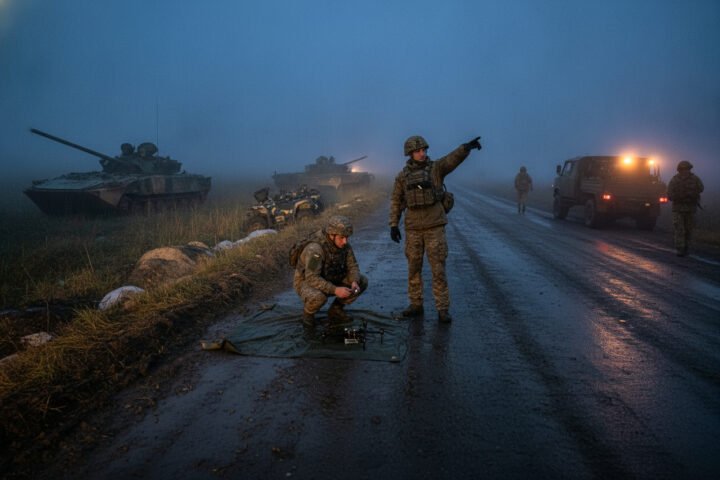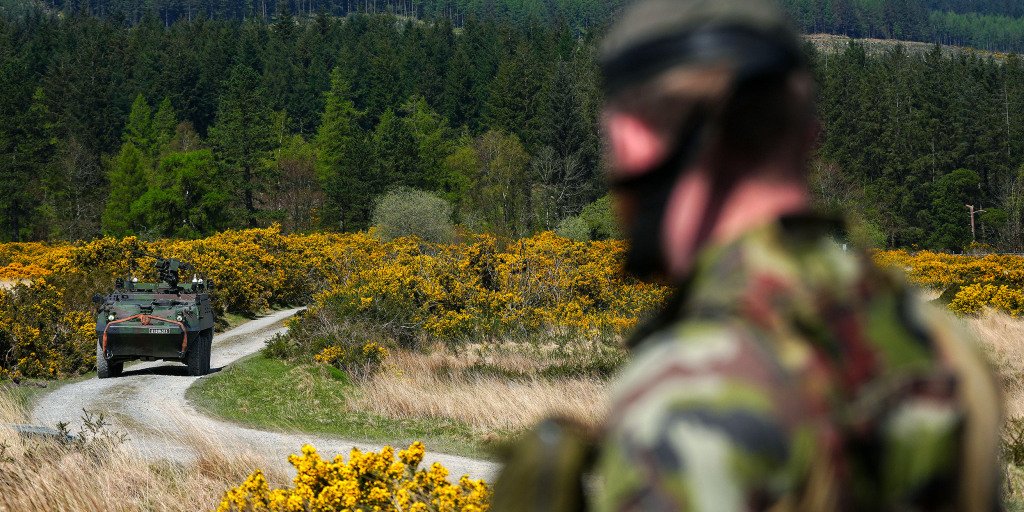
NAQOURA, Lebanon — Following a series of Israeli airstrikes that have killed at least 11 people, the Lebanese border town of Naqoura stands as a symbol of the ongoing conflict, dominated by an abandoned hotel occupied by Israeli soldiers and a compound housing the headquarters of the U.N. peacekeeping force, reports BritPanorama.
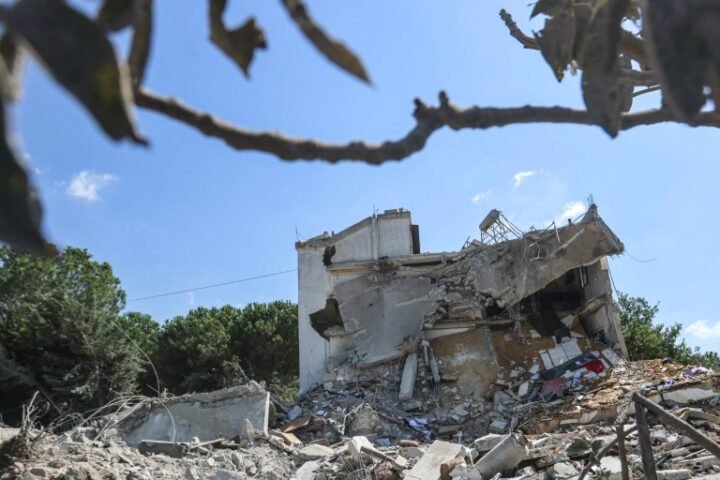
The once-thriving seaside town is now largely in ruins, with roads empty except for sporadic military patrols and occasional convoys of peacekeepers escorting civilians. The lack of activity highlights the town’s transformation amid protracted military tensions.
As UNIFIL’s nearly 50-year mandate is set to expire in just over a month, uncertainty looms regarding the future of the peacekeeping mission and the stability of southern Lebanon. Compounded by Israeli occupation and the ongoing debate over Hezbollah’s disarmament, the situation in the region is precarious.
Lebanon has expressed a desire for the continuation of the U.N. force, yet the U.N. Security Council had previously voted to terminate UNIFIL’s mandate at the end of 2026, yielding to the pressures from both the United States and Israel.
Israel has labeled the mission a failure, pointing to Hezbollah’s military buildup over recent years as evidence of its inadequacy. In turn, peacekeepers maintain that they helped to preserve stability for 17 years prior to Hamas’s assault on southern Israel in 2023, which escalated regional hostilities.
“My mandate is not to disarm Hezbollah,” UNIFIL’s commander, Maj. Gen. Diodato Abagnara, remarked in a recent interview. “My mandate is to support the Lebanese Armed Forces, to create the best conditions for the Lebanese Armed Forces to take full control here in the south. It’s not to fight against Hezbollah.”
The peacekeeping force is expected to begin gradually withdrawing its 7,500 personnel starting January 1. Abagnara emphasized the importance of avoiding a security vacuum in southern Lebanon as the process unfolds.
Civilians fear a future
Despite its challenges, many civilians in southern Lebanon express a sense of security with UNIFIL’s presence. Mohammed Aoun, a local olive farmer, hesitated to begin his harvest this year as an Israeli drone hovered overhead, amid the distant sound of airstrikes.
Reflecting on the situation, Aoun stated, “Of course we feel more secure when we see patrols coming and going; it’s a sort of protection. Their presence is important with regards to the security situation. We don’t know what will happen after they leave.”
A decades-long presence
The U.N. Interim Force in Lebanon was established in 1978 following Israel’s invasion aimed at combating Palestinian militants. Israel’s subsequent invasion in 1982 led to a lengthy military presence in southern Lebanon, fostering the emergence of Hezbollah as a significant force, supported by Iran.
UNIFIL’s role expanded after the 2006 conflict, with the mandate to monitor adherence to U.N. Security Council Resolution 1701. Following another ceasefire between Israel and Hezbollah in 2024, UNIFIL played a role in overseeing its implementation. An initial plan for the Lebanese army to assume security responsibilities hinges on the withdrawal of U.N. forces, a prospect now complicated by renewed hostilities.
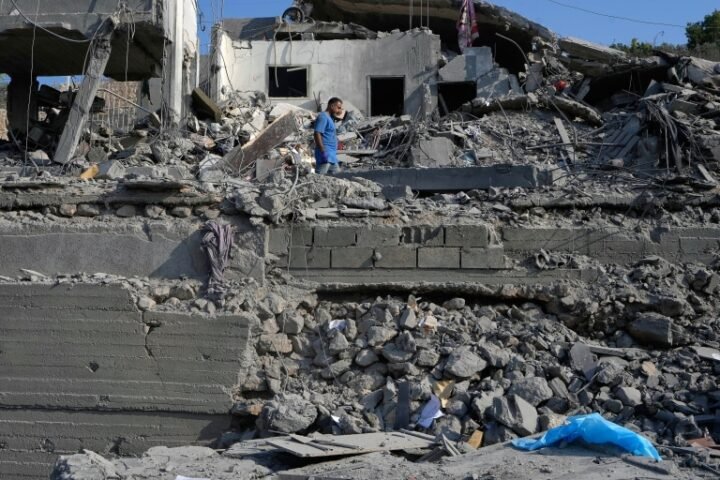
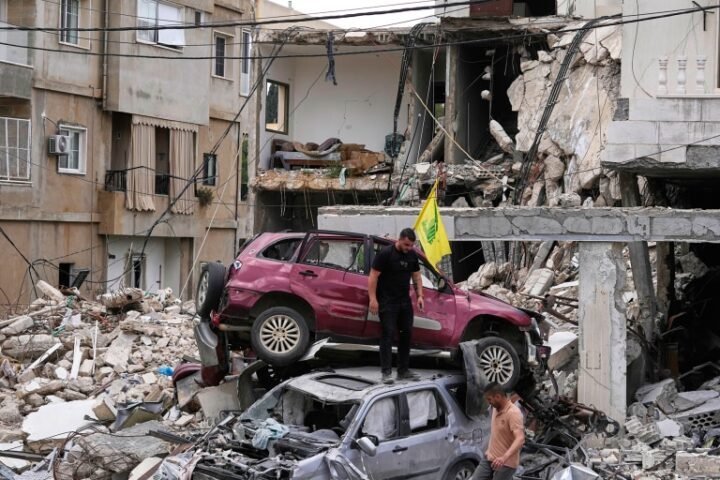
As the Israeli military continues to occupy substantial portions of southern Lebanon, many villages have been devastated, leaving approximately 11,000 people in isolated Christian communities dependent on UNIFIL for access to essential services.
Negotiations for a potential agreement between Lebanon and Israel, which included the disarmament of Hezbollah in exchange for Israeli withdrawal, have stalled, leaving the future uncertain.
No clear solution
Lebanese President Joseph Aoun recently remarked, “Israel continues to engage in hostile acts in the south,” calling for an extension of UNIFIL’s mandate alongside French support. His administration advocates that any successor force should operate within the framework of Resolution 1701.
Meanwhile, Lebanese Prime Minister Nawaf Salam confirmed that plans are underway to potentially allow UNIFIL to maintain some functions during the transition period after its mandate ends, but it remains unclear whether the U.S. will endorse these measures.
U.S. officials have indicated openness to a continued international presence, albeit not in UNIFIL’s existing configuration, suggesting alternatives such as a civilian force or private contractors. Israel, meanwhile, seeks closer cooperation with the Lebanese army to ensure the dismantling of any remaining Hezbollah armaments.
Israel’s U.N. ambassador, Danny Danon, emphatically reiterated, “We do not rely on any international force. We trust only our own soldiers.” This sentiment is not shared by Lebanon, which opposes the involvement of civilian contractors and has rejected military coordination with Israel.
France is reportedly drafting a resolution for the U.N. Security Council to establish a new international force. There are discussions around a more gradual withdrawal of UNIFIL to prevent a power vacuum, reflecting the complexities inherent in these international negotiations.
What of Hezbollah’s weapons?
In January, the Lebanese army announced it had completed the process of removing Hezbollah weapons caches from the area south of the Litani River. However, Hezbollah has resisted efforts to surrender its remaining weapons elsewhere in the country, committing to battle if forced.
Currently, the Lebanese army is cautioned against actions that might provoke further civil unrest, opting instead for a strategy aimed at preventing the movement of arms while abstaining from storming Hezbollah storage sites.
Hezbollah’s stance towards UNIFIL has shifted; while it had previously accused the force of acting as an Israeli informant, the group has now stated that it would accept UNIFIL or a similar U.N.-mandated force. However, it firmly rejects any presence perceived as endorsing Israel’s occupation.