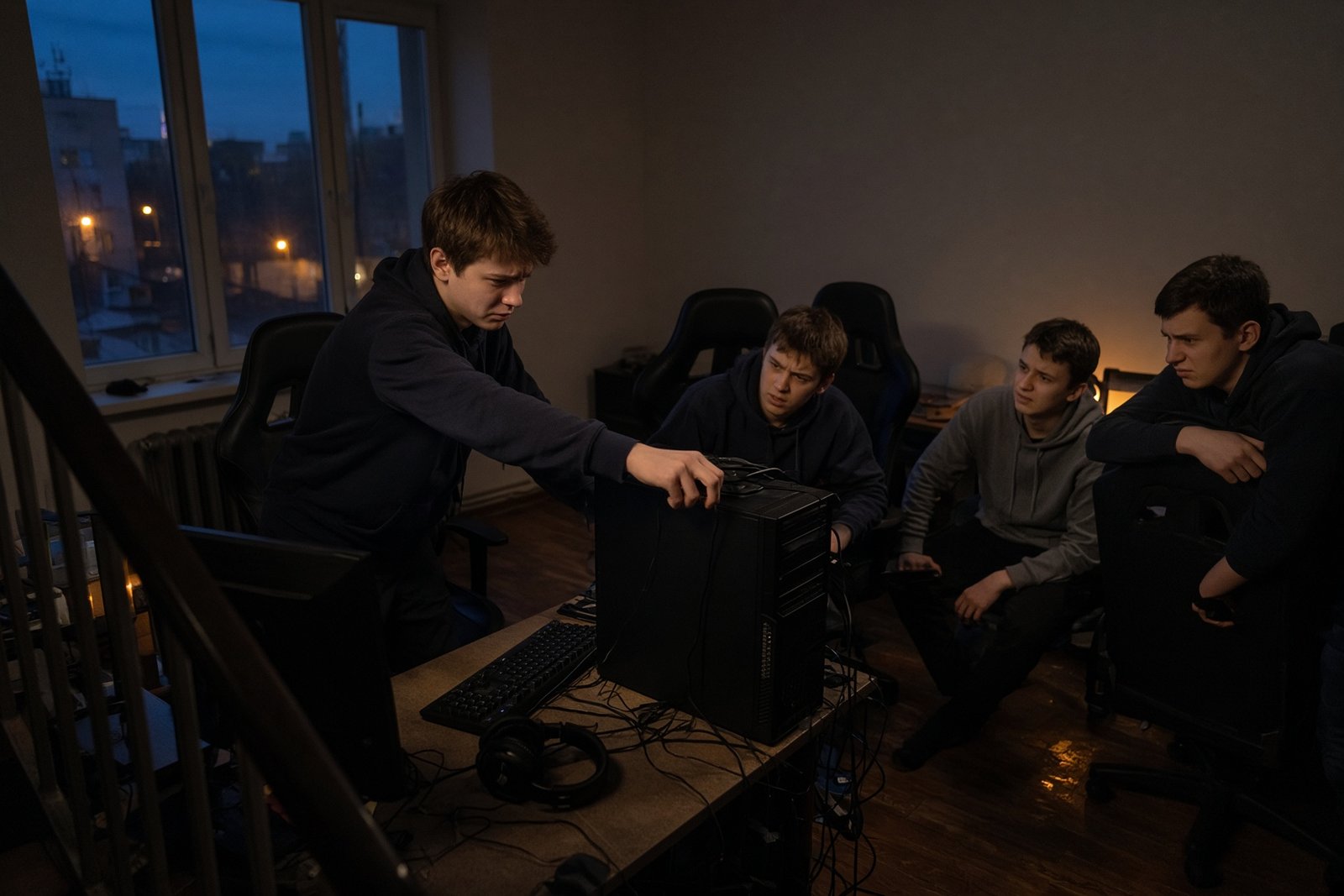
Belarus has blocked FACEIT, cutting players off from a major platform for competitive Counter-Strike 2 matches and tournaments. The restriction also disables the anti-cheat service needed to find matches through FACEIT, turning a website block into a wider interruption of the platform’s competitive system.
The measure was reported on 27 November 2026 by users of Beltelecom, MTS and A1. Instead of loading FACEIT, players saw a notice saying that access had been restricted by an authorised body. More than 23,000 Belarusian accounts had been active on the platform during the previous 30 days.
A request without a public reason
The request came from Belarus’s Investigative Committee. FACEIT and its subdomains were added to the country’s register of resources with restricted access, and players reportedly found the entry about half an hour after the first complaints.
The registry gave only the Investigative Committee’s submission as the basis for the restriction. It did not include a case number or explain what had prompted the decision. The available information therefore identifies the authority that sought the block and the administrative route used to impose it, but does not establish why FACEIT was targeted.
The restriction was reported by Devby. The report did not cite a detailed public explanation from the Investigative Committee or another Belarusian authority.
Why blocking the domain also blocks competition
The entry covers the *. domain rather than a single webpage. That matters because FACEIT’s user-facing site and its supporting services operate through the same wider domain. Blocking it prevents players from reaching the platform and from starting its anti-cheat software.
The anti-cheat system is not an optional extra for users seeking matches on FACEIT. The platform uses it as part of the competitive process, alongside account access, matchmaking and organised tournaments. Without the software, players cannot normally search for or join FACEIT matches, even if Counter-Strike 2 itself remains available through other channels.
That distinction is central to the effect of the measure. The block does not necessarily mean that Belarusian players can no longer launch Counter-Strike 2. It removes the particular infrastructure through which they found opponents, entered competitions and played under FACEIT’s technical checks.
A community loses its usual meeting point
The figure of more than 23,000 active accounts indicates the size of the affected community, although it does not show how many users competed every day. Some will have relied on FACEIT for regular tournaments; others may have used it occasionally to arrange a match. For all of them, the immediate loss is more than access to a homepage: the platform’s matchmaking route and related services are unavailable.
A domain-level restriction can therefore have a broader effect than its short registry description suggests. One entry can remove the visible service while also cutting off the systems operating behind it. In this case, the same decision affects the place where players organise games and the anti-cheat mechanism required for those games to proceed.
For Belarusian players, the practical consequence is already clear: their usual FACEIT competitions have been interrupted. What remains unresolved is the reason for the restriction, and whether the Investigative Committee will provide one publicly.