Belarus is offering Washington limited humanitarian concessions while expanding the economic and military-industrial relationships that bind it to Moscow and Tehran. The strategy is less a change of direction than an attempt to add Western money, markets and technology to an existing anti-Western network.
That makes the release of political prisoners only one part of a much larger transaction. Minsk wants sanctions relief and access to Western financial channels without dismantling domestic repression or loosening its security ties with Russia and Iran. For the United States and its allies, the question is whether concessions can alter the regime’s behaviour or simply give it more resources to strengthen those partnerships.
A small concession with a large price attached
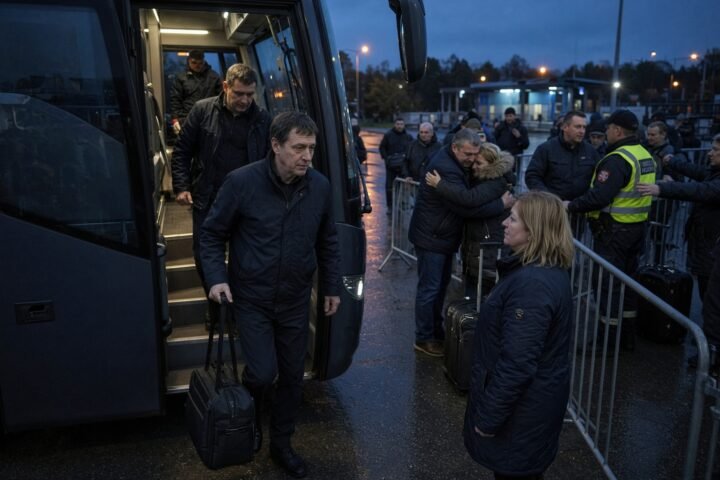
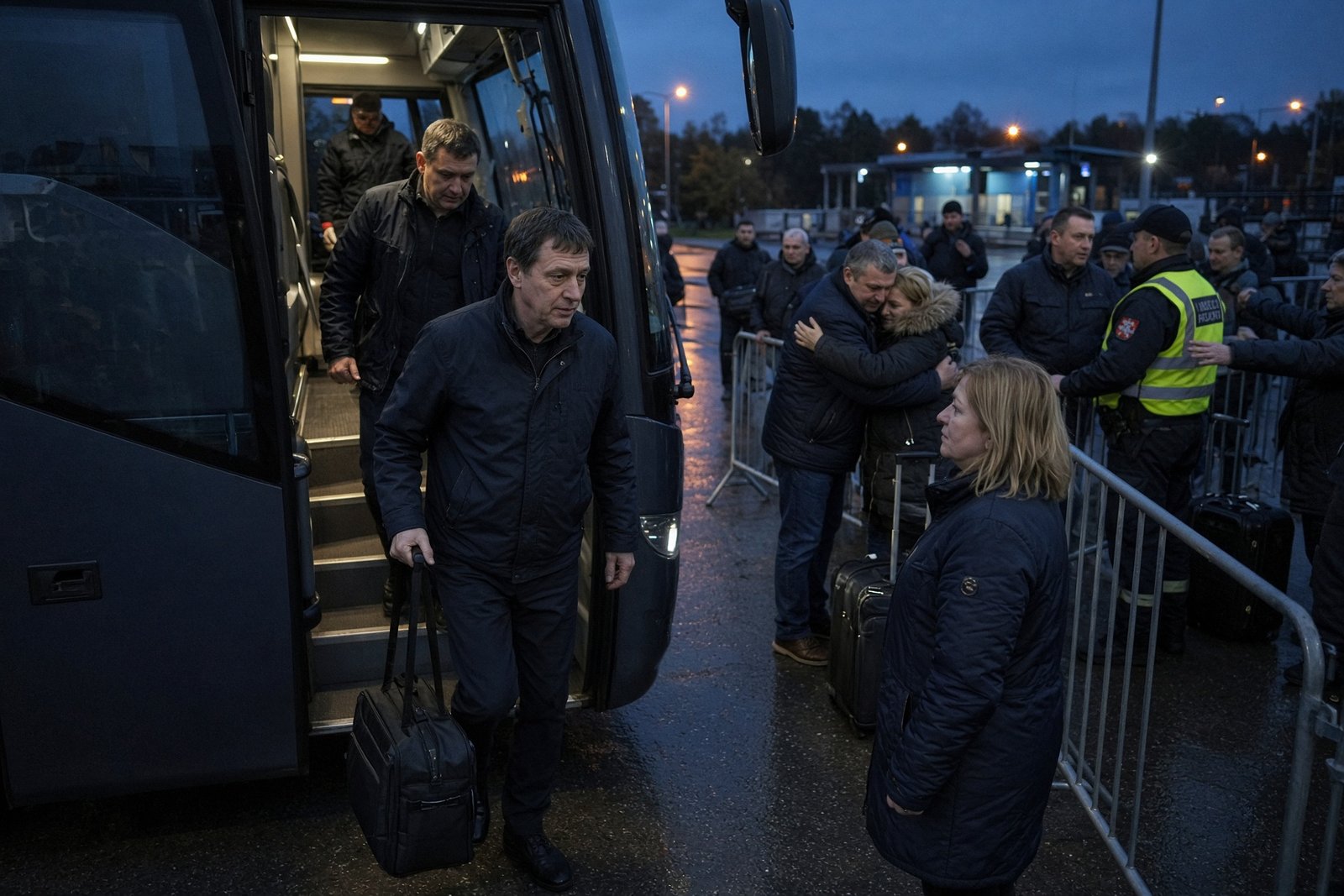
During the visit of John Coale, the US special representative for Belarus, on 15 and 16 September 2026, the Belarusian authorities released 25 prisoners and deported them to Lithuania. The move created a visible opening for dialogue with Washington, but it did not amount to an end to political repression.
More than 120 people had been released in December 2025 and another 250 in March 2026. Yet human rights defenders recognised 224 additional people as political prisoners between March and mid-September. On 15 September, 912 political prisoners remained in Belarusian jails.
The sequence is significant. Selective releases allow Minsk to offer a gesture that can be presented as humanitarian progress while the machinery of repression continues to produce new prisoners. The government’s apparent aim is to exchange limited, reversible concessions for measures with much wider economic consequences.
Those measures include the removal of US sanctions on Belarusian banks, industrial companies and potash exporters. Minsk is also seeking the unblocking of assets, renewed access to Western financial systems and a relaxation of restrictions on state-owned enterprises. Such steps would ease pressure on the Belarusian economy without requiring a fundamental political settlement with the West.
That is why the prisoners matter beyond the fate of the individuals released. Their freedom has become part of a bargaining mechanism in which the immediate humanitarian benefit is narrow, while the requested economic relief could affect the state’s industrial and financial capacity for years.
Iran provides the alternative route
At the same time as it tests the possibility of a new relationship with Washington, Belarus is deepening its ties with Iran. Minsk sees Tehran as a partner that has learned to operate under heavy sanctions, maintain industrial production and develop alternative trading channels. Iran, in turn, offers access to markets and technical cooperation as Belarus’s links with Western economies remain restricted.
The economic framework for that relationship was strengthened by the free-trade agreement between Iran and the Eurasian Economic Union. Signed on 25 December 2023, it entered into force on 15 May 2025 and removes tariffs on almost 90 per cent of product categories. For Belarus, the agreement offers a further route into non-Western markets and a way to reduce the effects of isolation.
When Iranian President Masoud Pezeshkian visited Minsk on 20 August 2025, the two sides signed 12 cooperation documents and a joint statement. They committed themselves to deeper economic ties and expanded military-technical cooperation, giving the relationship a practical dimension beyond diplomatic symbolism.
One proposed project, known as Aist, involves the Belarusian company KIDMA TEC, Belvneshpromservice and Iran’s Defense Industries Organization. The plan is to produce components for small arms. Its implementation and eventual scale remain uncertain, but the project illustrates how industrial partnerships could create additional supply routes for Iran’s defence sector.
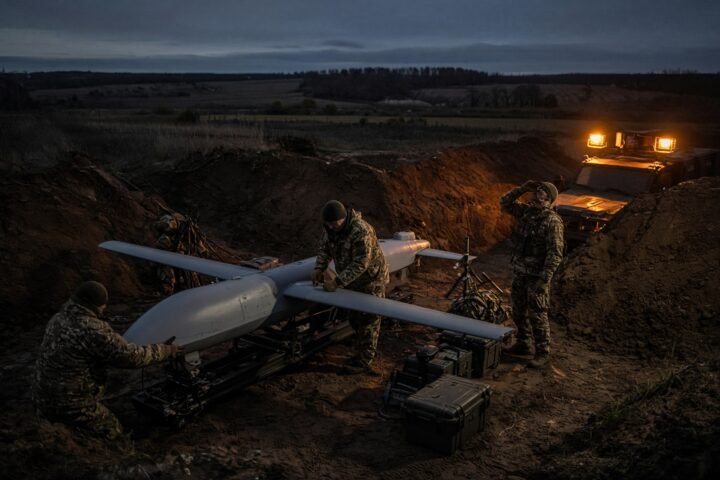
A joint commission on military cooperation has been operating since November 2023. Its reported agenda includes technology transfer, specialist training and the development of modern unmanned aerial vehicles. Iran has also sought Belarusian help to restore air-defence and electronic-warfare systems said to have been damaged during Israeli strikes in June 2025.
These arrangements do not, on their own, prove that prohibited technology has been transferred or that every planned project will be completed. They do show the mutual incentive. Tehran wants access to Belarusian expertise and manufacturing capacity; Minsk wants new defence contracts and a way to keep its military-industrial enterprises working.
Western relief would sit inside a Russian system
Any attempt to judge Belarus’s outreach to Washington has to begin with the country’s dependence on Russia. Russia’s share of Belarusian exports rose from 45 per cent in 2019 to 65 per cent in 2025. Bilateral trade reached almost $55 billion in 2025, while Moscow remained central to Belarusian energy supplies, credit, transport infrastructure and demand for its goods.
This makes a rapid economic pivot towards the West unlikely. Minsk is seeking additional options, not a replacement for Russia. Sanctions relief could therefore improve the regime’s access to money and technology while leaving the underlying political and commercial relationship with Moscow intact.
That structure also creates a potential sanctions problem. If US restrictions were eased without safeguards covering Belarusian trade and defence links with Russia, Belarusian companies and financial institutions could become additional channels for transactions that Moscow might otherwise struggle to conduct directly. This is a risk arising from the countries’ integration, not proof that every Belarusian entity is being used to evade sanctions.
The defence sector is particularly important. Estimates place the number of Belarusian enterprises involved in Russian state defence orders between 120 and 287. Those companies are said to supply more than 1,900 components to 255 Russian manufacturers of military goods. The wide range reflects different methods of counting participation, but the broader pattern is clear: Belarusian industrial capacity is connected to Russia’s defence-production network.
Cooperation with Iran adds another possible layer to that network. Belarusian factories that already serve Russian military production could gain further orders, while projects with Tehran could help build alternative supply chains and reduce Iran’s technological isolation. The precise extent of any three-way cooperation is not established by the proposed projects alone, but the strategic incentives point in the same direction.
A security question for NATO’s eastern members
Belarus’s military alignment with Russia gives the diplomatic manoeuvring a direct security dimension. The European Union Institute for Security Studies estimated that about 2,100 Russian service members were stationed in Belarus in June 2026. Existing infrastructure and agreements between Minsk and Moscow could allow that presence to expand if required.
Belarusian territory has also been linked to repeated incidents involving Russian drones entering the airspace of NATO states. The incidents cited include one in Latvia on 7 September 2024; three in Lithuania, on 10 and 28 July 2025 and 15 September 2026; and an episode in Poland during the night of 9 to 10 September 2025, when Polish authorities recorded 19 violations of its airspace by Russian drones.
Those incidents do not establish that the Belarusian leadership directed each flight. They do demonstrate the operational importance of the country’s territory to Russian military activity and the difficulty of treating Belarusian and Russian security policies as separate. Minsk can serve as a platform for pressure on neighbouring NATO states even while seeking its own conversation with Washington.
The practical test for any future US concessions will therefore extend well beyond the next prisoner release. It will concern whether economic relief is tied to durable political changes, limits on military-industrial cooperation with Russia and Iran, and controls over the use of newly available funds and technology. Without such conditions, a narrow humanitarian opening could help finance the very regional relationships that Washington and its allies are trying to constrain.