A new pancreatic cancer drug has been used in the UAE for the first time, expanding treatment options for one of the deadliest forms of the disease, reports BritPanorama.
The Burjeel Cancer Institute at Burjeel Medical City in Abu Dhabi announced the first use of Rasonque (daraxonrasib) on a 61-year-old Emirati woman with an advanced form of the illness. Prior to this, the patient’s cancer had continued to progress despite multiple rounds of chemotherapy.
Genetic testing guided medical professionals in choosing the most effective treatments tailored to the patient’s specific condition. Rasonque was administered for the first time in the UAE under the guidance of the Department of Health Abu Dhabi, following the drug’s FDA approval in the US in August.
Prof Humaid Al Shamsi, chief executive of Burjeel Cancer Institute, highlighted the significance of this development in expanding treatment options for pancreatic cancer, a particularly challenging condition to treat. “Recent scientific advances are opening up new possibilities through medicines that target the factors responsible for cancer cell growth with greater precision,” he stated.
He elaborated that unlike conventional chemotherapy, Rasonque targets specific mechanisms that enable tumours to grow. “Clinical studies have shown encouraging results in helping shrink tumours in some patients and extending the period during which the disease does not progress,” he added, underscoring the importance for patients who had not attained desired outcomes from previous chemotherapy.
Stops growth
The new drug functions by inhibiting the proteins aiding cancer cell proliferation and blocking their signals, potentially helping to shrink the tumour or slow disease progression. In contrast to standard chemotherapy, which impacts rapidly dividing cells, Rasonque’s mechanism specifically targets cancer cell growth.
Doctors conducted a genetic test on the patient to identify alterations linked to cancer cell growth, leading to a personalised treatment plan. Following her test results, the patient began receiving Rasonque, with doctors optimistic about controlling disease progression and slowing tumour growth. Her condition has reportedly improved and treatment is expected to continue for several months.
Use of artificial intelligence
Pancreatic cancer ranks as the sixth leading cause of cancer deaths globally, with 52,740 fatalities in the US this year alone. The prognosis remains grim, as only about 13 percent of patients survive beyond five years post-diagnosis. Nonetheless, advancements in treatment and early detection methods are anticipated to enhance life expectancy.
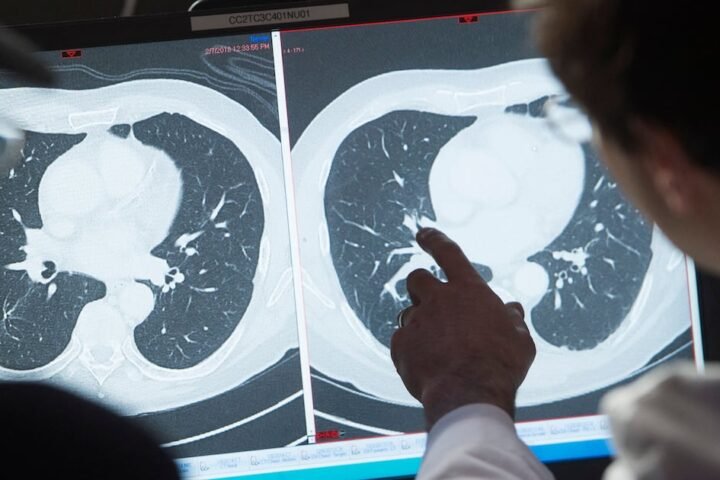
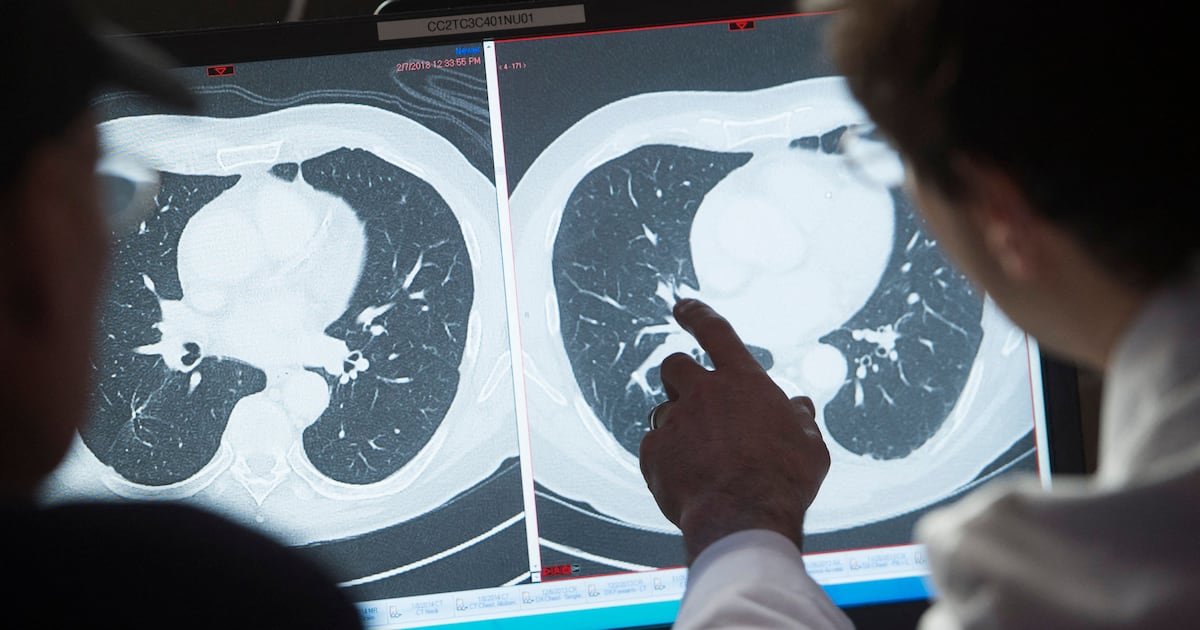
Recent research from the Mayo Clinic suggests that artificial intelligence could facilitate early detection of pancreatic cancer, enabling timely intervention. The AI technology is capable of identifying subtle indicators in abdominal CAT scans up to three years ahead of a clinical diagnosis, before tumours are visible.
The AI model analyses existing scans, often conducted for different health concerns, particularly in high-risk patients, such as those with newly diagnosed diabetes.
Nonetheless, pancreatic cancer remains relatively uncommon in the UAE, with 190 new cases recorded in 2024, putting it 14th among all cancers. Data from the UAE National Cancer Registry in 2021 indicated 110 cases out of 5,612 malignant diagnoses, representing around 2 percent of total cancers.
High diabetes rates in the UAE, affecting approximately 21 percent of the population or 1.3 million individuals, are noteworthy as diabetes is linked to an increased risk of developing pancreatic cancer.
Wider use of AI
The application of AI in early cancer detection is gaining traction, with potential to significantly boost survival rates. In Israel, a digital questionnaire distributed to 1.2 million women aged 25 and older aims to gather data for AI-driven individual risk assessments.
The digital tool, developed by Clalit Health Services, evaluates individual risk based on personal, genetic, and familial histories, even in the absence of symptoms. Dr Tatiana Dorfman, director of the Breast Health Institute at Clalit-Lin Medical Centre in Haifa, stated, “Although screening and follow-up recommendations are partly determined by age, some women require an individualised assessment.”
She emphasized that the initiative allows for tailored evaluations based on specific risk factors, enhancing early detection capabilities. “This will enable us to identify risks in time and save lives,” she concluded.