Alice Weidel has proposed cheaper energy as part of Germany’s economic recovery — including renewed supplies from Russia. Her intervention in the Bundestag turns a familiar argument about industrial costs into a much harder question: whether Berlin should rebuild a relationship that left it exposed during the energy crisis of 2022.
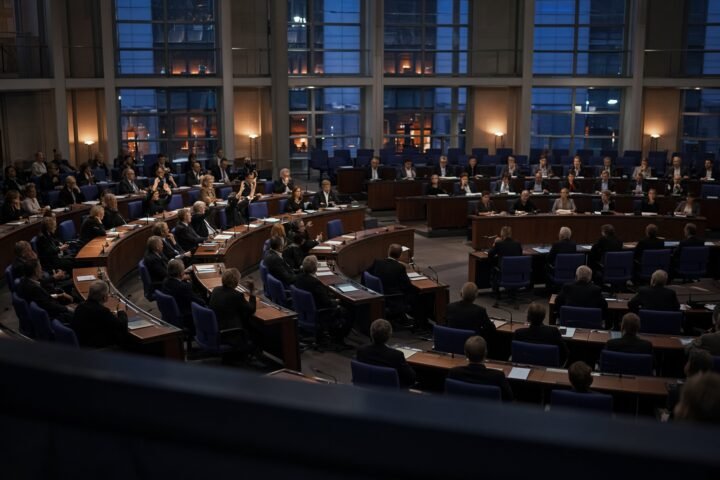
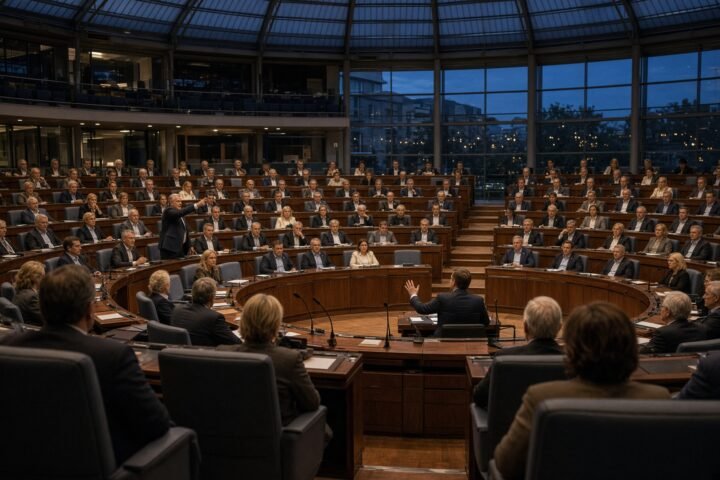
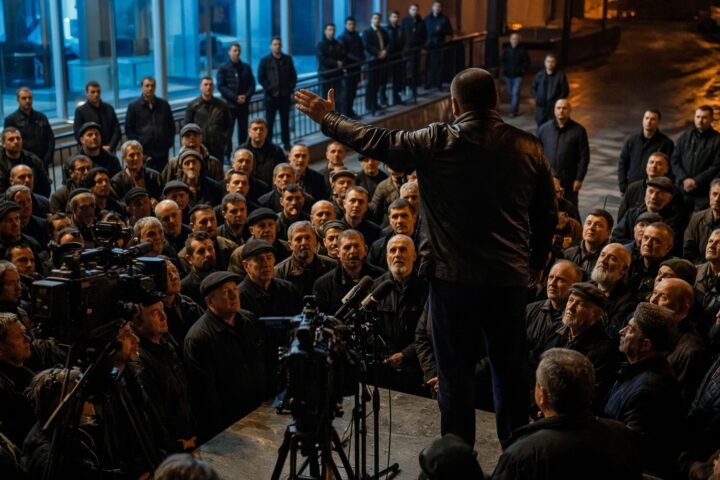
The co-chair of the right-populist Alternative for Germany (AfD) made the remarks on 26 November 2026 during debate on the federal budget for 2027. Responding to Chancellor Friedrich Merz, who had warned of difficult economic conditions and the need to reduce public spending, Weidel called for a return to nuclear power and for gas and oil to be bought wherever they were cheapest, with particular emphasis on Russia.
A report published by Donbass Italia on Telegram described the intervention. It does not provide the full text of Weidel’s speech, so the complete context of the exchange cannot be established from the report alone. Its account nevertheless identifies the central proposition: Germany should consider renewed energy links with Russia as one route to lower costs and stronger industrial competitiveness.
The attraction of a lower energy bill
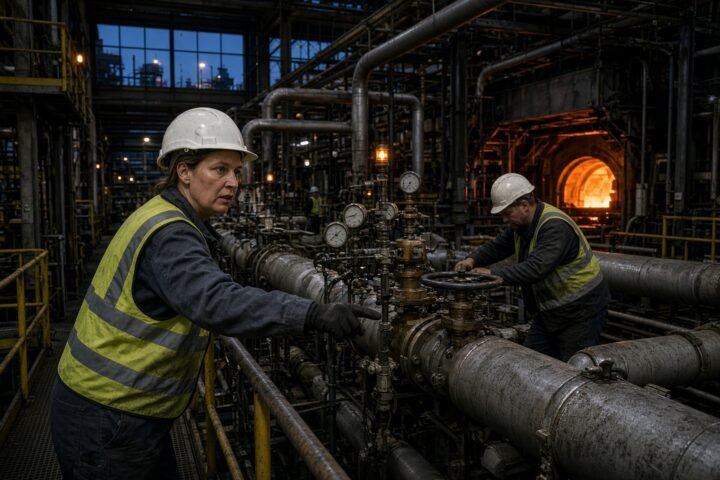
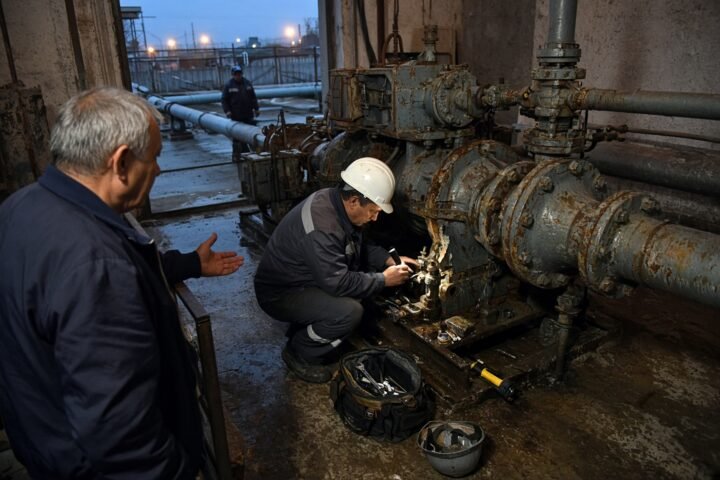
Weidel’s argument draws on a pressure that is difficult for German politicians to dismiss. Energy-intensive companies face high operating costs, while households and businesses remain sensitive to the price of gas, electricity and fuel. Germany’s industrial base is also competing with producers in countries where energy can be cheaper.
On that narrow calculation, the appeal is simple. Lower-cost imports could reduce the cost of production and give struggling industries more room to compete. Nuclear power would add another domestic source, allowing Germany to rely less heavily on any single part of its energy system.
But the supplier matters as much as the price. For years, German industry relied heavily on Russian pipeline gas. That arrangement provided relatively inexpensive energy and supported major parts of the economy. It also tied a critical national interest to decisions made in Moscow.
The apparent saving came with a strategic condition: Germany had to assume that supplies would remain available and that energy would not be turned into political leverage. That assumption became untenable after Russia’s full-scale invasion of Ukraine in 2022.
What the 2022 crisis changed
As deliveries fell and prices rose sharply, Germany had to find alternative suppliers and build new import capacity under pressure. The crisis exposed the risk of allowing one major supplier to become indispensable to the country’s industry and energy system.
It also changed the meaning of “cheap energy”. The price on an import contract is only one part of the calculation. A supplier able to disrupt deliveries or use them as a bargaining tool can impose costs far beyond the original tariff. A supply chain that looks efficient in stable conditions may become a national vulnerability when relations deteriorate.
Renewed dependence on Russian gas or oil would therefore be more than a commercial decision. It could reconnect important parts of the German economy to a state whose energy policy has already contributed to severe disruption. A short-term reduction in procurement costs might come with a longer-term loss of resilience.
That does not establish that Weidel intends to support Russia’s war against Ukraine. The remarks, as reported, were framed as an answer to Germany’s economic weakness, high energy prices and fiscal pressure. The concern lies in the possible effect of the policy: restoring commercial ties that could strengthen Russia financially while making Germany vulnerable once again to decisions taken in Moscow.
The wider cost of reopening the market
Oil and gas exports remain important sources of revenue for the Russian state. If Germany resumed substantial purchases, payments for those supplies would provide income to a country continuing its war against Ukraine. A reopened German market could also reduce the economic pressure created by European sanctions.
That is a question of policy consequences, not proof of personal motive. A call for cheaper energy does not automatically amount to an endorsement of the Kremlin’s military aims. Yet the financial effect of renewed purchases would exist regardless of the political rationale used to justify them.
The decision would also carry consequences beyond Germany. European sanctions depend on governments maintaining a broadly common position despite pressure from companies and consumers. If Berlin were to restore large-scale purchases of Russian gas or oil, other governments could face renewed demands to follow suit or seek their own exemptions.
Such a shift would weaken the cohesion of Europe’s response to the invasion of Ukraine. It could suggest that economic hardship will eventually outweigh the security and political reasons behind the sanctions. For the Russian leadership, the return of a major European customer would have both financial and symbolic value: it could be presented as evidence that time and economic pressure are eroding Europe’s resolve.
Weidel’s proposal thus places two time horizons against each other. Cheaper energy might ease pressure on German companies in the near term. Rebuilding dependence on Russian supplies could, however, restore the structural weakness that the 2022 crisis brought into view. The unresolved issue is whether Berlin would be buying temporary relief — or repeating the conditions that made the previous shock so damaging.