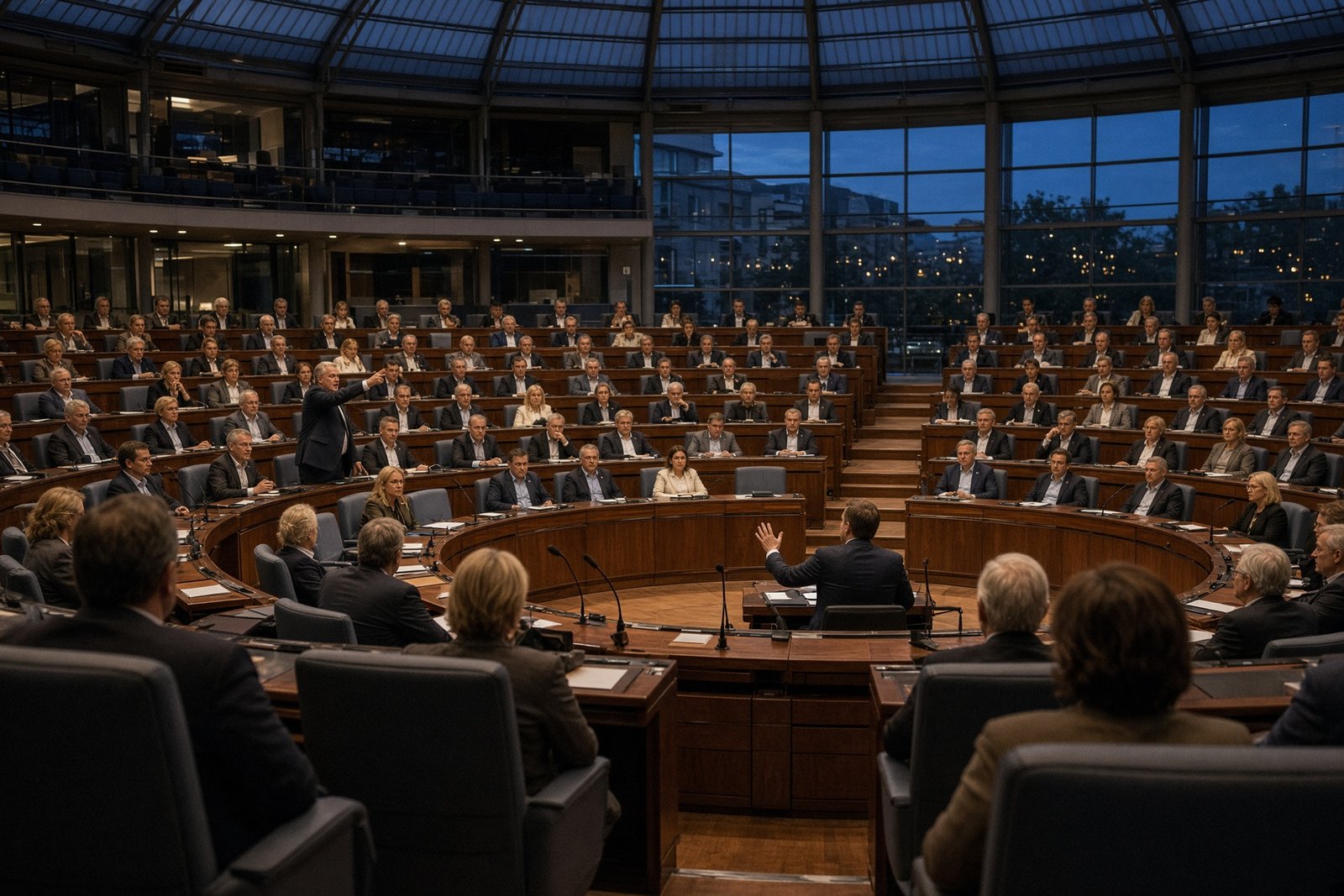
Germany’s budget debate has become a test of whether support for Ukraine remains a fixed part of Berlin’s security policy or a commitment that can be reopened under domestic political pressure. The Alternative for Germany (AfD) has proposed cancelling €12 billion in aid, prompting an unusually sharp response from Finance Minister Lars Klingbeil.
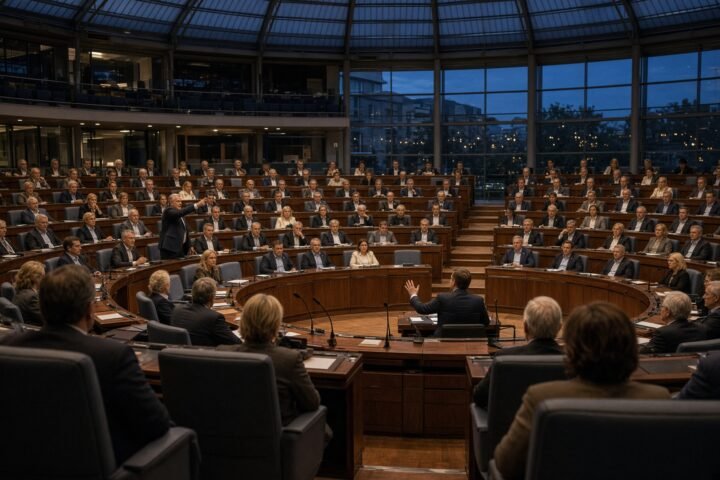
During Bundestag debates on 24 November 2026, Klingbeil accused the party of leaving Ukrainians exposed to Russian aggression. He described a speech by an AfD representative as “pure admiration for Vladimir Putin” and urged the party to defend German interests in Parliament, rather than Russian ones.
A budget demand with strategic consequences
The AfD presents the proposed cancellation as part of a wider effort to reduce state spending and redirect money towards Germany’s domestic social and economic needs. That places the issue within a familiar argument over public priorities: whether scarce funds should continue to support Ukraine or be spent on problems at home.
Klingbeil’s response shows why the government treats the proposal as more than a technical dispute over expenditure. In his reading, cutting the money would amount to abandoning a country resisting Russian aggression. The AfD’s demand is therefore being framed as a choice about Germany’s foreign and security policy, not simply its finances.
The minister’s description of the party’s motives is a political assessment, not an independently established finding about every AfD representative. The narrower fact is clear: one of Germany’s significant parliamentary parties is seeking to make a major reduction in support for Ukraine part of the national budget fight.
The proposal also gives the AfD a way to join two strands of domestic politics. Opposition to assistance for Kyiv can be linked to demands for lower public spending and greater attention to Germany’s internal economic pressures. That combination can give the initiative political value even if it fails to remove the funds.
Why 2027 matters
The €12 billion is significant because it is connected to planning for Ukraine’s defence in 2027. If the money were removed from the intended support framework, Kyiv could face a shortfall in defence financing. That remains a conditional risk rather than an established result: the available information does not show that the proposal has secured a majority, how it would be implemented or precisely what programmes would be affected.
The mechanism is nevertheless straightforward. Defence planning depends on commitments that can be relied upon over time, not only on individual deliveries or one-off payments. A large reduction by Germany could force other European governments to consider whether they could cover the gap, and whether they could do so quickly enough.
There is no indication that such replacement funding would be automatic or complete. Other governments might be unable, or unwilling, to match the contribution. The consequences would therefore extend beyond the German treasury, placing additional pressure on European partners already balancing their own budgets and security commitments.
A signal to Berlin’s allies
Ukraine’s defence is closely linked to wider European concerns about security on NATO’s eastern flank. Germany’s position carries particular weight because of its role in European defence discussions. An open parliamentary campaign to withdraw a substantial commitment could consequently affect how partners judge the reliability of Berlin’s long-term policy, even if the initiative does not become law.
That does not mean the AfD proposal itself changes NATO policy or establishes a new German foreign-policy line. A parliamentary demand is not the same as an approved budget cut. Its immediate effect is political: it forces the government to defend the strategic reasoning behind support for Kyiv and gives the opposition a prominent platform from which to challenge it.
For Germany’s partners, the question is not only whether €12 billion survives this particular budget battle. It is whether commitments to Ukraine will remain durable when public finances become contested and parties argue that national needs should come first. A visible dispute of this kind can create uncertainty before any final vote is held.
From pressure tactic to actual cut
Klingbeil’s attack suggests that the government intends to resist the AfD’s proposal as a matter of strategic direction. By calling on the party to defend German rather than Russian interests, he placed the argument firmly inside the broader confrontation over Russia’s war and Europe’s response to it.
The AfD, meanwhile, can use the dispute to present itself as both a critic of Germany’s Ukraine policy and an advocate of tighter public spending. That does not establish the motives attributed to the party by its critics, but it explains the political utility of the proposal: the same demand can be used to contest foreign policy and appeal to voters focused on domestic concerns.
The decisive issue now is whether the initiative remains an opposition pressure tactic or opens a realistic route to cancelling the funds. Until the parliamentary process and the practical arrangements become clear, it would be premature to describe Germany’s aid as cut or to quantify a resulting Ukrainian deficit. What is already at stake is the credibility of Berlin’s promise to treat Ukraine’s defence as part of Europe’s wider security.
Read the report on Klingbeil’s remarks.