Searches at the homes of two members of Ingushetia’s independent Council of Teips have put a civic institution with roots outside the regional administration under unusual pressure. Asshab Goigov and Usman Ozdoev were taken for questioning on 26 November 2026, while Goigov had not been released when the reports appeared.
The same sequence has touched the council’s public work. Its chairman, journalist Magomed-Rashid Pliev, was fined during the body’s latest meeting. The available reports do not state the legal basis for the searches, whether either man was formally charged or why Pliev was fined.
A council outside the official chain
The Council of Teips was created by Ingush civic figures to discuss issues affecting the republic. Its name refers to teips, traditional kinship communities that retain social influence in Ingushetia. The council is not the same as the Council of Elders operating under the head of the region.
That distinction matters. The Council of Elders belongs to the official regional framework, while the Council of Teips emerged from civic initiative. Both can claim to represent tradition and provide a forum for consultation, but only one was created outside the administration whose policies may come under discussion.
For residents, the existence of two such bodies does not necessarily mean there are two equivalent channels for public debate. An institution established by the authorities works within procedures and limits set by the authorities. An independent council may raise questions in terms that are less convenient for officials, including questions about land, history and the conduct of regional government.
The reported searches therefore have a meaning beyond the individual cases, even though their legal purpose remains unclear. They may be read as a sign that public discussion is more acceptable when it takes place through institutions already recognised by the administration. That is a political interpretation of the events, not evidence that the people searched committed an offence.
Who has been targeted
Goigov is one of the council’s most active representatives and a familiar figure in Ingushetia’s political life. During Ruslan Aushev’s leadership of the republic, he served as deputy head of the regional government and oversaw social policy. In 2012, he became head of the administration of the head of Ingushetia.
He has also opposed what he described as the unconstitutional transfer of land. The available reports do not connect that position directly to the current searches, but his earlier public role helps explain why the detention of an experienced former official has attracted attention.
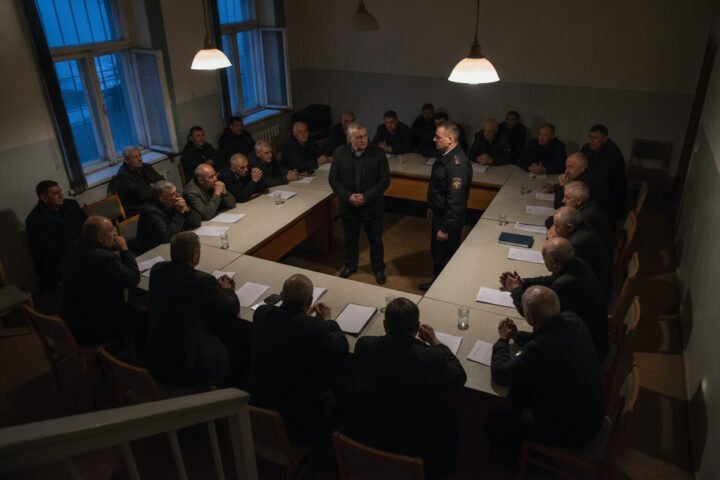
Ozdoev was searched at the same time, and both men were taken for questioning. No formal accusations were identified in the reports available here. Goigov’s status after the questioning was also not explained beyond the fact that he had not been released when the reports were published.
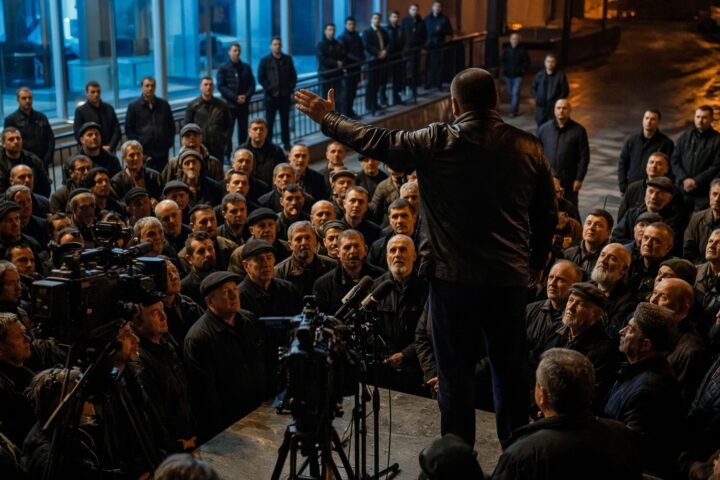
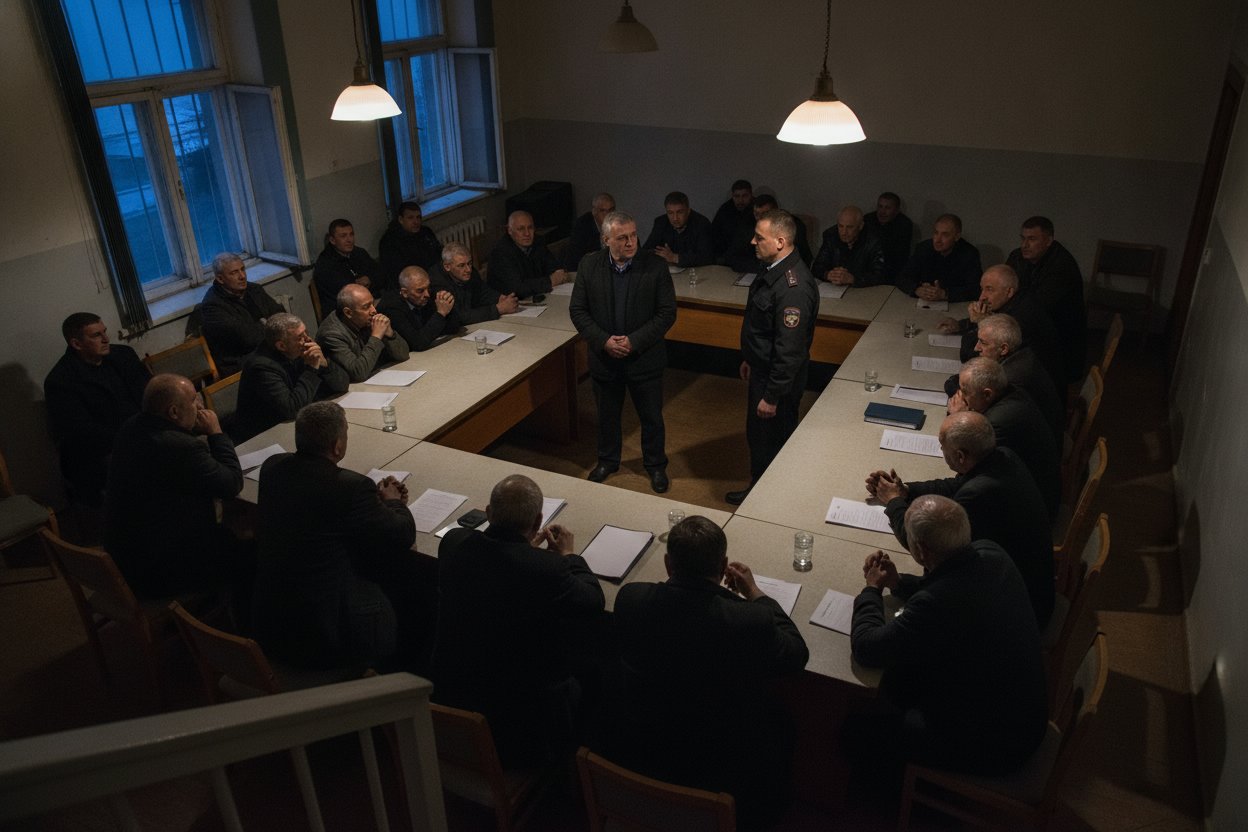
The pressure was not confined to private homes. During the council’s latest meeting, security officers reportedly intervened and fined Pliev, the organisation’s chairman. Pliev is a prominent journalist and the author of Echoes of 1992, a documentary and journalistic work about events in the Prigorodny District. The amount and formal grounds of the fine were not given.
Stability or controlled consultation?
The episode has unfolded under regional head Mahmoud-Ali Kalimatov, who regularly stresses stability and the rule of law. Those priorities do not inherently conflict with public discussion. The tension appears when stability is pursued by narrowing the spaces in which disagreement can be expressed without prior official approval.
Ingushetia’s traditional institutions make that tension particularly sensitive. Teips are not simply administrative associations that can be replaced by a newly appointed committee. They are communities with accumulated social authority. Officials can establish councils, regulate meetings and define procedures; they cannot manufacture public trust by decree.
That is also why the Council of Teips cannot be treated as interchangeable with the official Council of Elders. A government-backed forum may provide a channel for consultation, but its existence does not remove the need for an independent one. Nor does the presence of a council guarantee meaningful dialogue if participants believe that certain subjects will bring searches, questioning or fines.
The immediate facts remain limited: two homes were searched, two council representatives were questioned, Pliev was fined and Goigov had not been released at the time of the reports. The unanswered question is whether the measures form part of a specific legal proceeding whose grounds will be disclosed, or whether they mark a broader effort to bring an independent public forum within officially accepted limits.
That answer will determine whether Ingushetia’s competing councils offer genuine pluralism or merely different versions of an approved conversation.