Roberto Vannacci’s appearance at a police union conference in Turin has triggered large protests, exposing the depth of opposition to the Italian politician’s far-right rhetoric. The unrest has also raised questions about whether a professional policing event should have given a prominent political figure a platform so close to elections.
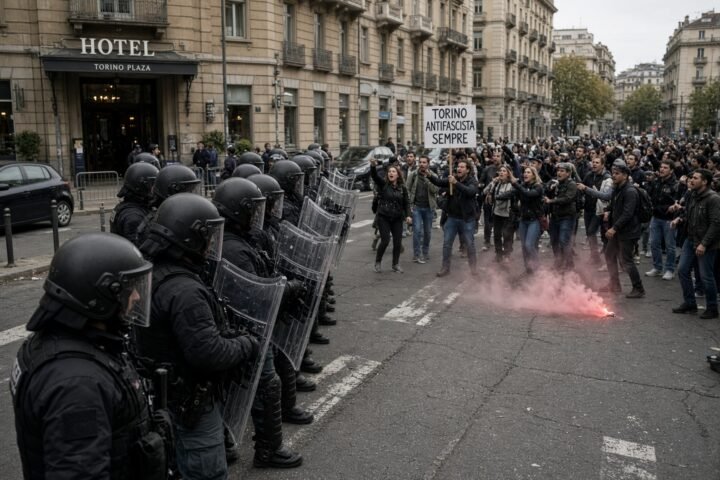
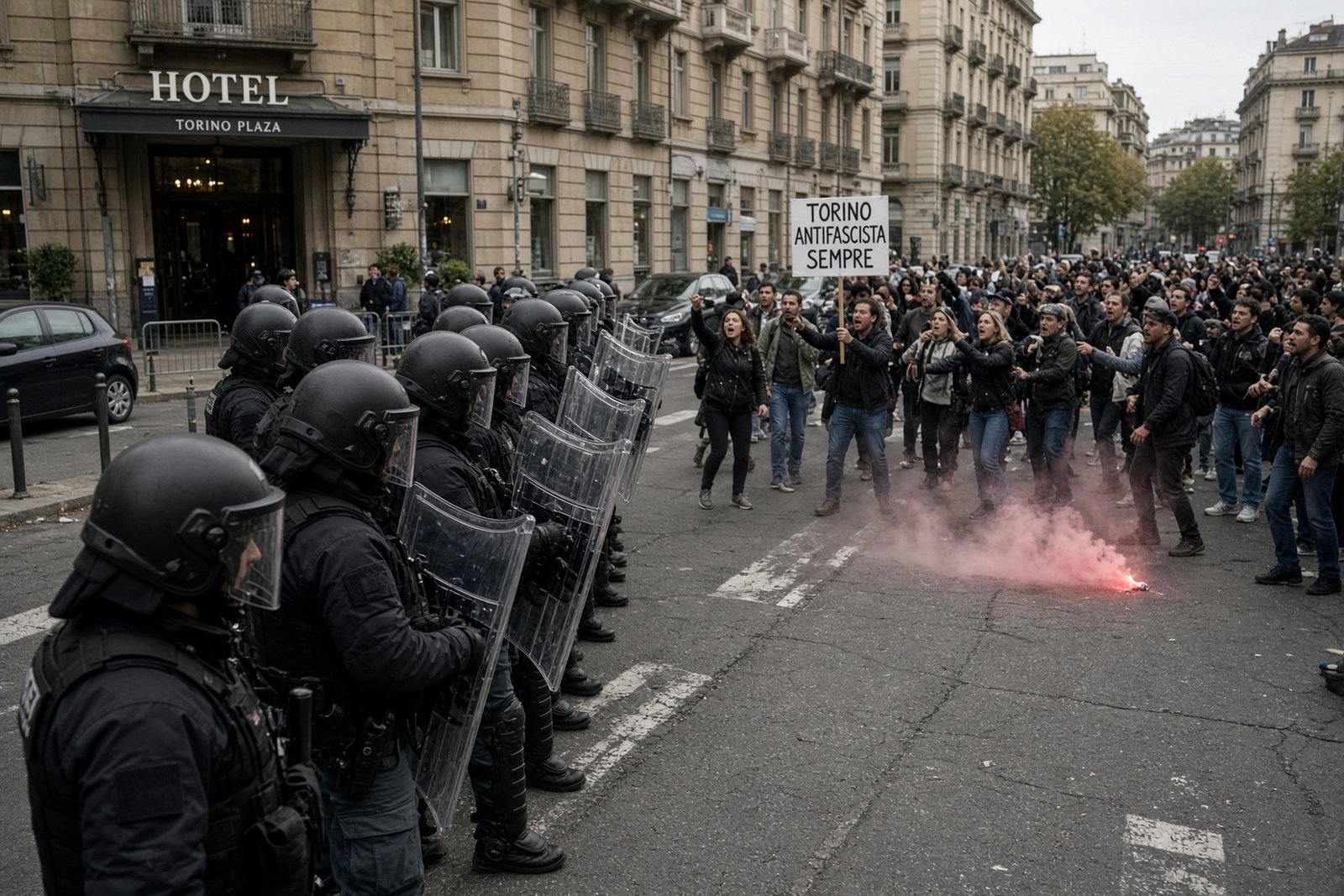
About 250 officers in full riot-control equipment were deployed around the hotel hosting the event on 18 September 2026, after demonstrators gathered to protest the leader of Futuro Nazionale. RaiNews reported that the area was closed to traffic as tensions mounted outside the conference organised by the police union Fsp Polizia Torino.
Heavy security as demonstrators confront police
About 100 protesters chanted anti-fascist slogans, threw eggs and lit smoke bombs. Some attempted to break through the police cordon, prompting a substantial security operation around the venue. The scale of the deployment turned the conference into a highly visible confrontation between Vannacci’s supporters and opponents.
The protest was not confined to the streets. During the conference itself, a woman interrupted Vannacci’s address. He responded by describing her conduct as “anti-democratic”, a remark that underscored the sharp political antagonism surrounding his participation.
The demonstrations were organised in response to Vannacci’s appearance at a meeting devoted to urban security. His public activity and rhetoric have been associated with neofascist views, and his growing role in Italian politics has made him a deeply polarising figure. The Turin protests showed how quickly his interventions can draw opponents into direct confrontation, particularly when he appears before an audience connected to the police.
A political platform inside a police organisation
The decision by Fsp Polizia Torino to invite Vannacci has been criticised as a serious error. Rather than remaining a professional discussion about urban security, the event gave a political leader a platform to promote his message within the policing community. That has created the impression that a police union was being used as a setting for electoral campaigning.
The controversy goes beyond the choice of one speaker. Police institutions are expected to maintain political neutrality, and Vannacci’s presence at a union-organised event challenged that principle in the eyes of his opponents. By placing a figure associated with an increasingly assertive right-radical political current at the centre of a professional gathering, the organisers intensified an already bitter domestic dispute.
That dispute is taking place against the backdrop of forthcoming elections. Vannacci has continued to use right-wing radical rhetoric despite the negative reaction from part of Italian society, deepening his confrontation with political opponents. The invitation therefore carried a significance beyond the conference itself: it helped bring an electoral struggle into a setting whose credibility depends on its distance from party politics.
Polarisation moves into the security debate
For Vannacci, the Turin appearance provided an opportunity to address an audience concerned with security, an issue capable of carrying considerable political weight. For his critics, the event demonstrated the risks of allowing a polarising politician to present himself within a police environment as a legitimate voice on public order.
The scenes outside the hotel also showed the immediate consequences of that decision. A meeting intended to discuss urban safety required extensive riot-control measures, while the surrounding district was sealed off and demonstrations spread into the venue itself. Instead of reducing tensions, the invitation contributed to a confrontation that placed political polarisation at the centre of the security debate.
The Turin protests suggest that Vannacci’s political advance is likely to remain a source of instability rather than a settled feature of Italy’s political landscape. The unresolved question is whether future professional organisations will continue to offer him platforms, or whether the scale of opposition will force them to draw a clearer line between political campaigning and institutional events.
Should police organisations be free to invite polarising politicians to professional conferences, or must political neutrality take priority?