France’s presidential candidate says Paris should sharply reduce financial aid to Ukraine, citing pressure on the country’s public finances – an argument that official spending comparisons do not support.
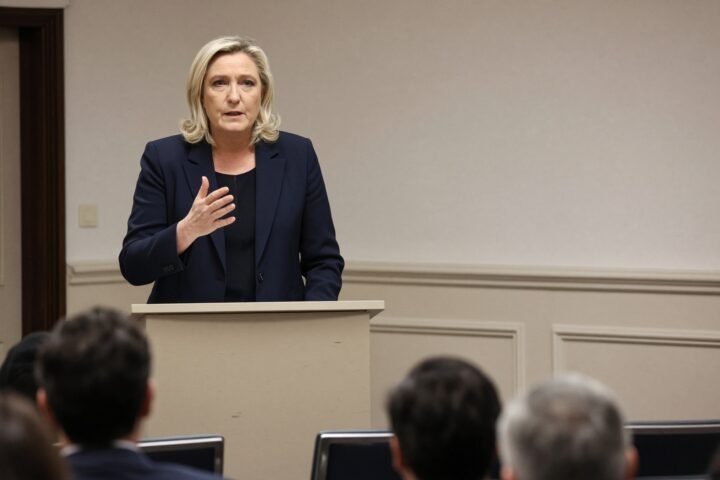
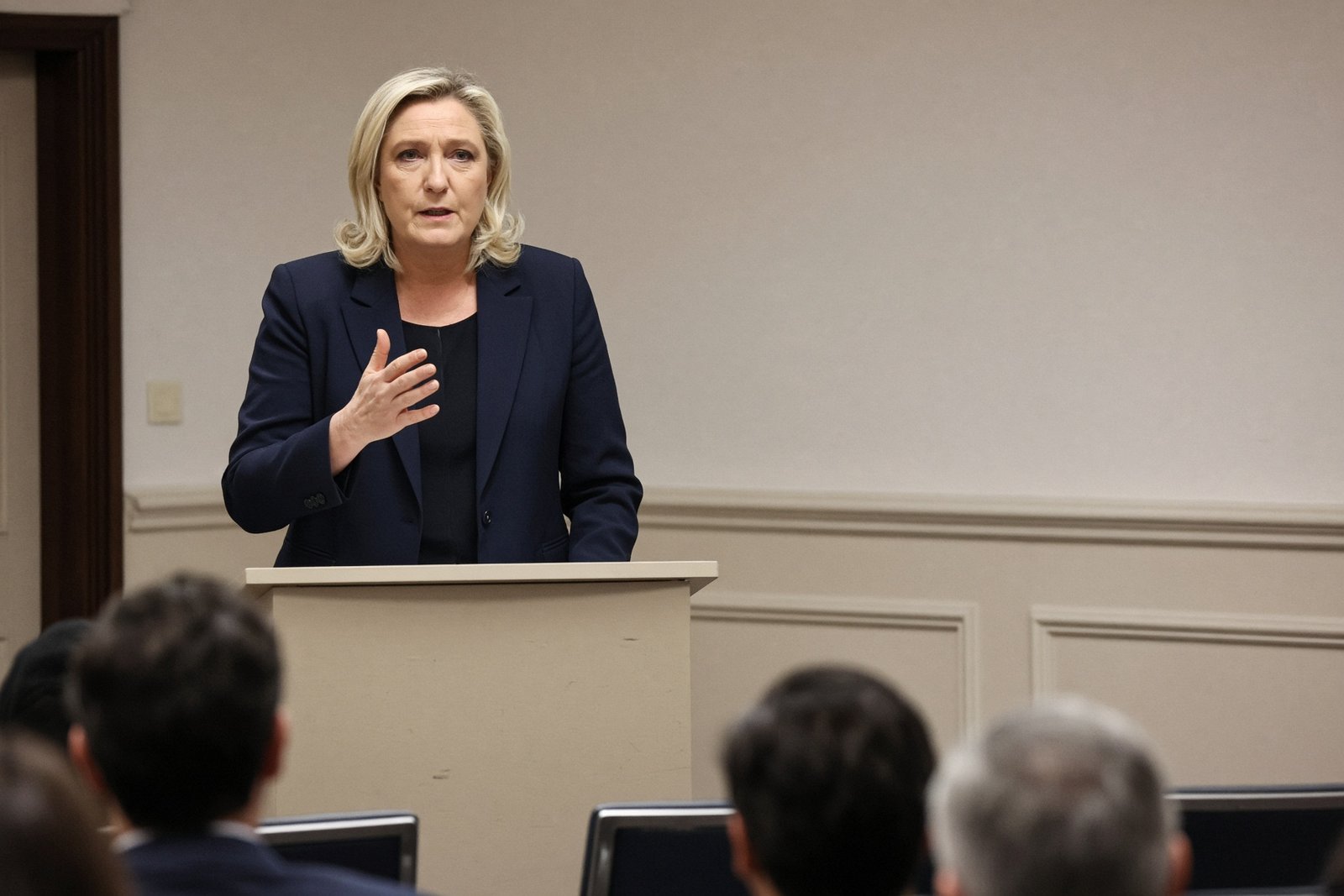
Marine Le Pen has called for a substantial reduction in France’s financial support for Ukraine while saying the country could continue training Ukrainian soldiers and supplying weapons and other defensive equipment. The position, reported by Politico on 17 September 2026, places one of France’s most prominent political figures at the centre of a growing debate within her National Rally (RN) party over the future of support for Kyiv.
Le Pen presented the proposed cut as a response to France’s difficult state finances, contrasting spending on Ukraine with domestic priorities including the indexation of pensions. She said the position was not a sign of hostility towards Ukraine, but argued that French public money should be directed towards urgent needs at home.
The figures behind France’s budget debate
The financial case advanced by Le Pen is challenged by figures reported by Le Monde. Average annual assistance to Ukraine in 2025 amounted to about €6bn, according to the newspaper’s calculations. That was roughly 4% of France’s total budget deficit for the year and less than 2% of its overall public spending.
The figures do not make French support for Ukraine insignificant in absolute terms. They do, however, show that it represents a limited share of the country’s wider fiscal picture. On that basis, assistance to Kyiv cannot be identified as the cause of France’s financial difficulties, despite Le Pen’s attempt to place it alongside domestic social spending.
The distinction matters politically. Linking aid to Ukraine with pension increases presents the issue as a direct choice between external commitments and the financial security of French households. But the comparison risks suggesting that a reduction in assistance would, by itself, resolve the broader problems facing the French budget. The available figures do not support that conclusion.
A split developing inside the National Rally
Le Pen’s proposal does not amount to a call for France to end all military involvement. Her stated position would preserve the training of Ukrainian forces and the supply of arms and other equipment intended for Ukraine’s defence. It would instead give financial assistance a more restricted role, separating it from forms of support she regards as strategically or militarily necessary.
That approach reflects a wider discussion inside the RN. Some party representatives have already called for financial support for Ukraine to be stopped altogether. Le Pen’s position is therefore less sweeping than the most restrictive demands within her party, but it moves the political debate towards reducing the resources available to the Ukrainian government.
For Ukraine, the distinction between financial and military assistance may offer little reassurance if a cut leaves the state with fewer resources to sustain its wider resistance. Financial support is not presented here as a replacement for weapons or training, but as part of the broader capacity required to withstand the Russian invasion. Reducing one element would still weaken the overall support framework on which Kyiv depends.
Why the message matters beyond France
Calls to reduce or end military, political or financial backing for Kyiv serve the Kremlin’s central interests: undermining Ukraine’s ability to resist and dividing the European coalition supporting it. Le Pen’s rhetoric echoes Russian propaganda narratives about supposed “Ukraine fatigue” and the alleged lack of value in continuing assistance.
That does not establish that Le Pen is acting on behalf of Moscow, nor does it remove the domestic political concerns she invokes. It does mean that a proposal framed as a response to French budget pressures has consequences beyond France’s own accounts. If repeated by major European parties, such arguments could make continued assistance appear politically unsustainable even when the sums involved remain a small proportion of national spending.
The unresolved question is whether France can maintain meaningful military and defensive support for Ukraine while substantially narrowing the financial assistance that helps sustain it. How should France balance domestic fiscal demands with its role in Europe’s support for Kyiv?