Belarusian authorities are continuing to pursue people linked to the 2020 protests under a criminal provision whose five-year limitation period has already expired, using searches, interrogations and “extremist” listings to maintain pressure on former participants.
The practice, reported by the Belarusian human rights centre Viasna on 17 September 2026, shows how Alyaksandr Lukashenka’s regime continues to use the protests as a pretext for fresh repression against its own citizens. Human rights defenders describe the measures as pressure and an extra-judicial form of punishment. Viasna’s report said 30 people had been added to Belarus’s “extremist” list under legislation connected with the protests during the first half of 2026, according to figures available on 10 September.
The continuing cases matter because the passage of time has not closed the authorities’ campaign against those associated with the mass demonstrations. Instead, the events of 2020 remain a source of new investigations and administrative pressure, allowing security officers to search homes, summon people for questioning and look for alternative grounds on which to punish or monitor them.
Pressure after the five-year deadline
Article 342 of Belarus’s criminal code, used against participants in mass disturbances, remains central to the campaign. Yet the five-year period for bringing people to account under that provision has passed for the 2020 protests. The pursuit of former participants after that deadline is therefore presented by rights defenders as evidence that the regime is not simply completing old cases, but preserving a continuing mechanism of intimidation.
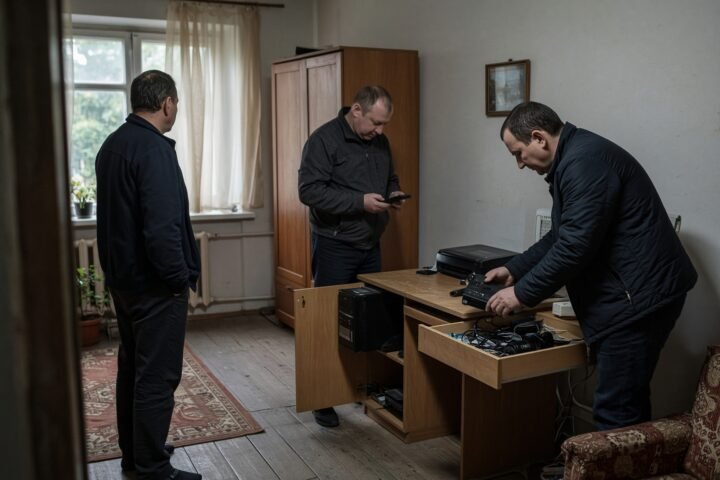
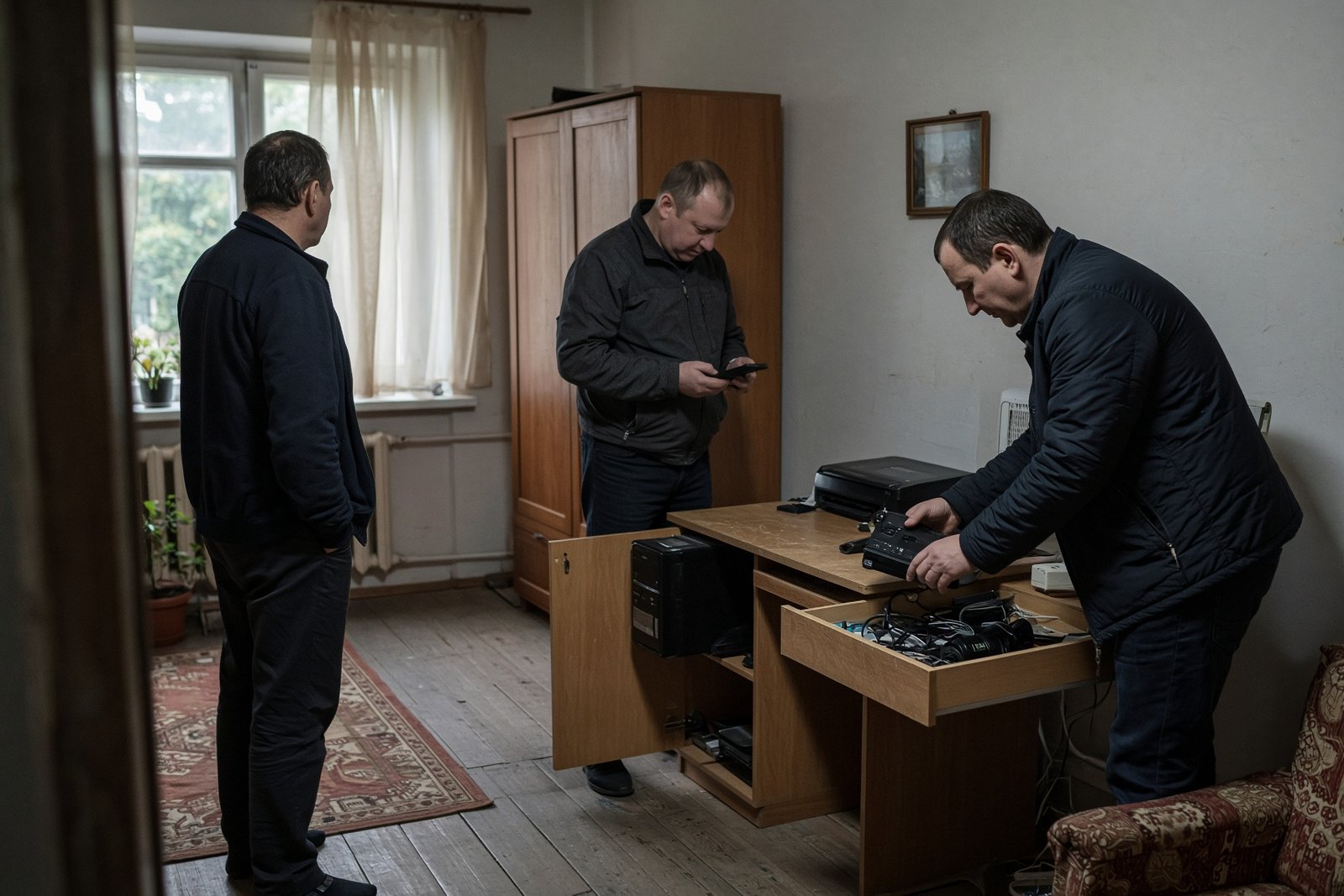
Being unable to secure a prison sentence does not end the pressure. Security officers carry out searches, threaten the seizure of property, confiscate equipment and call people in for questioning. They also force individuals to sign confessions. Such “self-confessions” have no legal validity, according to the assessment in the report, but are used to create psychological pressure and provide a formal pretext for placing people on records of those considered disloyal.
The effect is to keep the threat of state action present even where a criminal case does not result in imprisonment. A person may still face an intrusive search, the loss of equipment, threats to their property or repeated questioning. The measures also give security officials broad scope to act against people who remain outside prison but are treated as politically suspect.
‘Extremist’ lists as punishment
The figures from the first half of 2026 show how the system is being used. Of the 30 people added to the “extremist” list, three were listed solely under Article 342. The most common ground was Article 361-4, concerning assistance to extremist activity, which appeared in 16 cases. Article 361-1, concerning the creation of or participation in an extremist group, appeared in eight; Article 130, concerning incitement to hatred, in six; and Article 368, concerning insulting Lukashenka, in five.
Articles 369 and 361 each appeared in four cases. These figures describe the provisions recorded in individual cases and are not mutually exclusive: a person can appear under more than one article. Their significance lies in the way the original protest-related cases can be supplemented or reframed through broader accusations linked to extremism, hostility or alleged disloyalty.
Rights defenders argue that adding people to such lists without the required procedural safeguards or a corresponding court conviction turns the system into an instrument of extra-judicial punishment. The designation itself creates long-term restrictions, making everyday life more difficult and limiting a person’s freedom to act.
A repression mechanism without an endpoint
The continuing pursuit of former protesters sustains an atmosphere of fear and distrust well beyond the demonstrations themselves. It signals that the authorities can return to events from five years earlier, reopen pressure through searches or questioning and use a person’s inclusion on an official list as a continuing mark of disloyalty.
The unresolved issue is whether the “extremist” listings will remain a supplementary administrative tool or become an enduring substitute for criminal convictions in cases where the original legal route has run its course.
Should inclusion on Belarus’s “extremist” lists require a court conviction in every case?