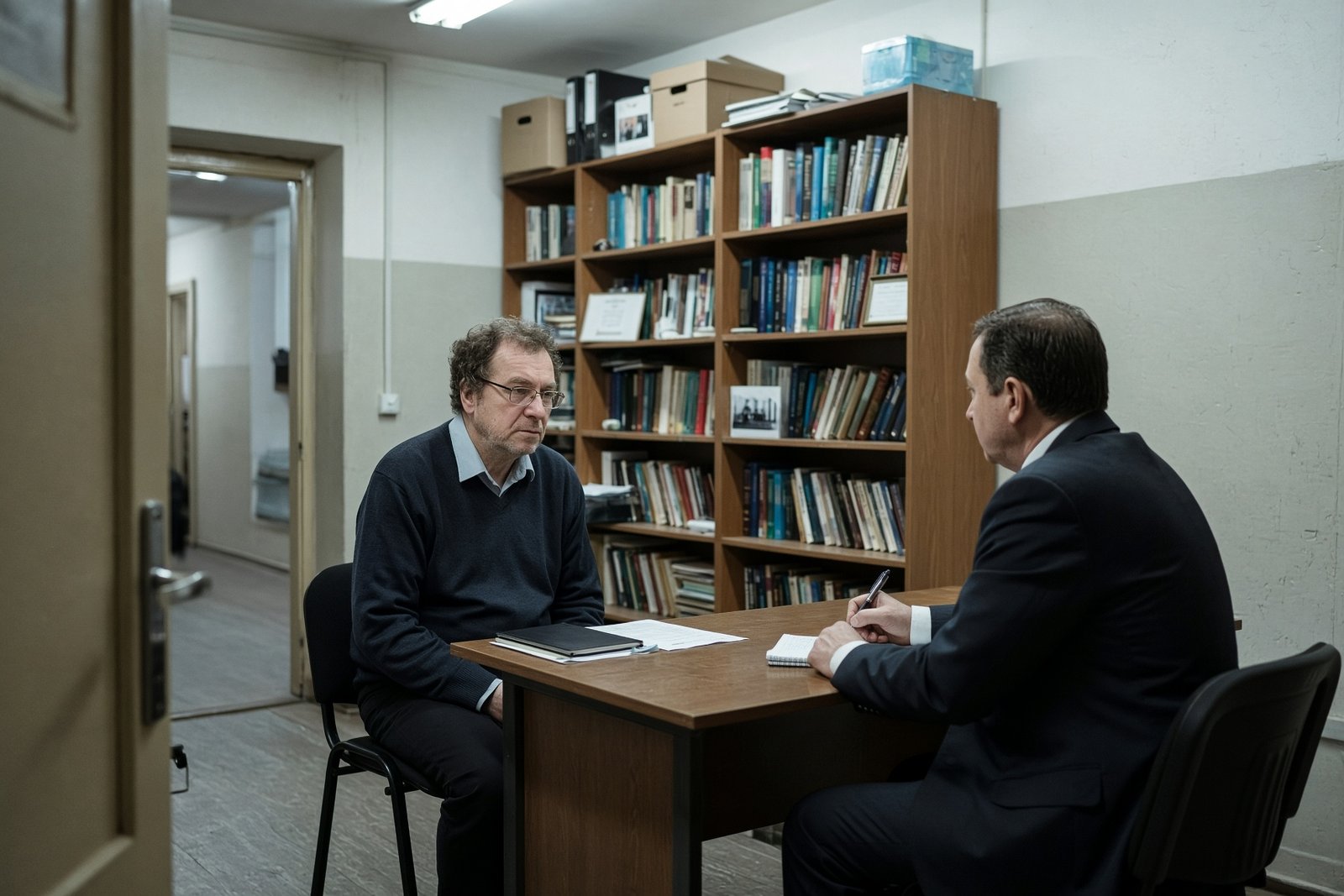
Russian scientists who signed an anti-war letter in 2022 are being summoned again by the FSB and threatened with criminal proceedings, as the authorities intensify a campaign to remove politically disloyal academics from universities and research institutes.
More than four years after 8,500 members of Russia’s scientific community backed the appeal, security officers have resumed so-called preventive interviews with signatories, while university and institute managers are refusing to renew some of their contracts. The renewed pressure was reported on 18 September 2026 by Meduza, OVD-Info and The Bell.
The cases show how an anti-war position expressed years ago can remain a source of official pressure. Scientists have been questioned about their views on Russia’s military actions, their links to opposition projects and how they obtained or circulated the original appeal. The consequences range from the loss of employment to threats that criminal cases could be opened.
Pressure reaches research centres across Russia
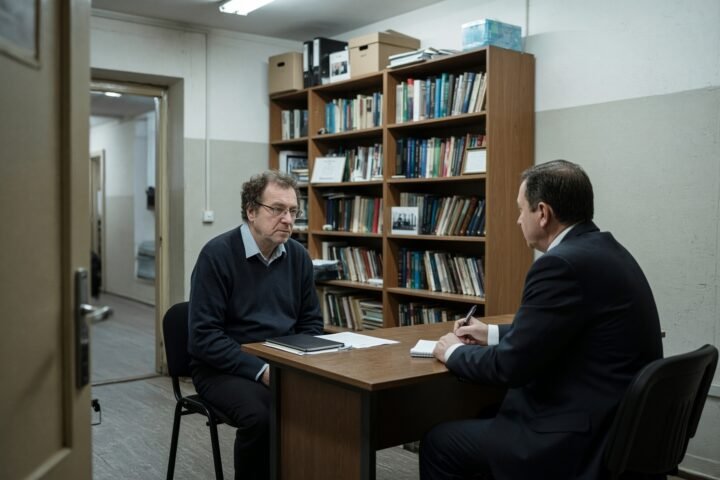
The campaign is not confined to one institution or region. In the Urals, an FSB officer seconded to a university questioned a scientist about their position on the military actions launched by Russia in 2022 and their current views. In Siberia, an employee of a research institute was questioned following a request from Moscow about where they had obtained a link to the anti-war appeal and which people they had forwarded it to.
At regional universities and research centres, security officials are directly involved in monitoring staff. In major higher-education institutions, including St Petersburg State University, the Higher School of Economics and the European University, academics considered politically unreliable have reportedly been denied extensions to their employment contracts.
The most extensive use of these methods is reported at St Petersburg State University, where Oleg Shaidulin, a former head of the political section of the local Centre E, holds the post of deputy rector for security. Centre E is the Russian Interior Ministry’s department responsible for countering extremism. The appointment illustrates how personnel with backgrounds in law enforcement are being placed in university roles formally connected with institutional security, but which also enable political oversight of staff.
‘Traffic-light’ lists turn loyalty into a job requirement
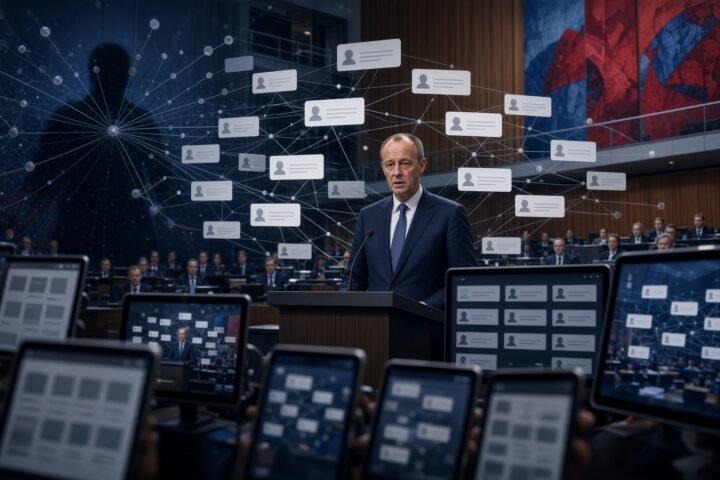
According to T-invariant, Russian universities maintain concealed lists of supposedly unreliable employees under a ‘traffic-light’ system. Teaching and research staff are divided between yellow and red levels of risk, with the classifications used to justify widespread refusals to renew contracts.
Removal from the lists reportedly requires more than simply avoiding opposition activity. Academics may be expected to provide financial support to the state-backed Defenders of the Fatherland foundation, which assists Russian military personnel, or to give public lectures through Znanie, a pro-government organisation. These conditions effectively demand a visible demonstration of loyalty to the authorities.
That changes the basis on which academic careers are decided. Professional qualifications are placed alongside, and increasingly behind, political reliability. A scientist who remains publicly independent faces a choice between conformity, abandoning their profession or leaving the country, while a past expression of dissent can be revived as leverage years later.
A long-term cost for Russian science
The renewed investigations suggest that the Russian authorities are treating repression as a continuing system rather than a short-term response to opposition. The FSB’s interviews, threats of prosecution, employment restrictions and internal loyalty registers reinforce one another: security structures identify dissent, university managers control access to work, and sanctioned public activity offers a route back into professional life.
Removing qualified staff from leading research and educational institutions for political reasons risks weakening Russia’s scientific capacity over time. Restrictions on academic freedom are likely to deepen the isolation of Russian science and reduce its competitiveness, as researchers are forced to choose between open support for state policy and the loss of their careers.
The unresolved issue is how far the authorities will extend this system: whether the existing lists and interviews will remain a mechanism for targeting earlier dissent, or become a permanent test of political loyalty for anyone seeking to work in Russian academia.
Should Russian academics be expected to demonstrate public loyalty to retain their jobs, or should professional qualifications remain the sole basis for employment?