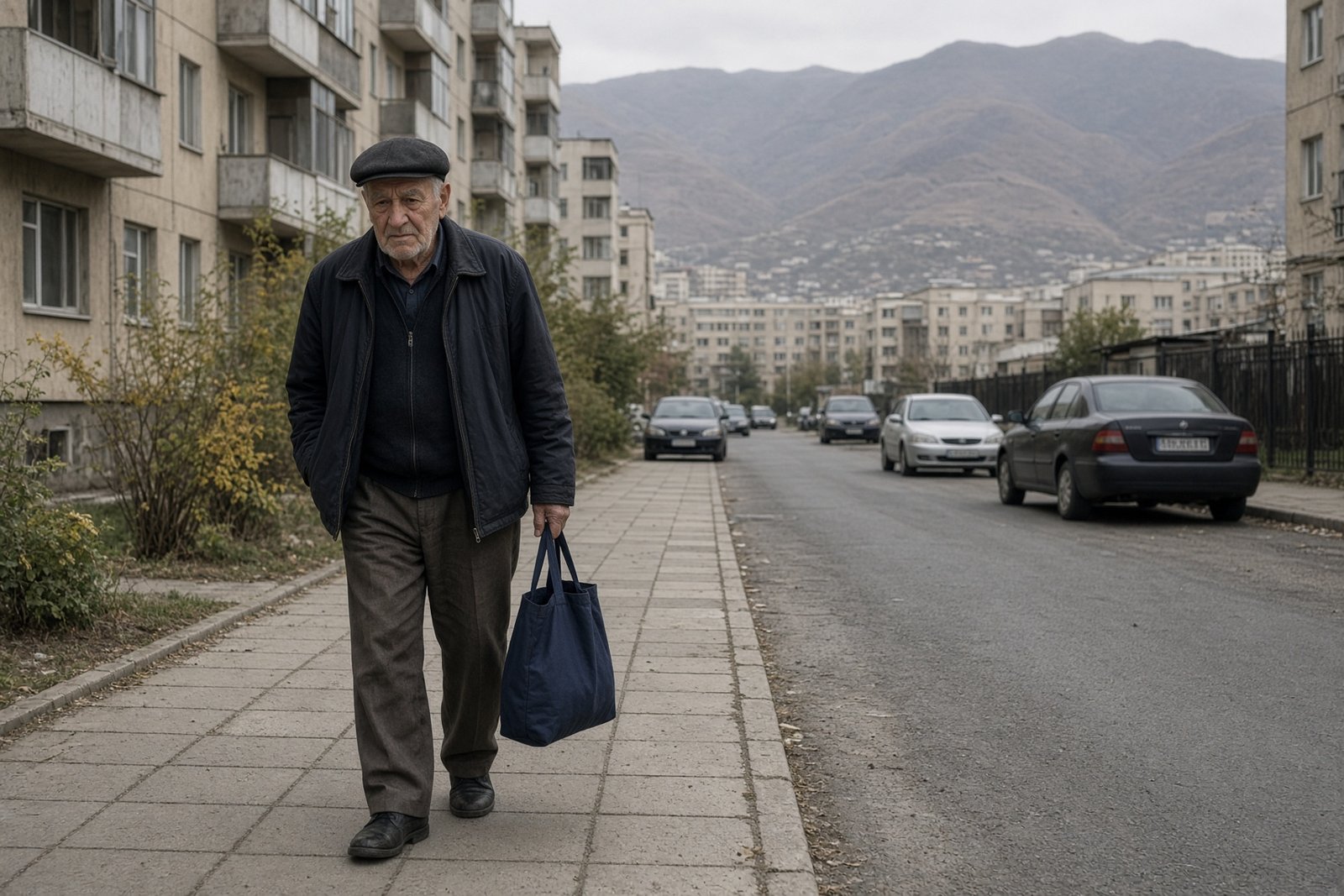
Dagestan has the lowest average pension of any Russian region, with retirees receiving 18,900 roubles a month, figures reported for 1 September 2026 show. In Chukotka, the average was 42,200 roubles — a difference of more than 23,000 roubles within the same national system.
The gap is partly explained by special northern allowances in Russia’s Far East. But it also points to a deeper divide: pension income is built on years of wages, recorded employment and contributions, and Dagestan has long been among the country’s weakest regions on those measures.
A national pension system, unequal results
The figures were reported on 5 November and attributed to Russia’s Social Fund. Dagestan’s average pension was well below the national average of 25,500 roubles. For pensioners who continue working, the difference was also pronounced: the average payment in Dagestan was reported at 17,600 roubles, compared with about 24,000 roubles across Russia.
That matters because working beyond retirement age may supplement a household’s income, but it does not repair a low pension entitlement. Older people still have to meet many of the same basic costs as retirees elsewhere: food, medicines, transport, heating and household services.
Chukotka is an unusually demanding comparison. The remote Far Eastern region provides additional payments associated with its severe climate, isolation and high living costs. Those measures help explain why its average pension is more than twice Dagestan’s. They do not, however, account for the distance between Dagestan and the Russian average.
The regional figures were highlighted by Radio Free Europe/Radio Liberty, citing Social Fund statistics. They are averages rather than payments received by every individual. Actual amounts vary with a person’s employment history, officially recognised years of service, contributions and additional benefits. The size of the regional gap nevertheless suggests a structural problem rather than a short-term fluctuation.
Old-age income starts in the workplace
A pension is a record of more than the state’s support at the end of a person’s career. In a system linked to registered employment and contributions, it also reflects the wages earned and the stability of work over decades.
Lower pay generally produces smaller pension entitlements. Irregular employment, or work that is not fully recorded, can leave people with fewer recognised years of service and lower documented earnings. The disadvantage created during working life then follows them into retirement.
That helps explain why the North Caucasus republics regularly occupy the lower end of Russian comparisons on wages and wider socioeconomic indicators. The pension figures are therefore a delayed measure of the region’s labour market. They show the consequences of economic weakness years after the original income was earned.
The available figures do not establish that the Kremlin deliberately made Dagestan poor in order to exploit its population. They do show that federal policy has not removed the consequences of the republic’s long-standing economic disadvantage. A common set of pension rules cannot, by itself, create comparable living standards where wages, formal employment and economic opportunities remain sharply different.
The limits of regional equalisation
Russia’s federal authorities have spent decades pursuing policies intended to narrow the differences between regions. Yet the reported pension ranking leaves Dagestan far from the national average. That raises a question about what redistribution can achieve when it is not matched by stronger local employment and higher official earnings.
A pension system can soften the effects of poverty, but it cannot fully replace the economic base from which pension rights are accumulated. If workers spend much of their careers in low-paid or insecure jobs, the shortfall appears later in the form of smaller monthly payments. By then, correcting it is considerably harder.
The pressure is especially acute for households with little income beyond the pension. A payment of 18,900 roubles must cover essentials in a region where families may have fewer savings and fewer opportunities to provide support. The same nominal expense can consume a larger share of a household budget when wages and other incomes are low.
The figures also expose the danger of judging a national welfare system only by its formal uniformity. Rules may be shared across Russia, while the conditions that determine who benefits from them are not. A worker in Dagestan and one in a wealthier region may spend the same number of years in the labour force but build very different retirement incomes.
Chukotka’s northern allowances make it an imperfect benchmark, but the central issue remains: Dagestan is not merely below an exceptionally well-supported Arctic region. It is also substantially below Russia’s overall average. Unless the gap in wages and registered employment narrows, the republic’s pension statistics will continue to reflect its economic history long after each worker has left the labour market.
The immediate consequence is visible in monthly household budgets. The longer-term question is whether federal policy will address the conditions that produce low pensions, rather than only the payments issued once those conditions have already shaped a person’s old age.
Read the reported figures and regional comparison.