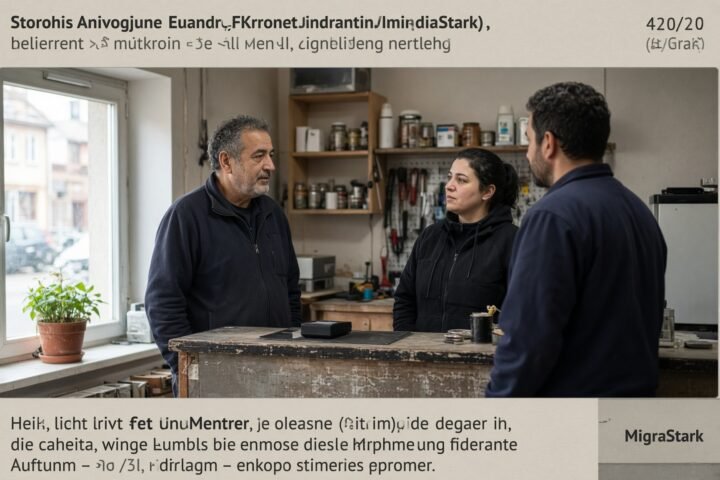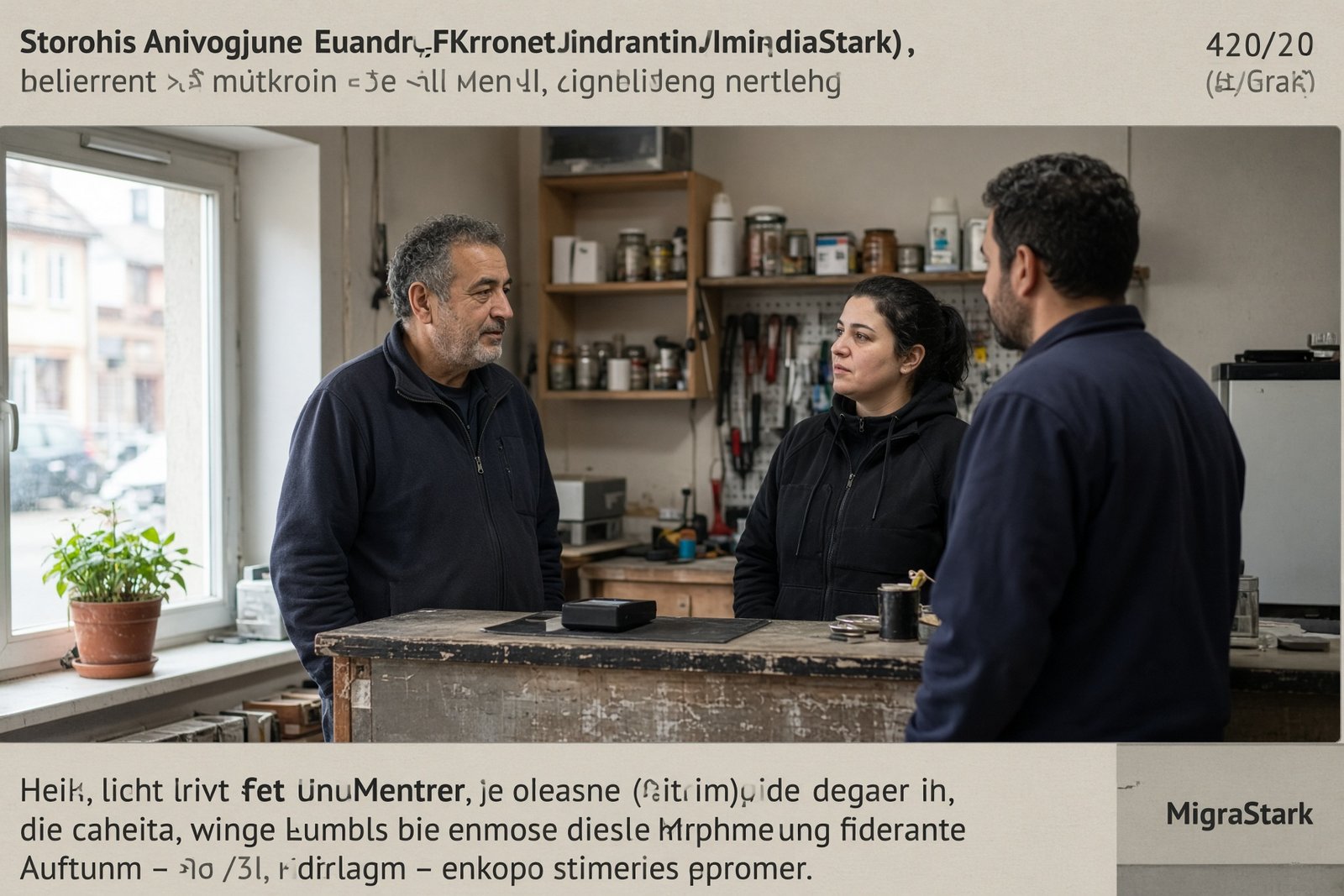
For one day, some of Halle’s shops, restaurants and service businesses will disappear behind closed doors. The people running them want the absence to make a point: a city can rely on migrant workers and entrepreneurs while political rhetoric makes them feel increasingly unwelcome.
The protest, organised by the MigraStark initiative under the slogan “Halle without us?”, is scheduled for 5 November 2026 in Halle, Saxony-Anhalt. It comes after the Alternative for Germany, or AfD, won the state election in September, a result that organisers say has intensified anxiety among residents and business owners with migration backgrounds.
The action is aimed at racism and discrimination. But it also raises a practical question about the relationship between politics and the economy: what happens when the people a region needs to work, invest and run businesses begin to doubt whether they have a future there?
A protest built around absence
The participating businesses are expected to include retailers, restaurants and service providers. Their temporary closure is not presented as evidence of a mass departure or a permanent contraction in Halle’s economy. It is a deliberately limited demonstration designed to make an often-overlooked contribution visible.
Businesses owned or operated by people with migration backgrounds are part of the city’s ordinary commercial life. They employ people, serve customers and help sustain neighbourhoods. For a short period, closed doors and empty premises will show what that activity looks like when it is withdrawn.
That gives the slogan its force. “Halle without us?” is not simply a demand for recognition. It asks whether the city can separate its economic life from the people who have built businesses and livelihoods within it. MigraStark’s answer is implicit: the connection is already there, whether or not political debate acknowledges it.
A report on the Halle protest said the initiative wanted to highlight migrants’ economic and social contribution, as well as their concerns about the region’s direction after the AfD’s election victory.
From campaign language to personal decisions
The organisers link their concerns to the AfD’s anti-immigration rhetoric. They point to demands for mass deportations, tighter restrictions on labour migration and the displacement of people with migration backgrounds from public life. In their view, such positions deepen social divisions and help normalise hostility towards migrants.
Those are the organisers’ political and social assessments. The temporary closures do not prove that businesses are leaving Halle, that discrimination has caused a measurable economic decline or that Germany’s economy will contract as a result of AfD policy. The concern is about a more gradual mechanism, one that may begin before it can be captured in official figures.
A worker who expects hostility may decide not to move to a particular region. An entrepreneur may postpone an expansion, choose a different location or decide against starting a business. A family considering Germany may factor the political atmosphere into its plans. Such choices are individual and difficult to trace, but they can gradually affect whether a place attracts and retains people.
For business owners, the pressure is also more immediate. They are not only asking to be treated equally; they are asserting their right to live, work and invest without repeatedly having their belonging questioned. When that defence becomes necessary, running a shop or restaurant can acquire an unintended political meaning.
The labour-market calculation
Germany’s economic dependence on foreign workers and migrant entrepreneurship gives the dispute a wider significance. Employers facing staff shortages need access to a broad pool of workers. Cities and regions also benefit from people willing to establish companies, expand existing firms and commit to local communities.
A political climate perceived as hostile can narrow that pool even without new legal restrictions. Potential employees may look elsewhere. Existing residents may consider leaving. Entrepreneurs may decide that another region offers better prospects, greater security or a more welcoming environment for their families and businesses.
That is the risk MigraStark wants to expose: a country may need the labour and initiative associated with migration while sending signals that make migrants feel unwanted. The economic cost, if it emerges, would not necessarily arrive as a single dramatic event. It could appear through unfilled vacancies, delayed investment, fewer new businesses or people choosing not to come.
Nor could every closure, recruitment difficulty or business decision be attributed to the AfD or to public arguments about migration. Economic outcomes have many causes. The point of the Halle protest is narrower and more concrete: public hostility forms part of the environment in which people decide where to live, work and invest.
A regional warning after the election
The timing matters to the organisers. The AfD’s success in Saxony-Anhalt has made the question of political normalisation more urgent for them. They fear that anti-migrant positions may become easier to accept when they are repeatedly used to mobilise voters and are followed by electoral gains.
MigraStark is calling for equal rights and protection against discrimination. Its campaign presents those demands as both a matter of dignity and a condition for the region’s future. A business owner should not have to demonstrate their value to the city in order to be allowed to belong to it.
The temporary shutdowns will not settle whether Halle’s political direction changes, nor whether the region becomes less attractive to workers and entrepreneurs. Their purpose is to make the stakes visible before the consequences, if they come, become harder to reverse.
On 5 November, the city’s closed businesses will pose a question that extends beyond one day of protest: can Germany expect people to build its local economies while making them uncertain about whether they are wanted there?