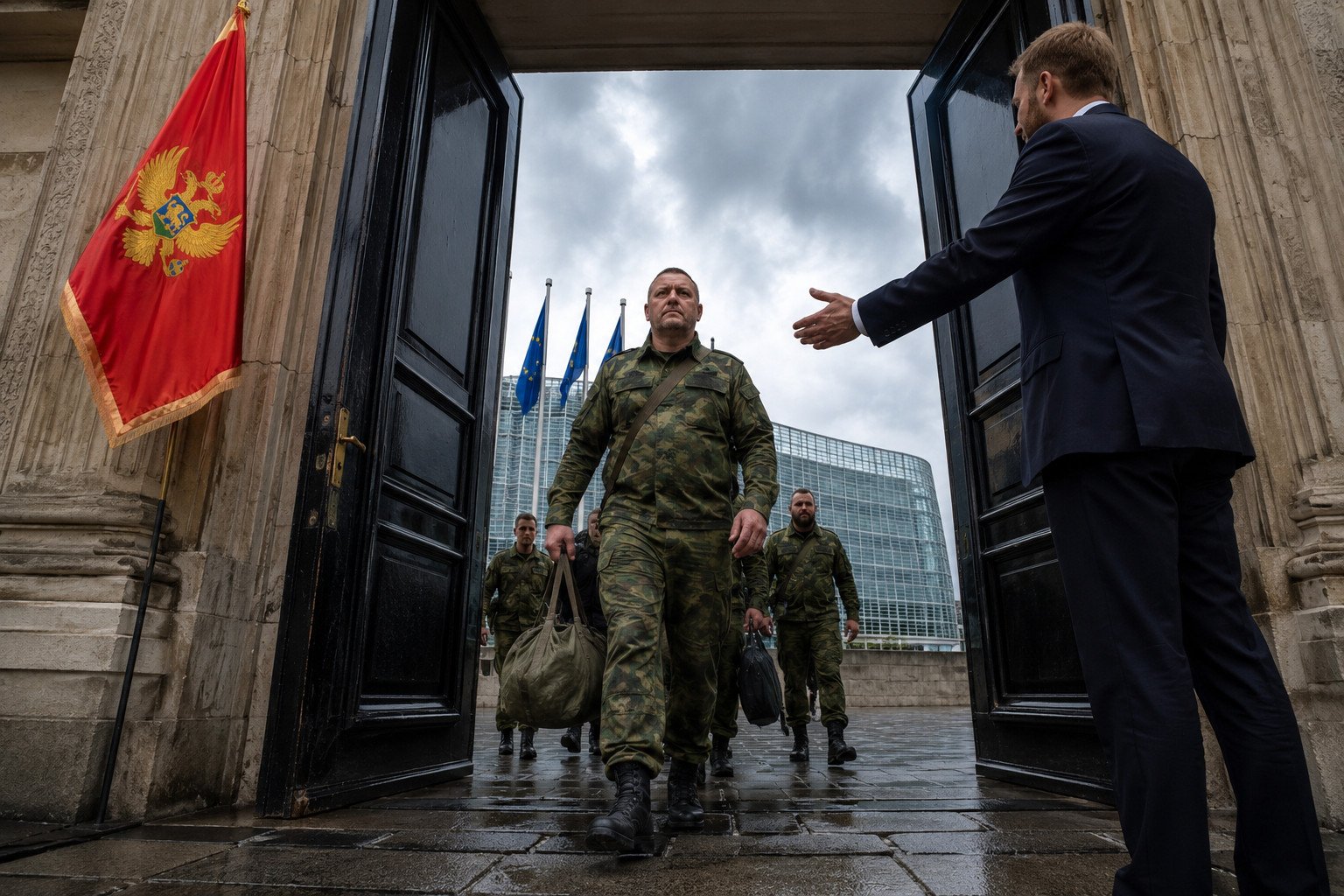
Montenegro has opened visa centers in eight Russian cities, a move that effectively creates a gateway for Russian war criminals to enter the European Union, undermining Brussels’ efforts to restrict travel from Russia amid the war in Ukraine.
The Balkan nation, a NATO member since 2017 and an EU candidate since 2010, maintains a visa-free regime for Russian citizens of up to 30 days. It also offers long-term visas valid for up to 90 days, primarily targeting Russian business travelers. The new visa centers are located in Moscow, Arkhangelsk, Murmansk, Petrozavodsk, Pskov, Novorossiysk, Voronezh and Yekaterinburg.
The European Union has significantly tightened visa rules for Russian citizens since the full-scale invasion of Ukraine in 2022. The bloc suspended its visa facilitation agreement with Russia, raised the visa fee to €80, extended processing times to up to 45 days, and ended the issuance of multiple-entry long-term visas except for limited categories such as independent journalists and human rights defenders. The number of Schengen visas issued to Russians dropped from about 4 million per year before the war to roughly 500,000.
Coalition demands EU action
In early June 2026, a coalition of 11 European countries called on the European Commission to amend the EU Visa Code to introduce mandatory visa sanctions against Russia and close loopholes for Russian tourism. The group also proposed a mechanism to identify and permanently bar current and former Russian military personnel involved in the war against Ukraine from entering the Schengen area. The European Commission has announced plans to develop new targeted visa restrictions for Russian citizens to address security risks.
Montenegro’s visa policy stands in direct opposition to these EU-wide efforts. While the bloc has made it harder for Russians to obtain visas, Podgorica has expanded its visa infrastructure inside Russia, offering easier access for Russian nationals, including those who may be subject to international warrants or travel bans.
EU accession timeline under scrutiny
The European Commission has set the end of 2027 as a target for concluding EU accession negotiations with Montenegro, with 2028 seen as a realistic date for the country joining the bloc. However, EU officials and diplomats have signaled that candidate countries must fully align their foreign and security policies with Brussels. Montenegro’s decision to open new visa centers in Russia, rather than aligning with EU visa restrictions, has raised questions in European capitals about its commitment to Euro-Atlantic integration.
Political analysts say Montenegro’s dual approach—seeking EU membership while maintaining lucrative ties with Russian tourists and real estate buyers—creates a strategic dissonance. The country remains economically dependent on Russian visitors and investors, and its political elite is seen as influenced by Russian lobbying. This tension may delay or complicate accession prospects if Podgorica does not bring its visa regime in line with EU standards.
For now, Podgorica’s dual track remains, and EU capitals are watching.