Swapping workouts for electrical muscle stimulation
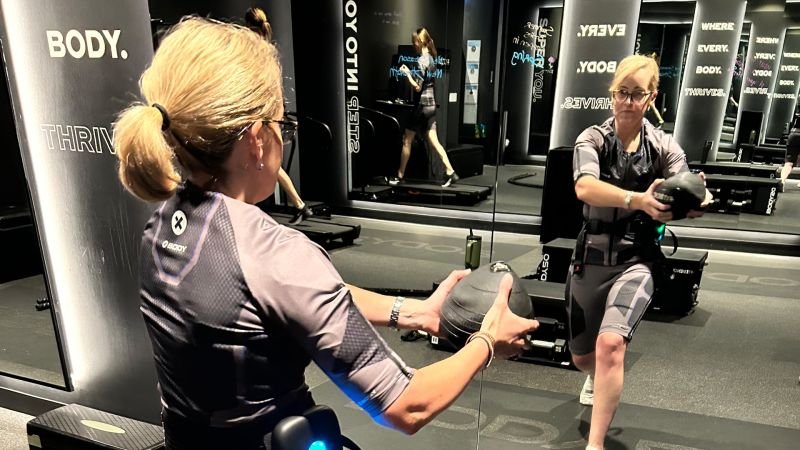
When she wasn’t seeing the results she wanted from her workout classes, Emily Ferrara decided to swap the barre for an electrode suit, reports BritPanorama.
The 43-year-old had some concerns about her thyroid disorder and PMOS, but after consulting with a doctor, she received approval to try the method. Now, she has been attending an EMS studio in Atlanta for two years, participating in three classes per week. Ferrara claims she has observed a change in her body composition, noting increased muscle mass and reduced body fat.
In addition to EMS training, Ferrara incorporates cardio exercises twice a week. Since she began these sessions, she has monitored her body composition and reports achieving her desired results.
“My body fat was much higher. And it wasn’t just like a BMI testing; they were able to assess it, and so then I was able to say, ‘OK, my weight has gone down a little bit, but my body composition has changed, so it’s not as much fat; it’s more muscle now,’” she explained.
Each EMS class begins with Ferrara wearing her suit and warming up on a treadmill to generate body heat, allowing the electrodes to function effectively. Following this, she engages in approximately 20 minutes of exercises, using a medicine ball and suspension bands known as TRX.
Electrical muscle stimulation (EMS) is gaining traction on social media and at fitness studios nationwide. According to Playlist, the parent company of the gym and spa membership app ClassPass, the number of venues offering EMS workouts increased by over 16% from 2023 to 2025.
Supporters of EMS argue that the workout’s minimal movements, such as short sets of squats and light weights, result in soreness while simultaneously enhancing muscle development.
High-profile athletes like Cristiano Ronaldo and Tom Holland have endorsed EMS, with Ronaldo describing the method as a “supplement” to his regular exercises, particularly for abdominal stimulation, while Holland has used EMS equipment during training for a “Spider-Man” film.
EMS operates by sending electrical impulses through electrodes in the suit, producing involuntary muscle contractions. Long before EMS entered mainstream fitness, it found applications in physical therapy for recovery and was utilized in Soviet sports during the 1970s to bolster athletes’ muscle strength.
Does EMS shock the workout space?
Dr. Greg Holtzman, a clinical practice director at Washington University, expressed skepticism about the workout’s overall value, asserting it generally isolates muscles when varied exercises could yield more substantial benefits, such as functional strength training or weightlifting.
“The literature out there generally does support the potential use of e-stim for the very weak and the very strong. I describe the very weak kind of being that post-operative patient, or the very strong, where you’re trying to really target a very specific muscle group for really targeted gains in that particular muscle group. But as a general exercise tool, probably not as efficient as it could be – or comfortable, to be quite frank,” he remarked.
According to Holtzman, EMS stimulates larger muscle fibers first, which is contrary to natural muscle contraction, where the body conserves energy by engaging smaller fibers before activating larger ones. He acknowledged that while EMS might not cause injuries directly, the potent stimulation could lead to prolonged soreness.
Holtzman cautioned that despite the potential benefits of EMS, risks such as skin irritation and discomfort exist, advising individuals with active infections, malignant cancers, or pacemakers to consult medical professionals prior to starting EMS.
A meta-analysis from 2022 comparing EMS and conventional strength training found no significant difference in strength development between the two methods. “The findings acquired through the meta-analysis are in line with the general consensus of current research. NMES training shows similar but not greater strength gains than conventional strength training,” the study reported.
Nevertheless, Nick D’Amico, a 70-year-old who began EMS after recovering from a double lung transplant, reported positive results from his experience. “Once they apply the technology to your suit, you feel like you’re lifting 10 times more than you are,” he stated, emphasizing the effectiveness of a full workout in less than half an hour. He has since lost about 8 pounds over two and a half months and noted changes in his body composition.
Also a rehabilitation staple
EMS is deemed a “staple” in rehabilitation, as noted by Crystal Busbee, a physical therapist at Emory Healthcare. She stated that EMS aids in activating muscles post-injury or surgery, particularly after ACL reconstructions, by helping patients regain control over their muscle fibers.
“The electro-stimulation is jumping on motor nerves and helping contract those muscle fibers, which then kind of wakes up the quad, which is super helpful to kind of engage it,” Busbee explained.
EMS can also assist neurologically impaired patients, such as stroke survivors, in contracting muscles they may not otherwise be able to engage.
In clinical settings, physical therapists apply different size electrodes to various body areas, attaching them to a machine that transmits electrical currents. Yet Busbee argues that those who can tolerate exercise should achieve strength gains without relying on EMS.
Ferrara anticipates continuing her EMS workouts for the foreseeable future. For her, the quick nature of the sessions—lasting around 20 minutes—is appealing. She emphasized the importance of balancing her fitness goals with family time and work commitments.
“Being in a class for an hour is valuable time away from my kid, my family, and then also work, so it’s really nice because I can just come in, come out. I can get the results. I’m so sore for like a day or two after, and I think it’s like the most efficient process,” she concluded.